
Creations
Arlington at Night
Pay It Forward
Arlington at Night
The Town Was Still Open. It Risked Not Being Seen.
In the winter of 2021, Arlington, Massachusetts looked dark. Its restaurants were open for curbside, delivery, and a few distanced tables, but from a car window on a cold night an open kitchen and a closed one looked the same, and the neighbors who wanted to help had no picture of where to begin.
My heart wanted to stir the pot during Covid and support the restaurants in my hometown. Pay it forward. Arlington at night.
Arlington at Night was not client work. No one hired me and there was no brief. I walked more than 24 miles through my own town with a camera and a tripod, photographed the restaurants I had eaten at for years, and paid out of my own pocket to put those photographs in front of the people who lived here. Thirty years of strategy and creative direction are worth the most when people need them most, and that winter my town did.
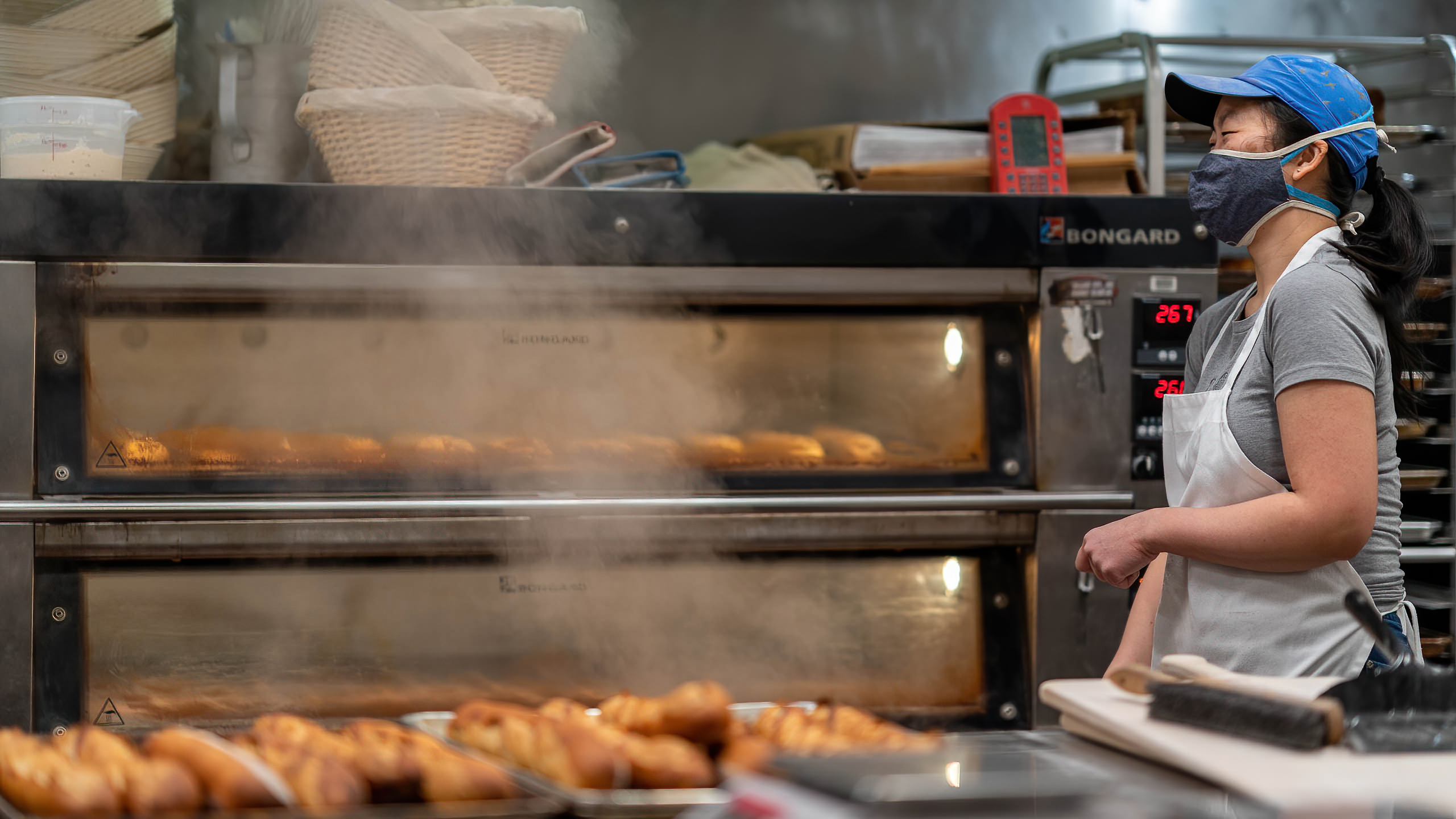
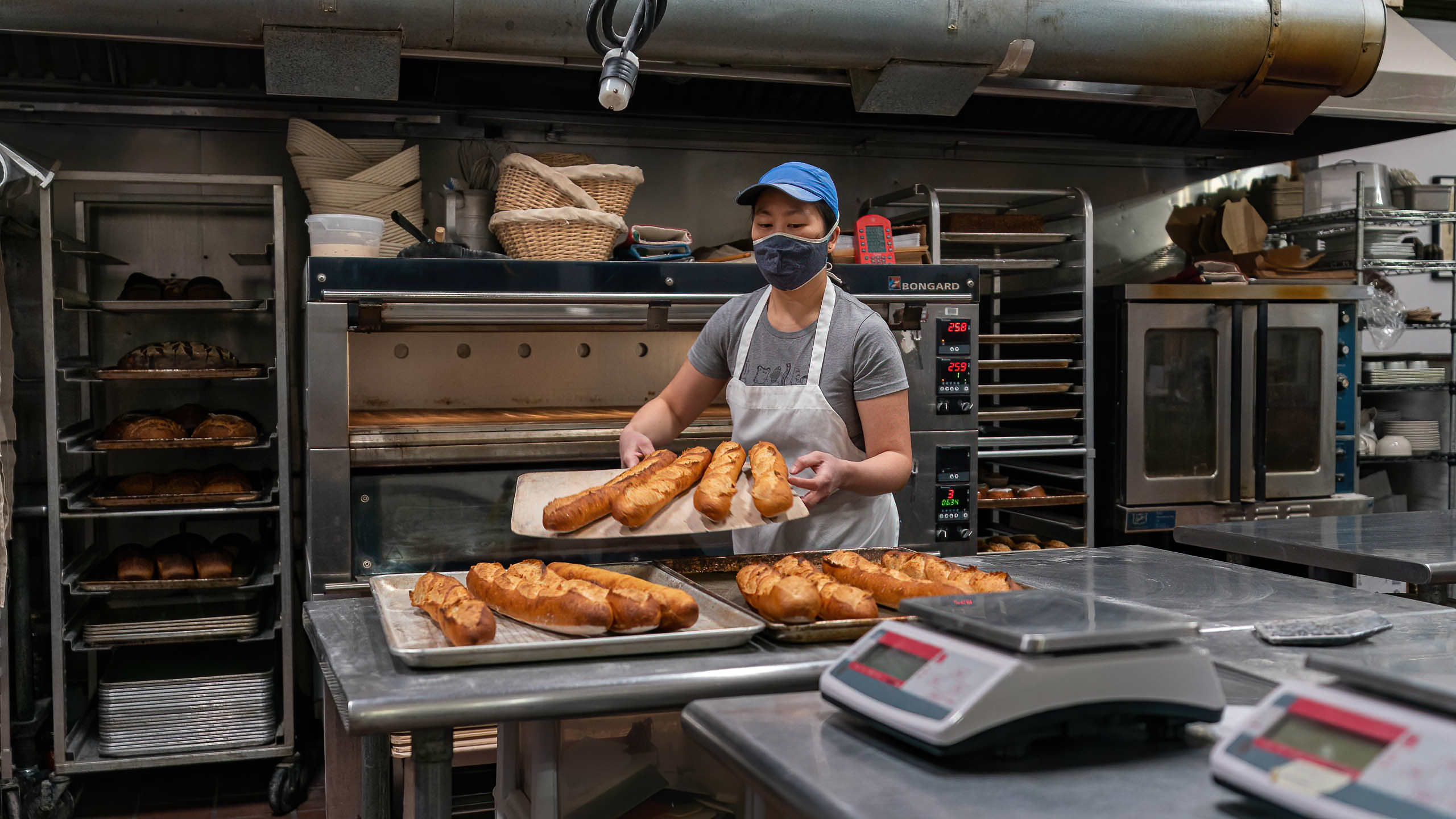
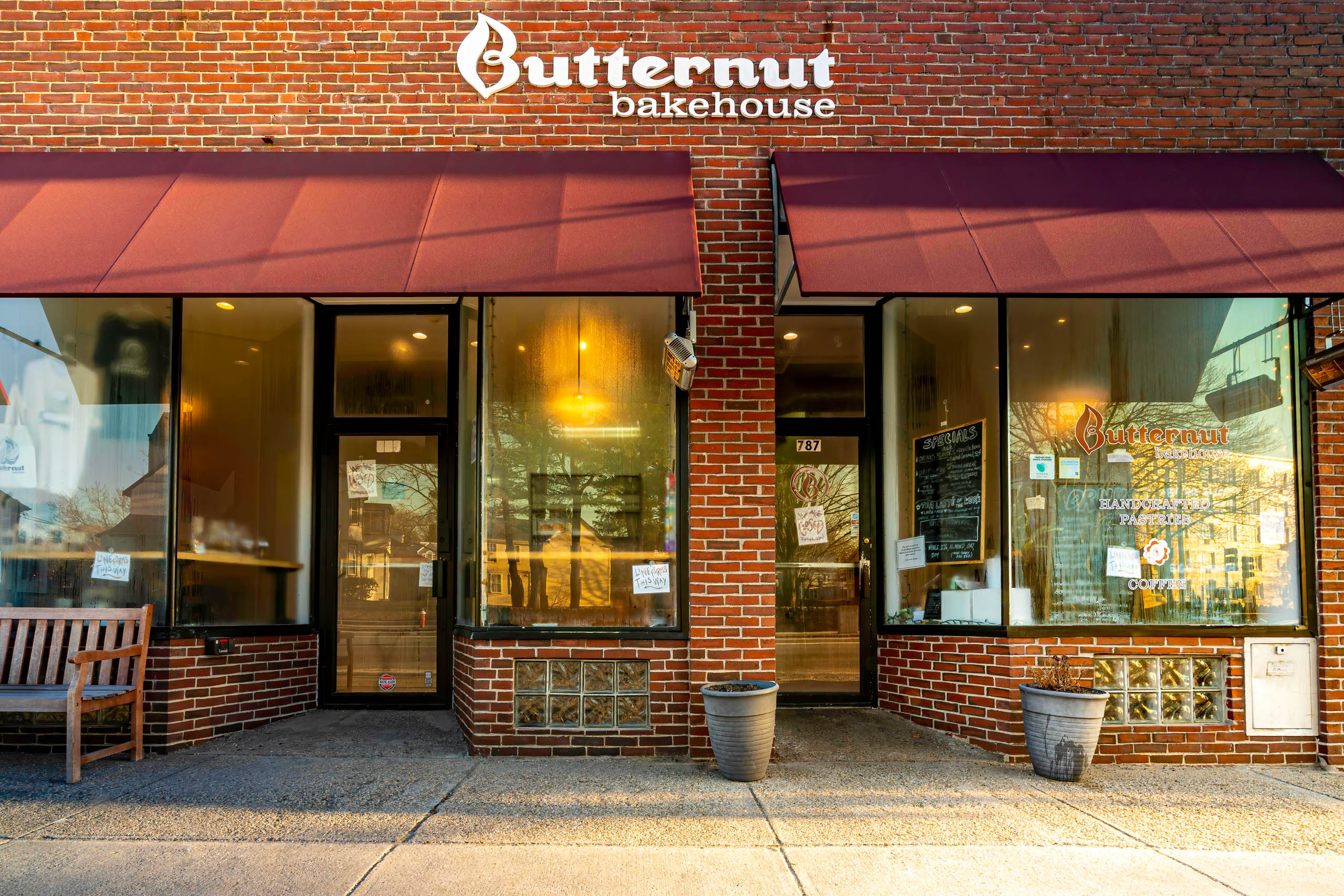
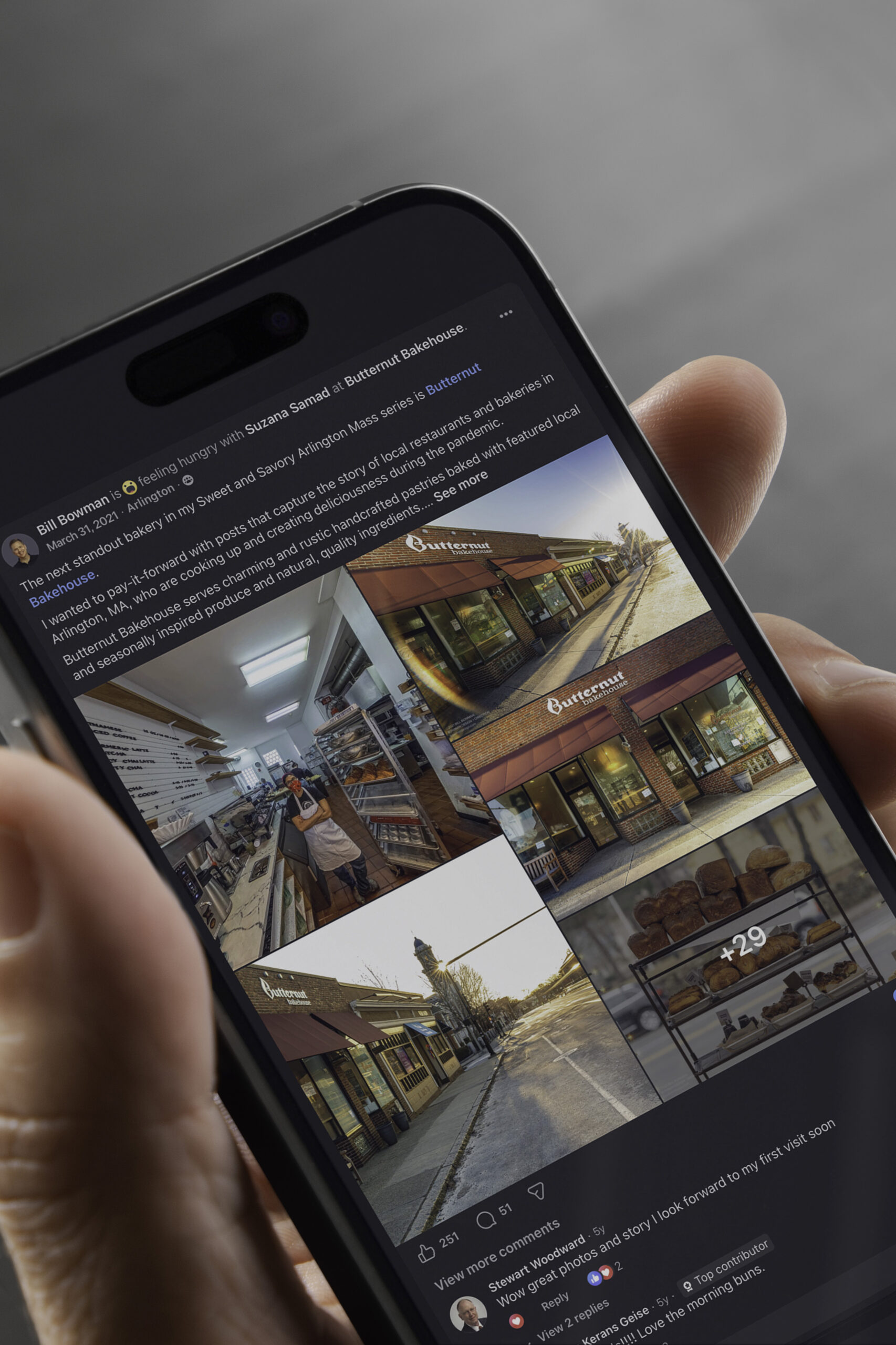
The pictures made a quiet town visible to itself, and the town did the rest. Butternut Bakehouse reported revenue as much as 30% higher while its promotion ran, I heard similar from most of the owners featured, and the photographs, placed on Google Maps where dinner gets decided, have been viewed more than 4 million times and are still counting.
Read the Story
Challenge
The restaurants had done everything asked of them. They had rebuilt their businesses around takeout windows, online ordering, curbside pickup, and no-contact delivery, and they were cooking every night into a town that could not see them doing it. Winter dark, a pandemic, and empty sidewalks made an open restaurant and a closed one look the same.
The goodwill was already there. Residents wanted to help their neighbors and said so. What they lacked was evidence: who was open, what was safe, what to order, and how to get it. Uncertainty kept people home, and a restaurant loses to hesitation as surely as it loses to a competitor.
Direction
A town that looked closed, and a shutter held open long enough to prove it wasn’t. The work became a matter of exposure, in both senses of the word.
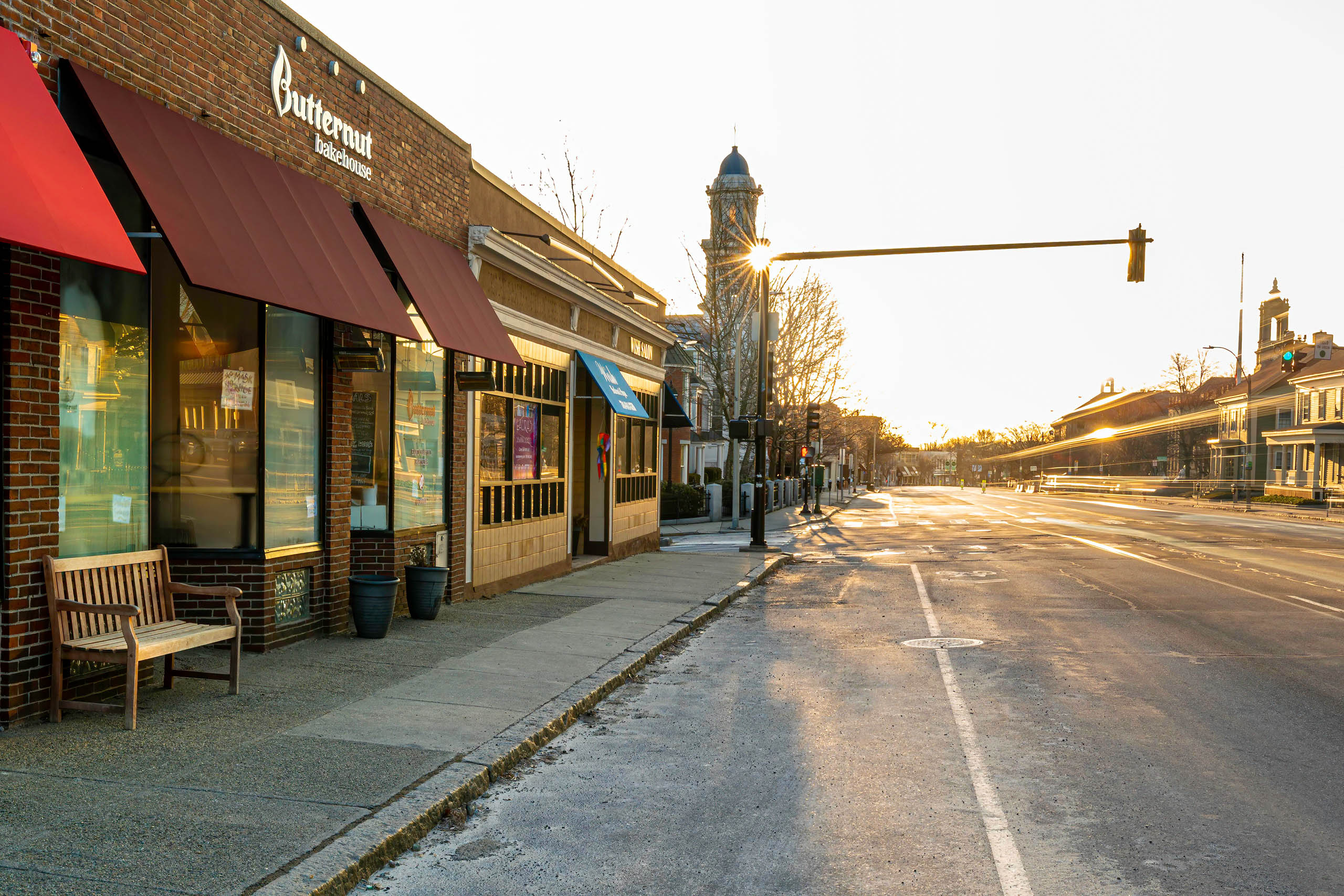
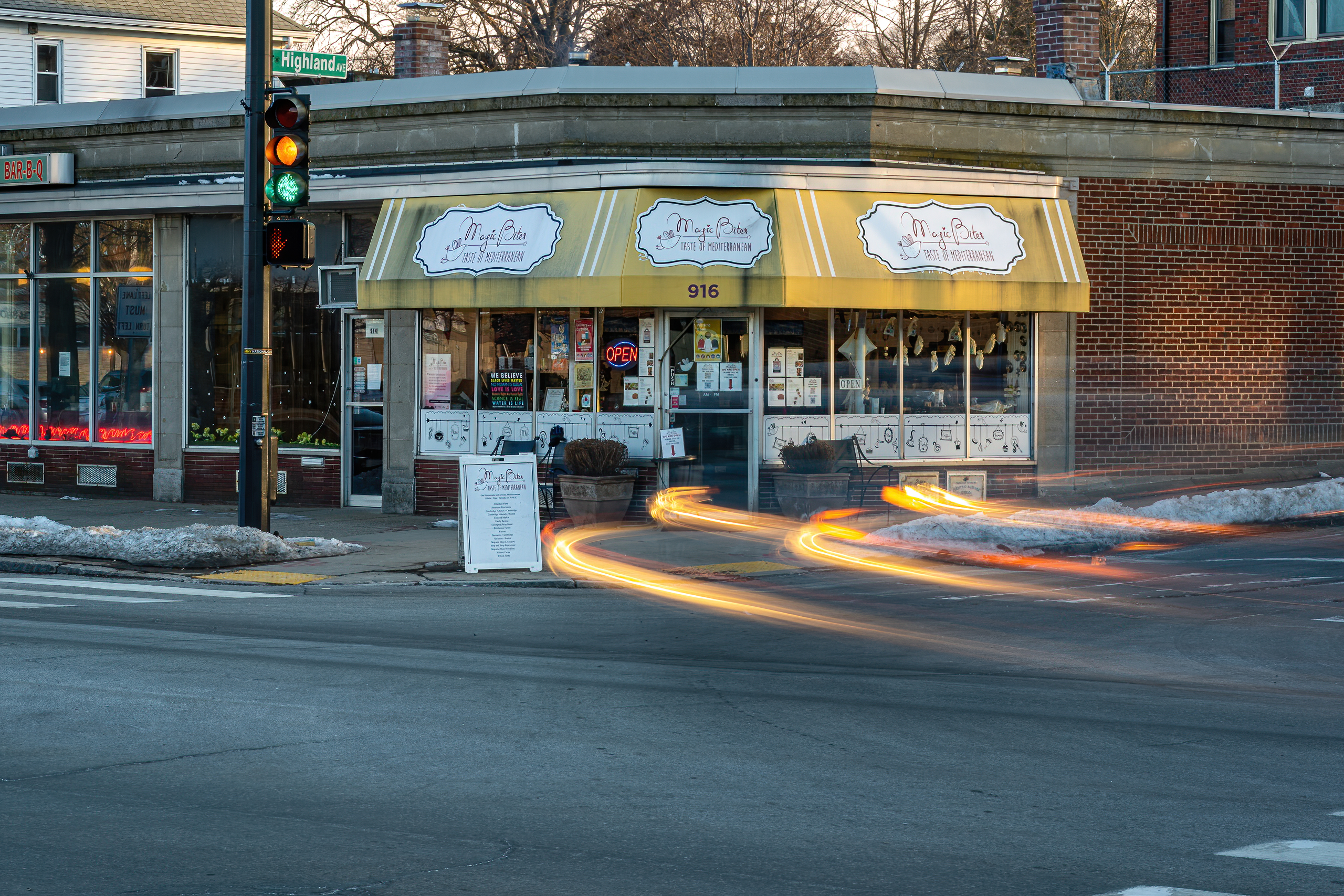
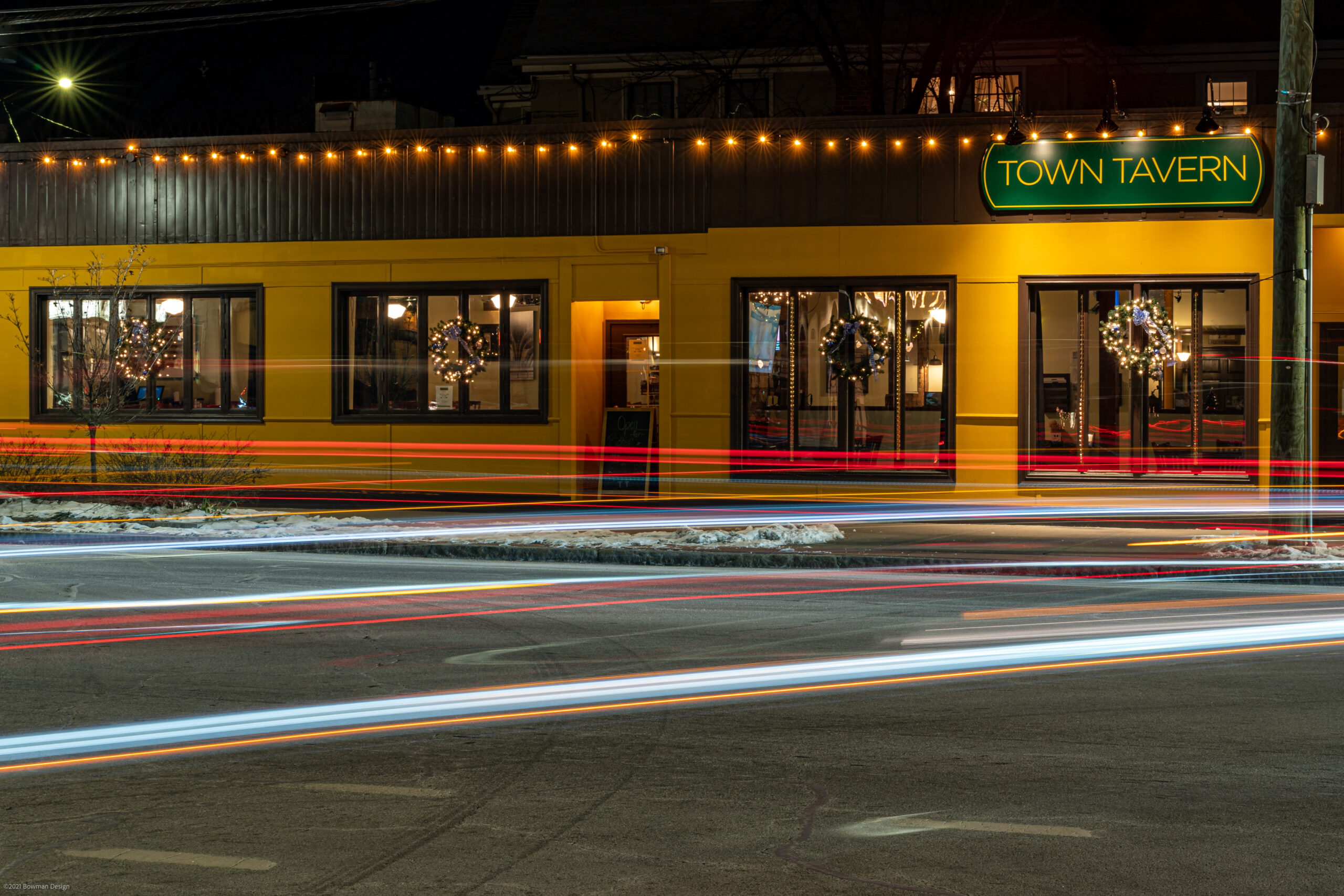
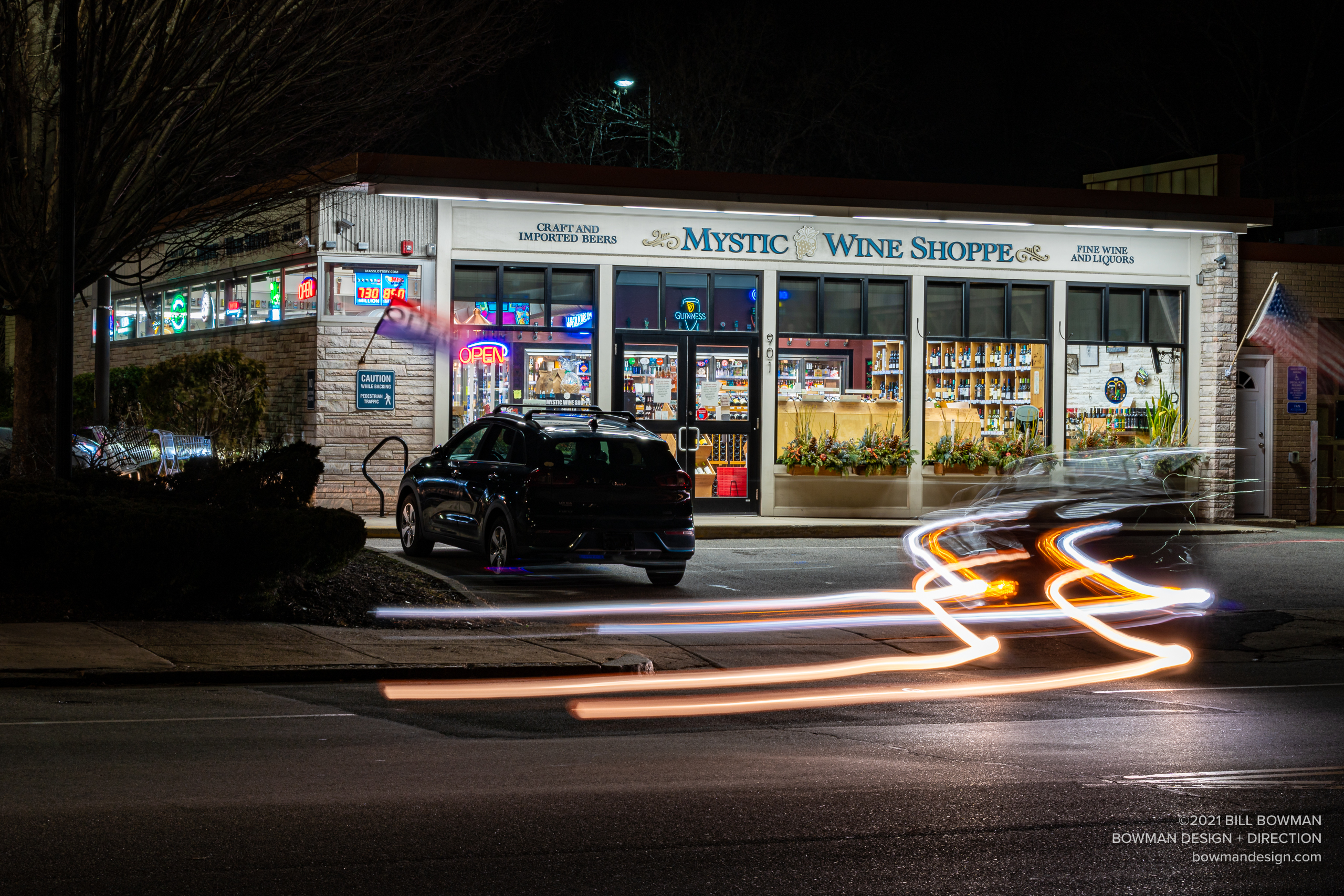
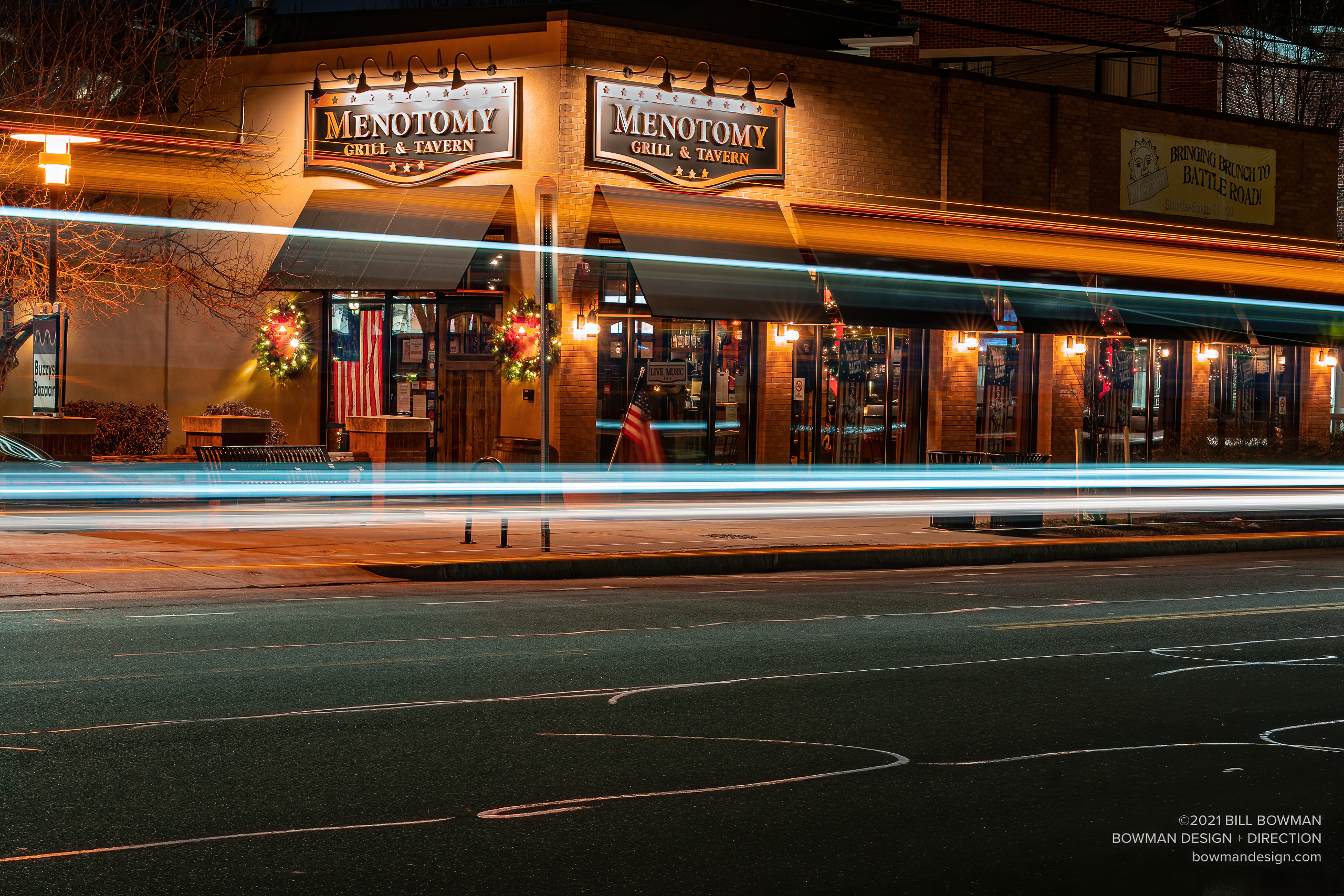
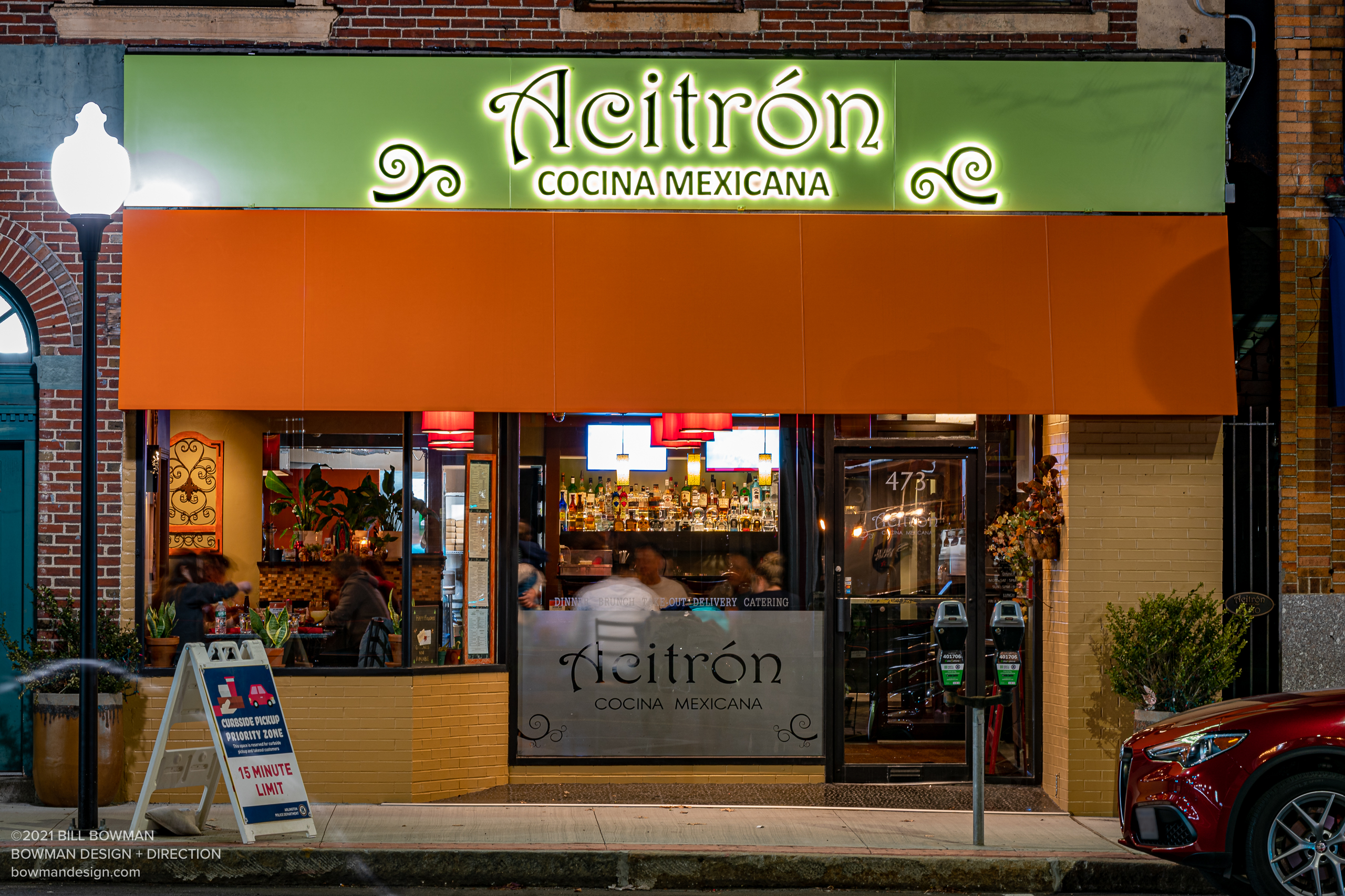
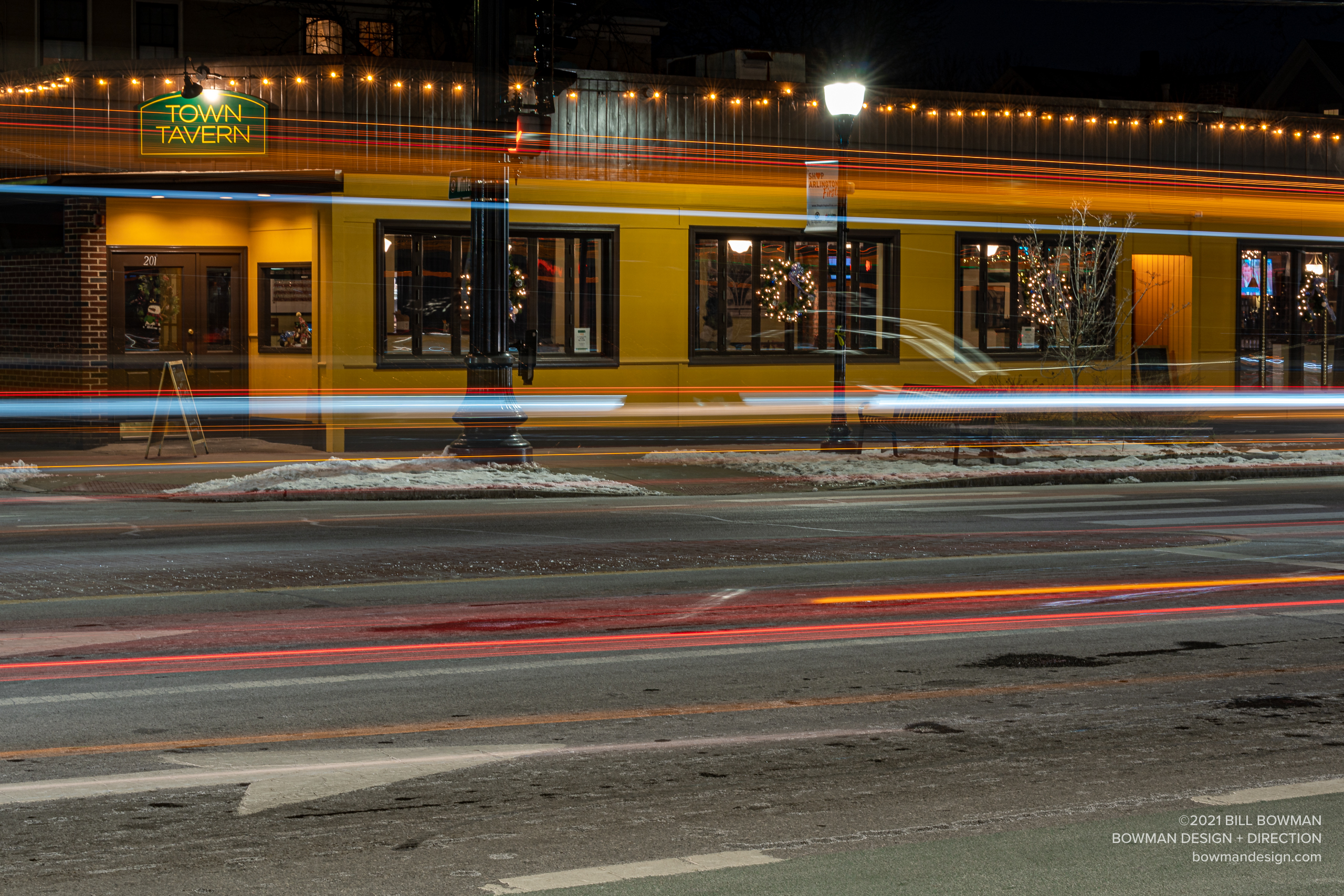
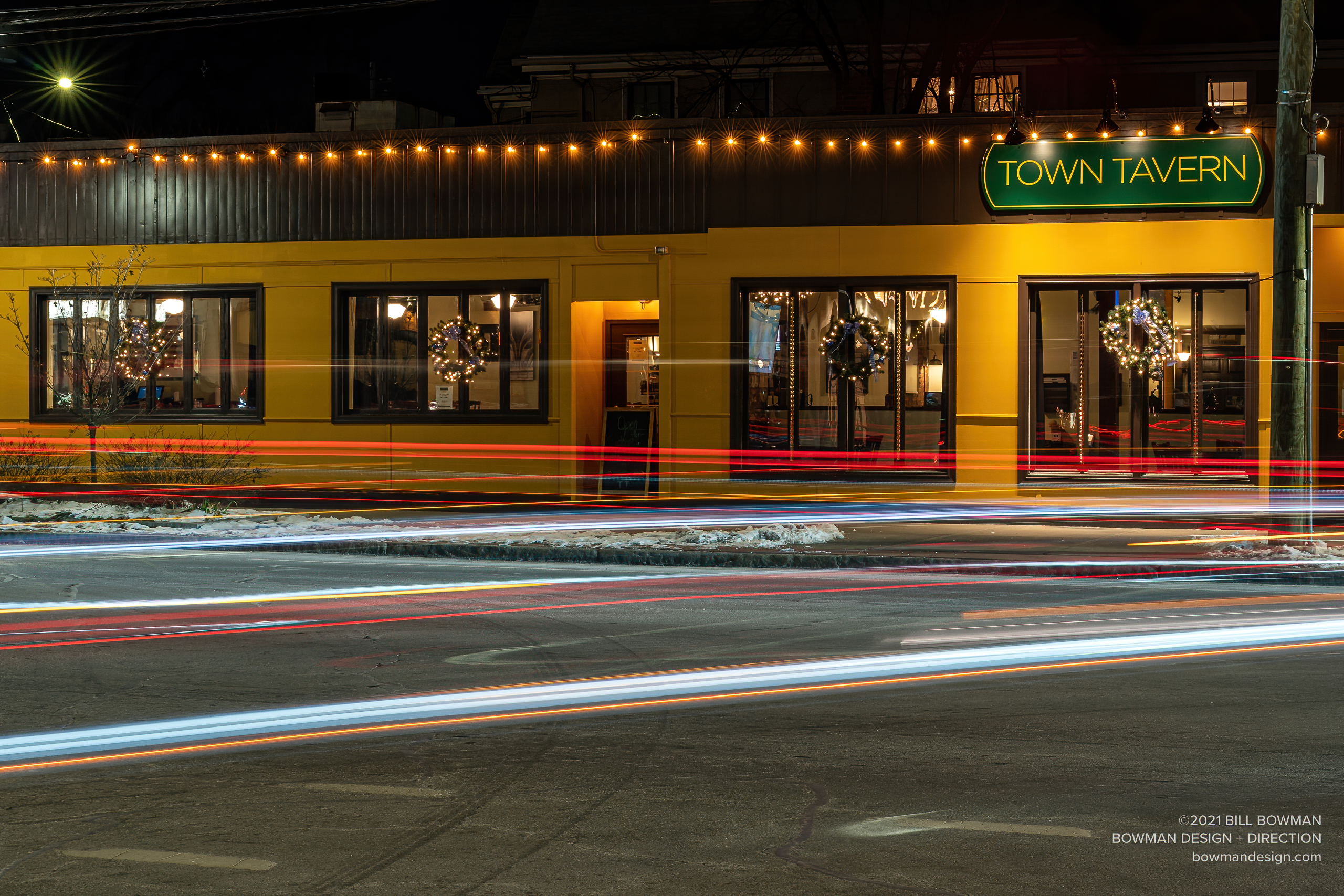
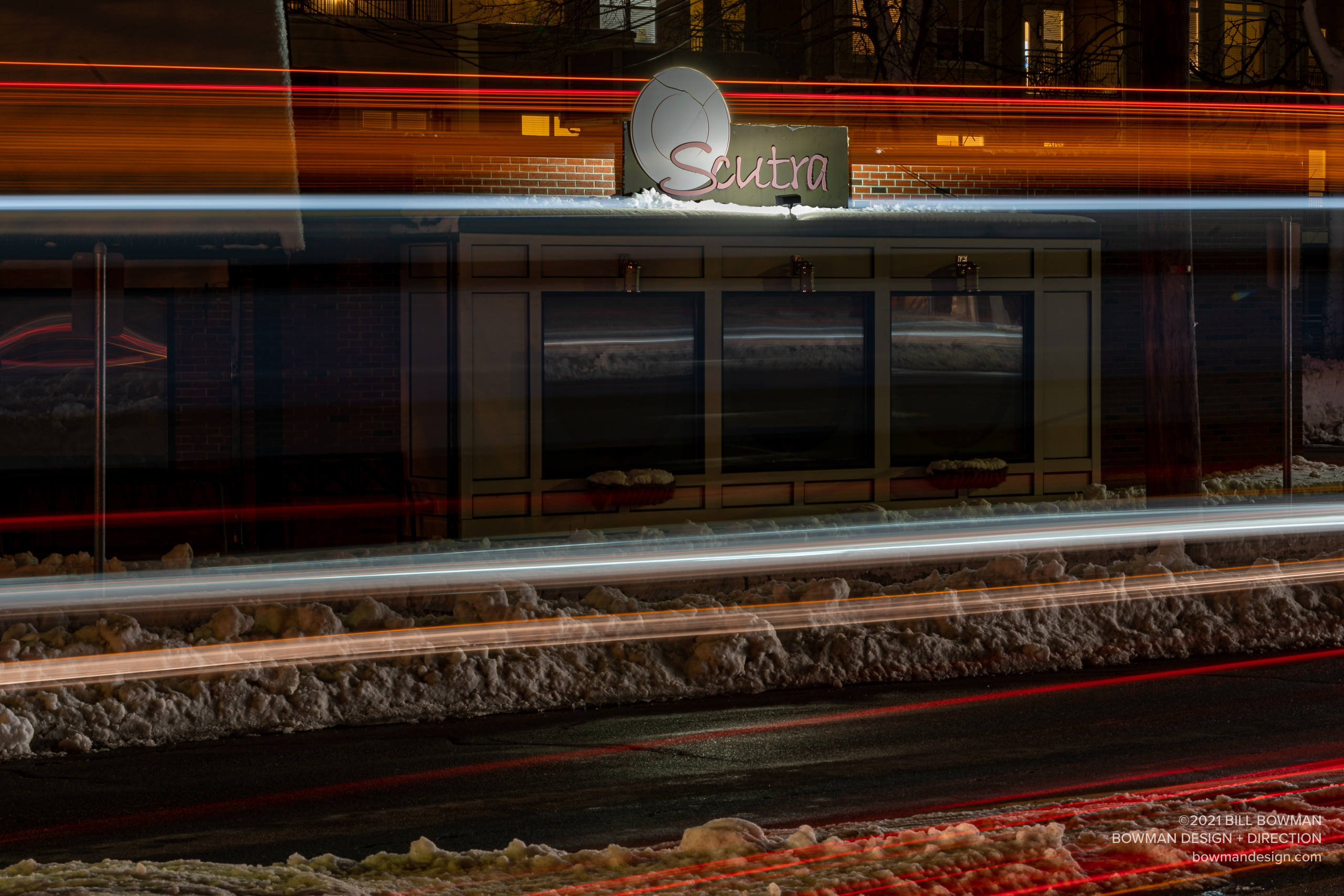
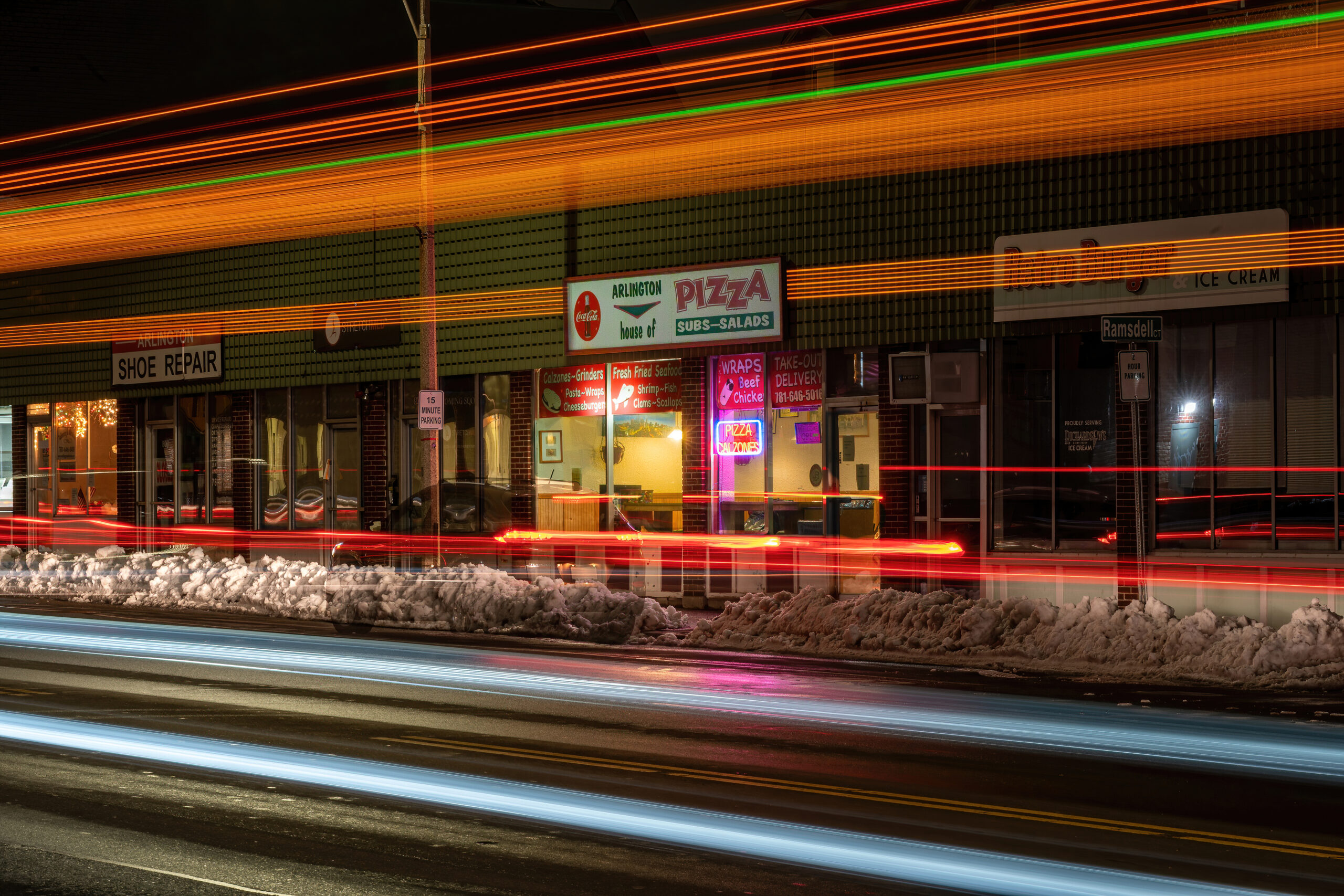
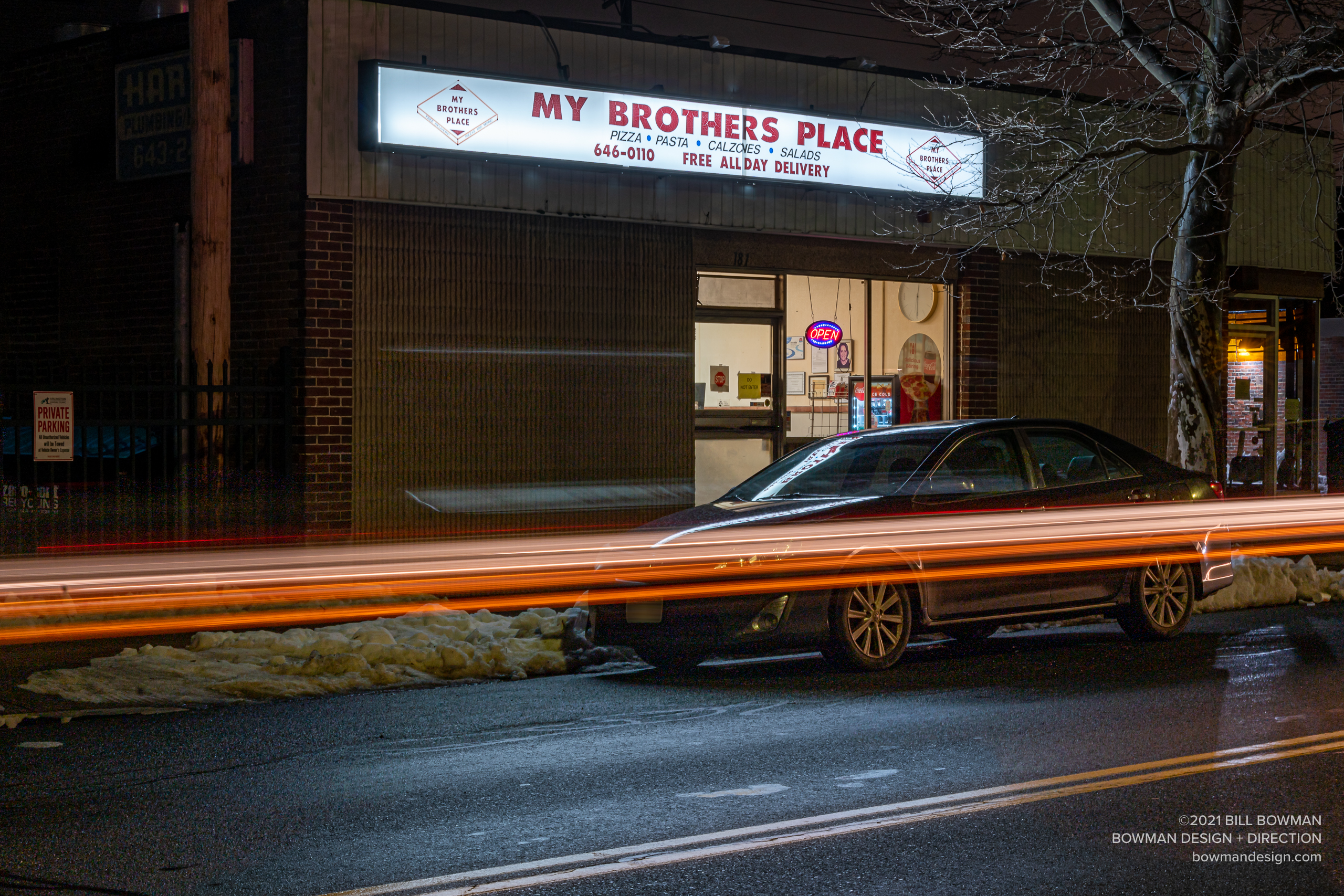
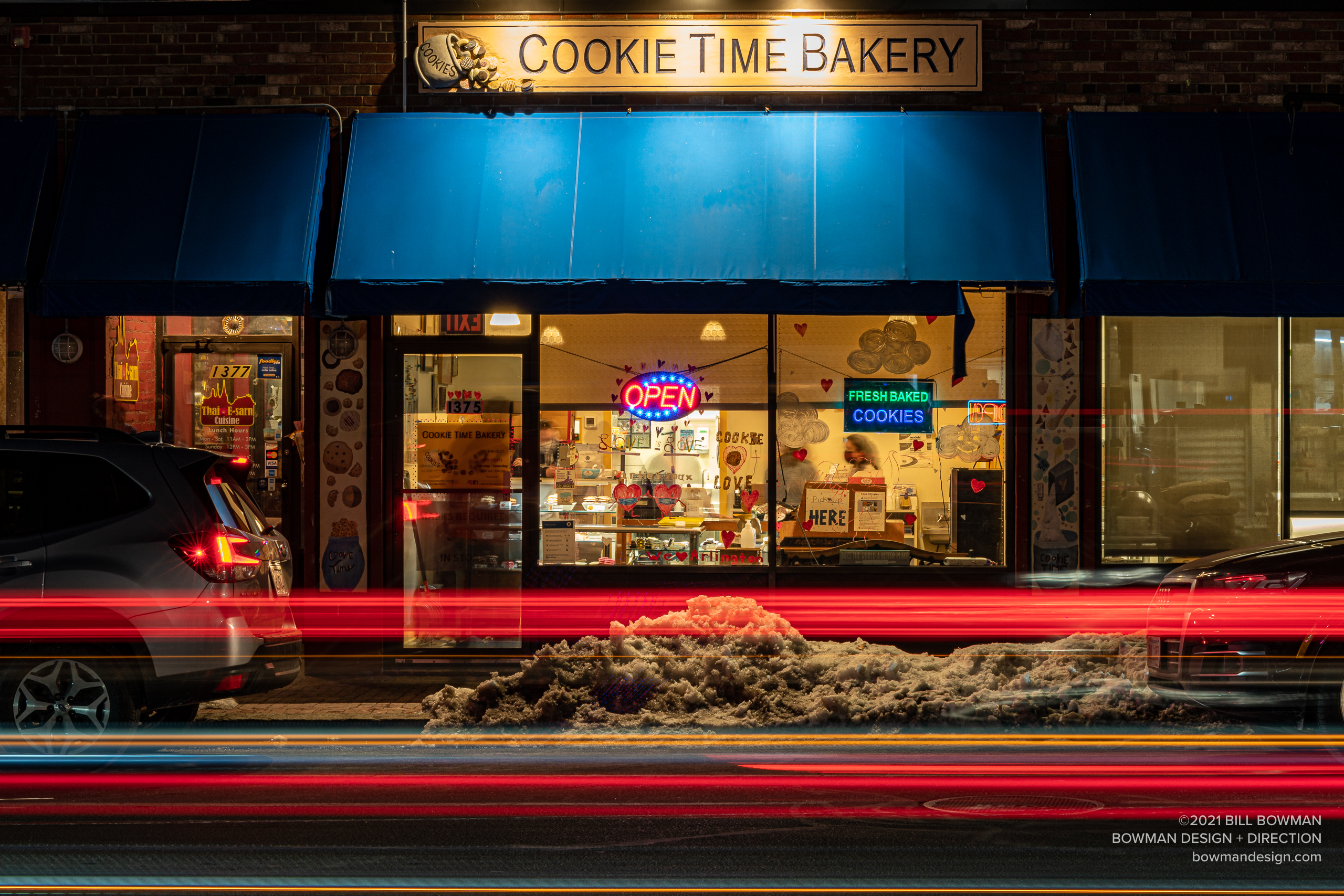
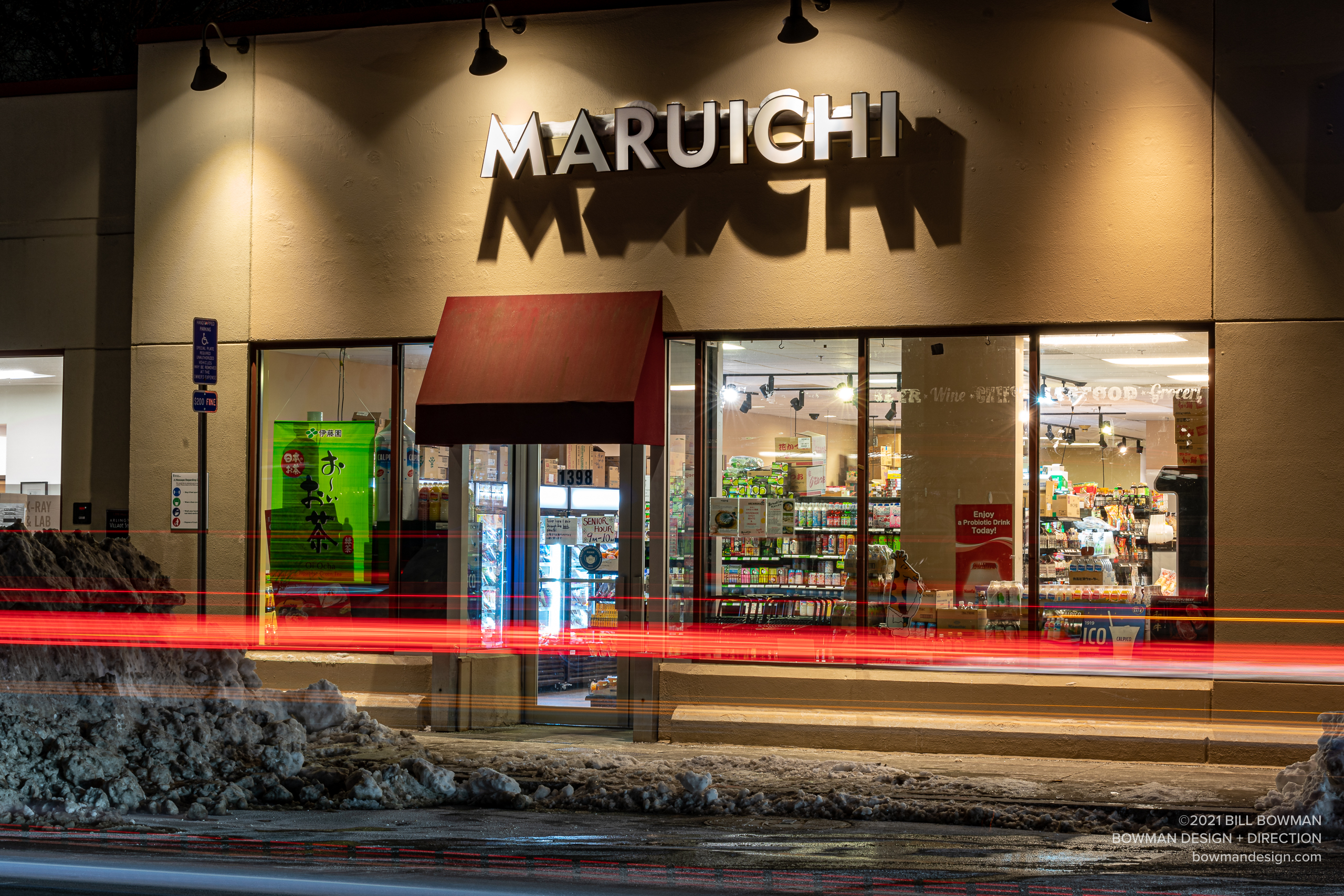
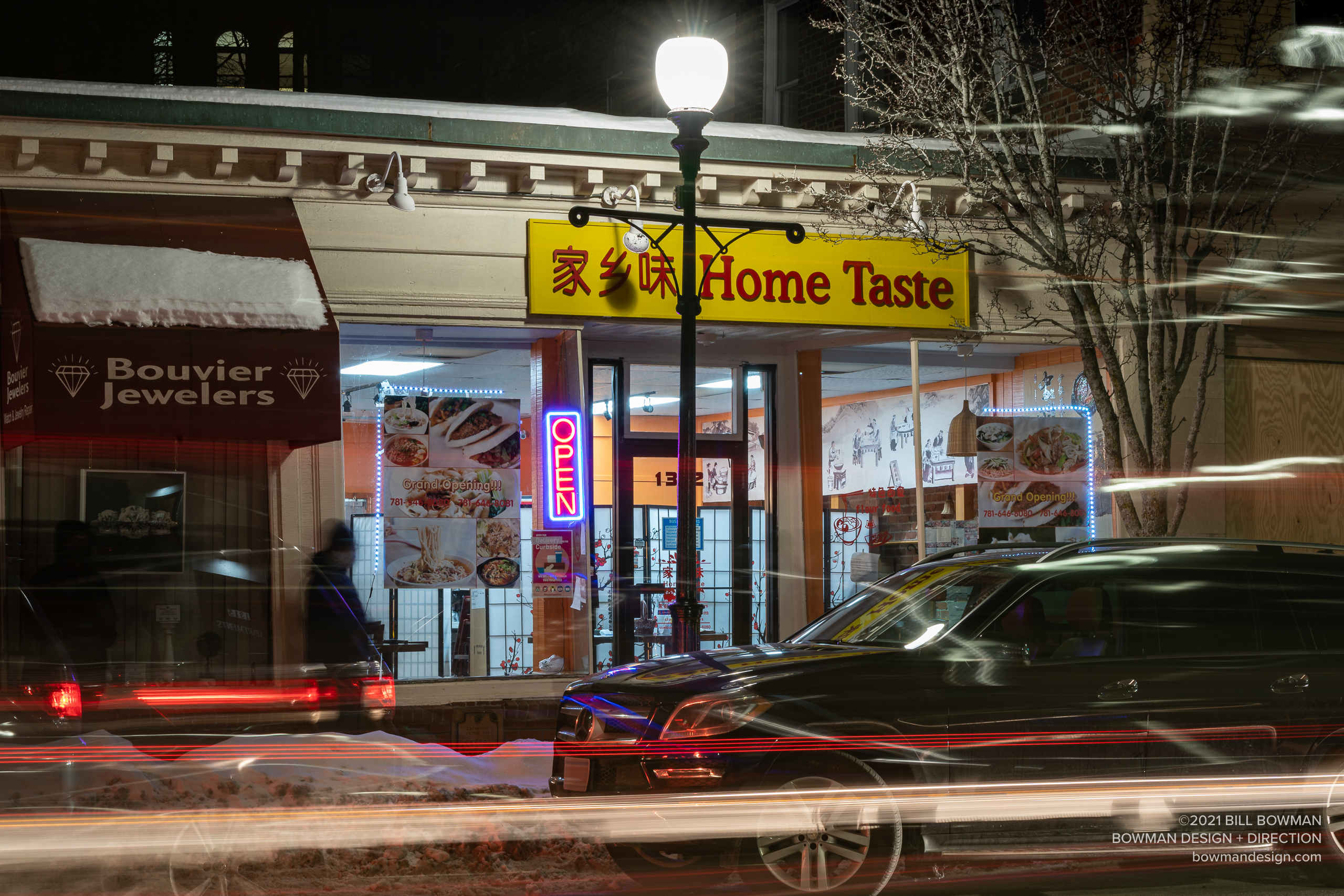
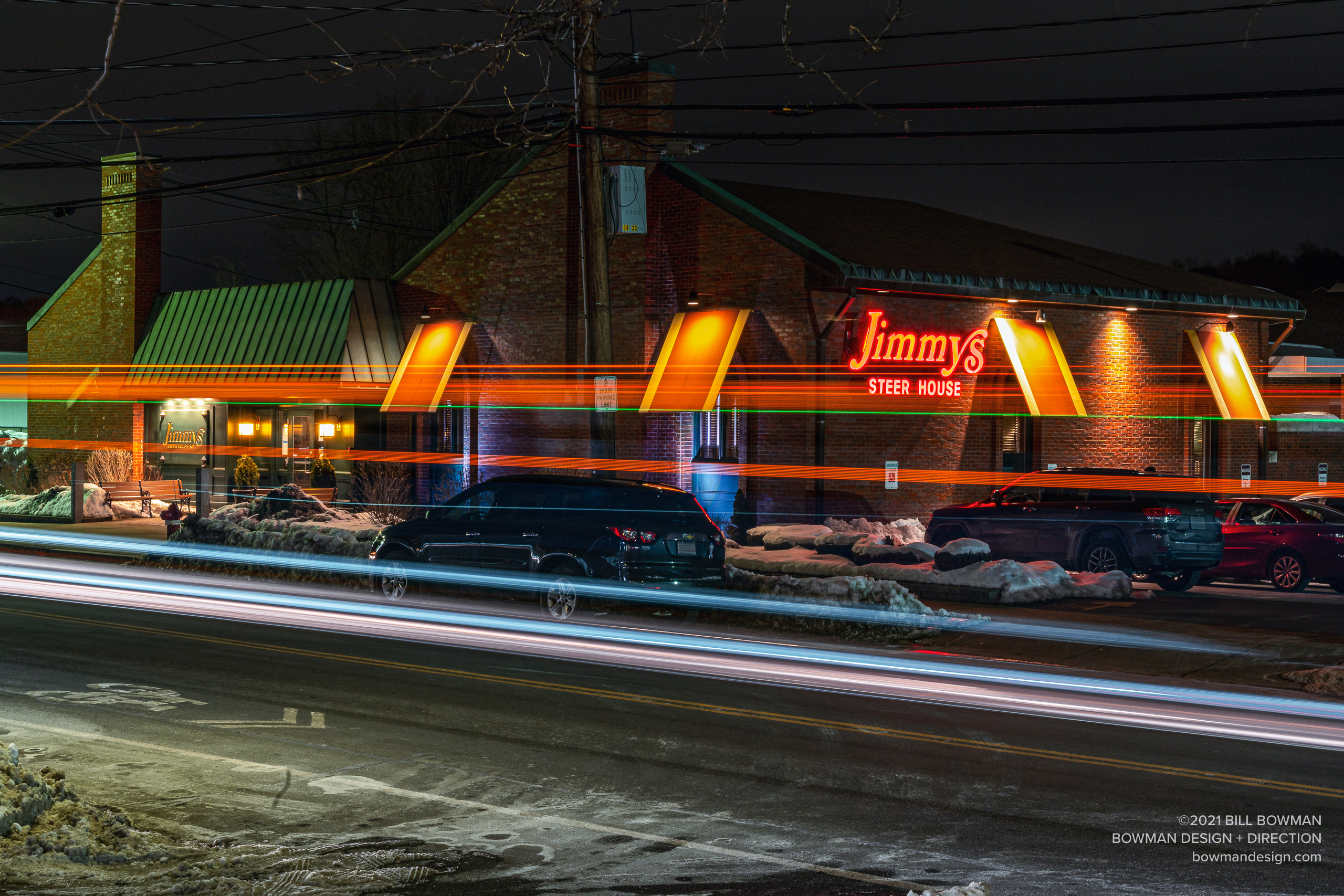
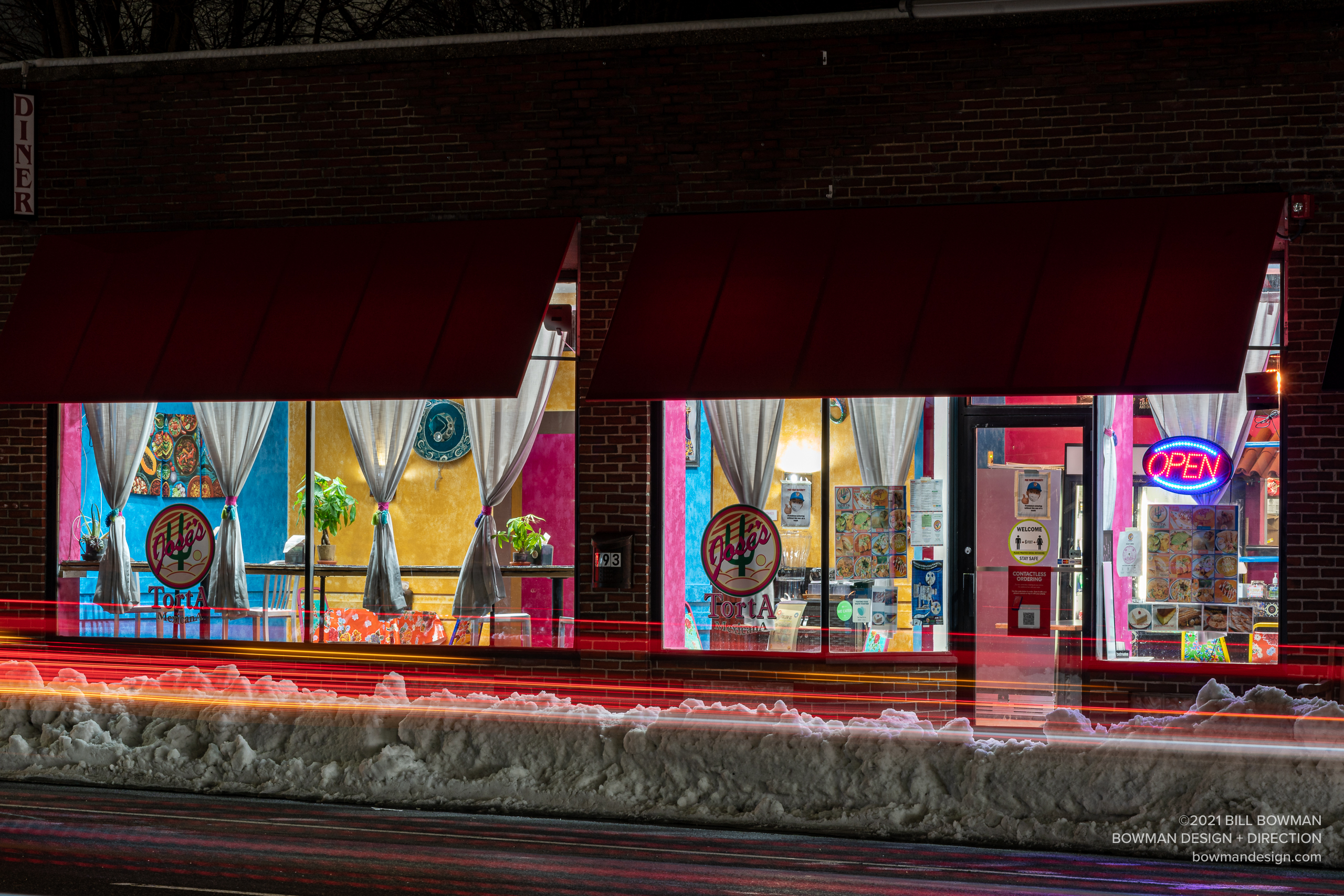
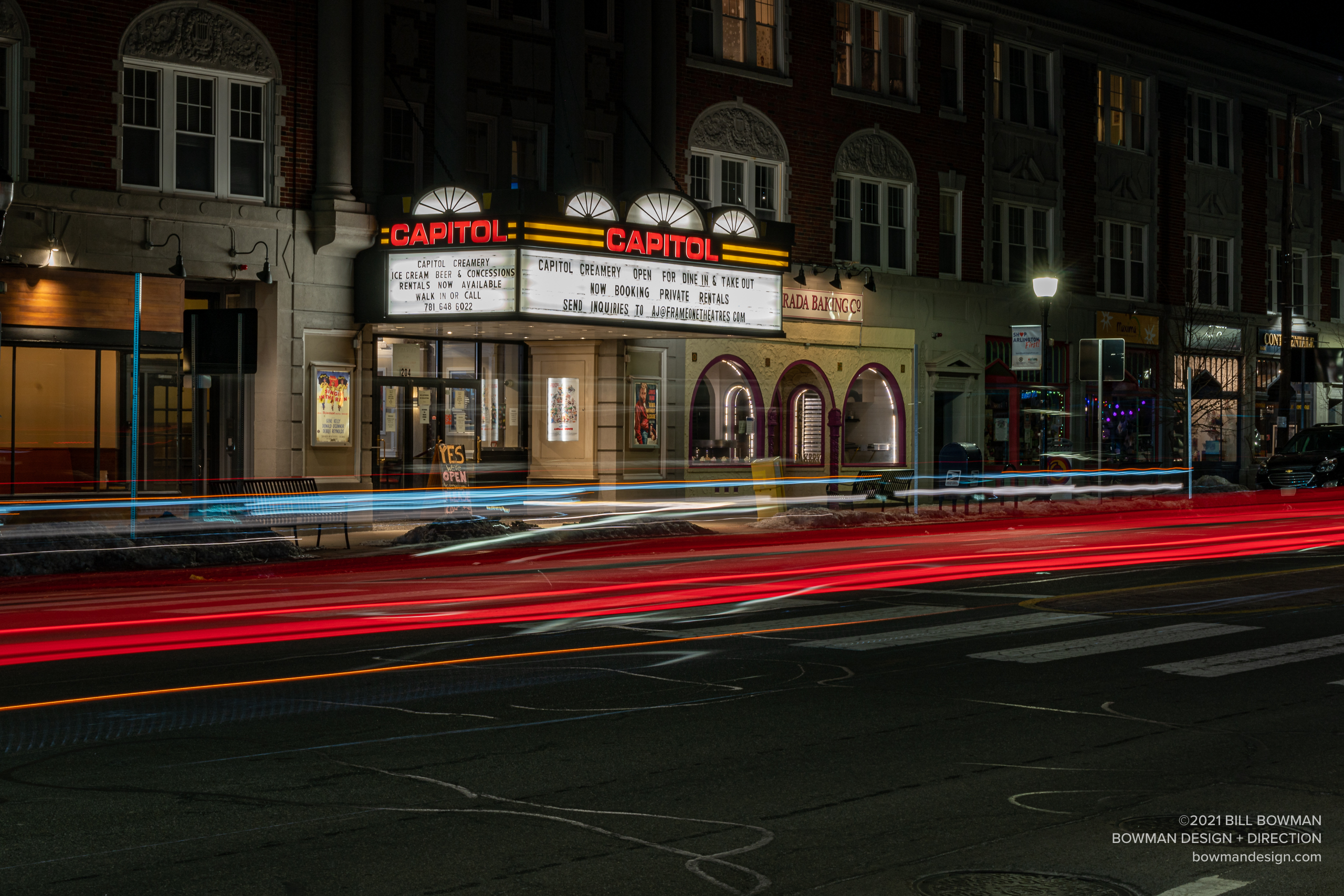
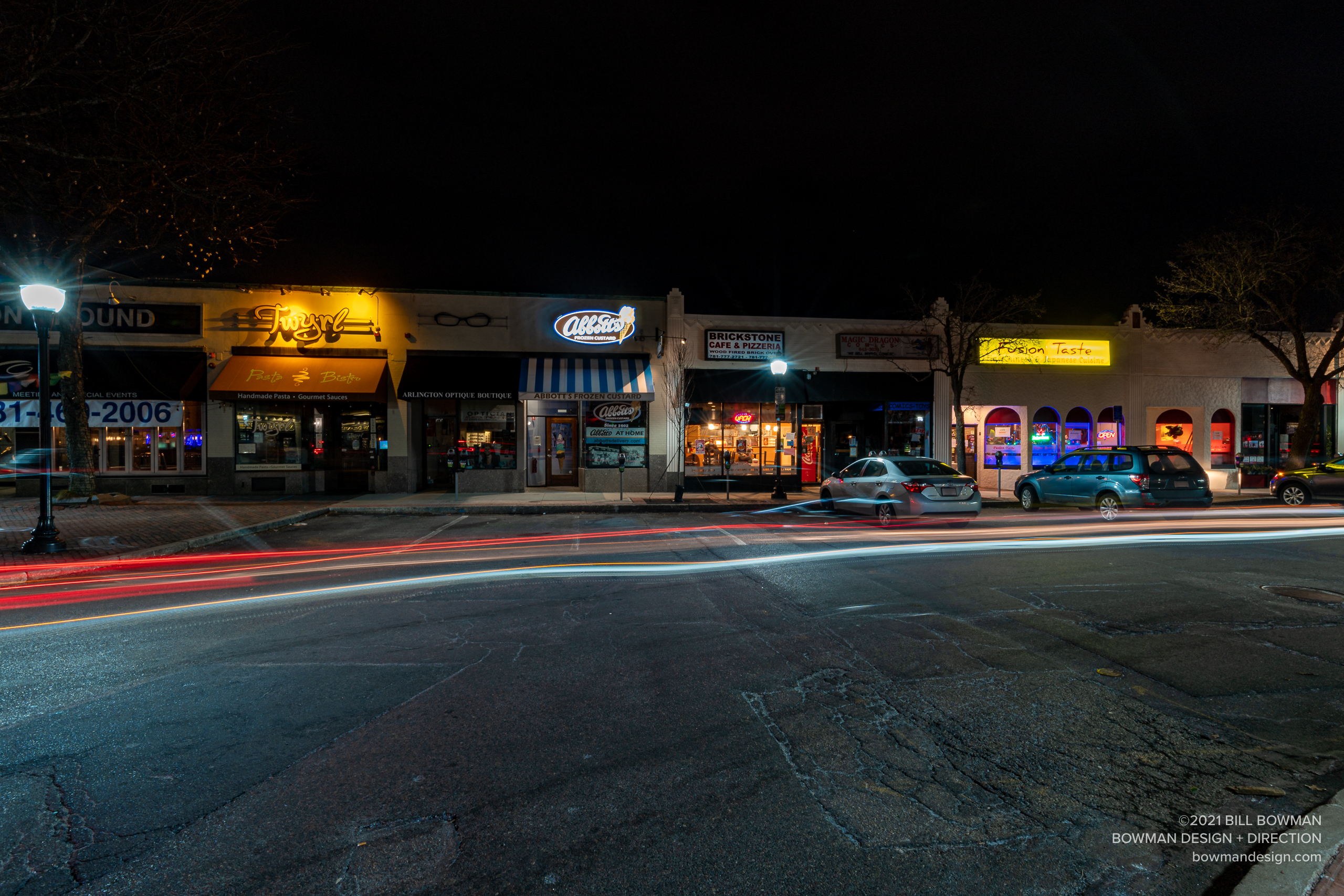
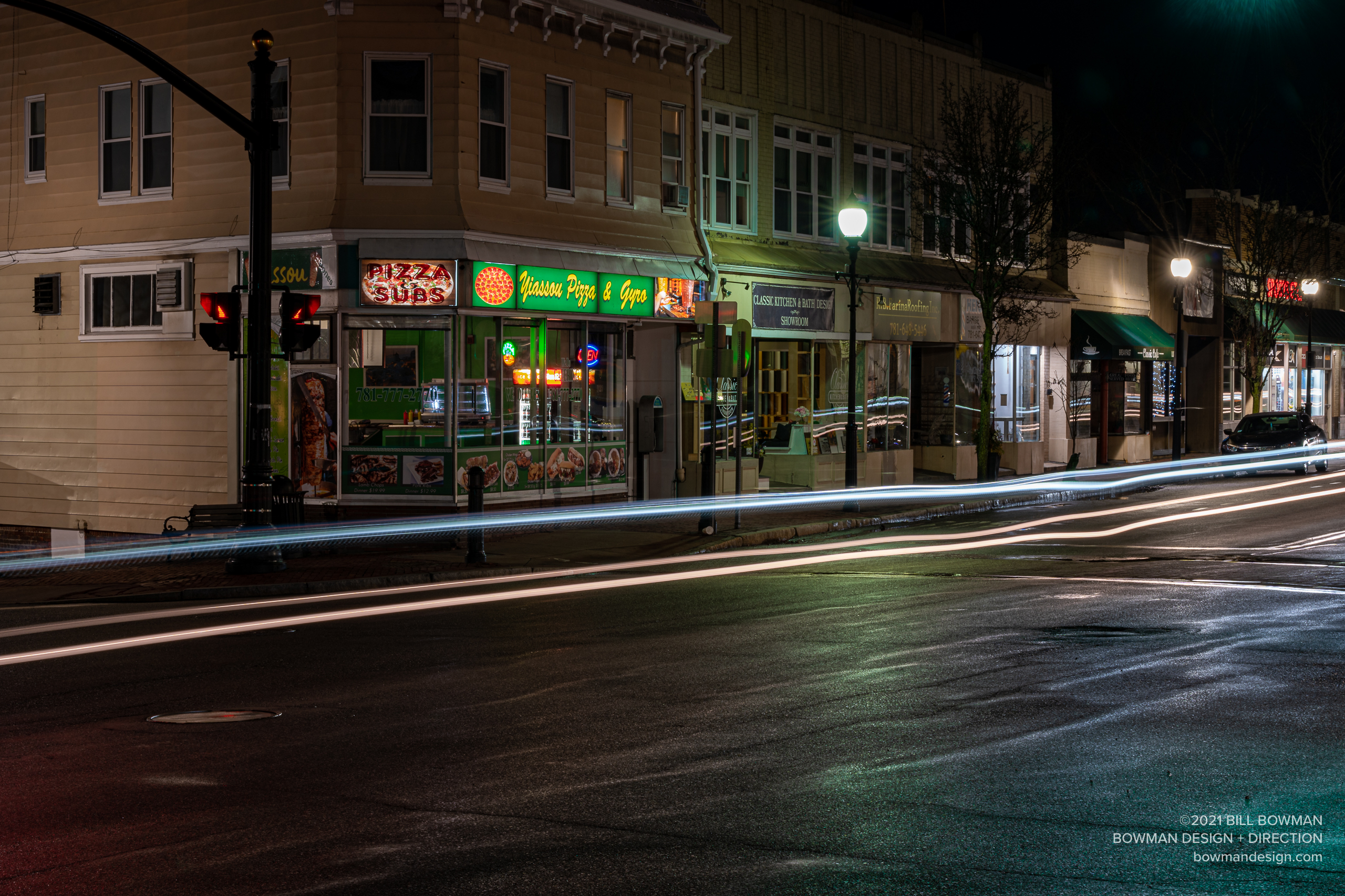
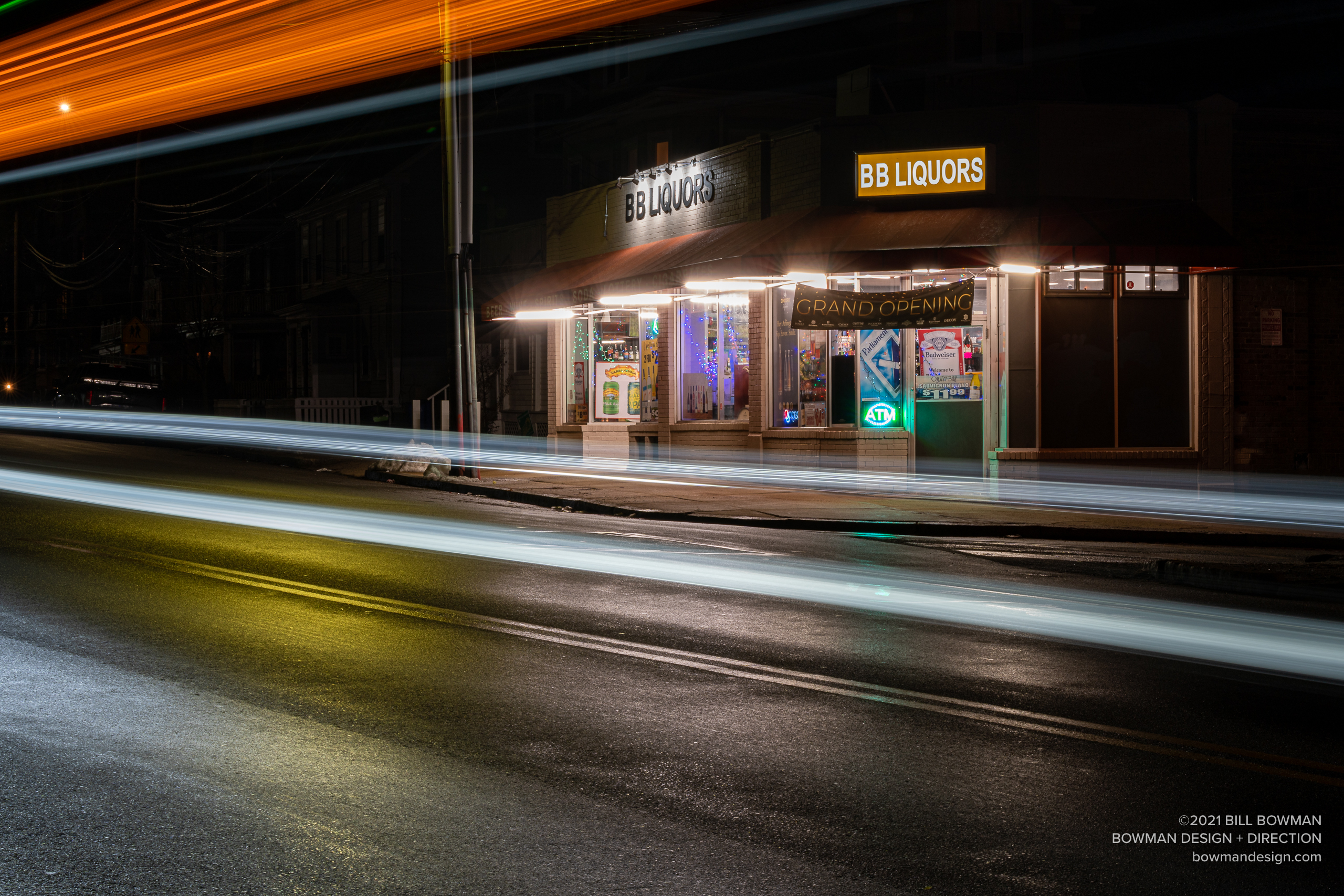
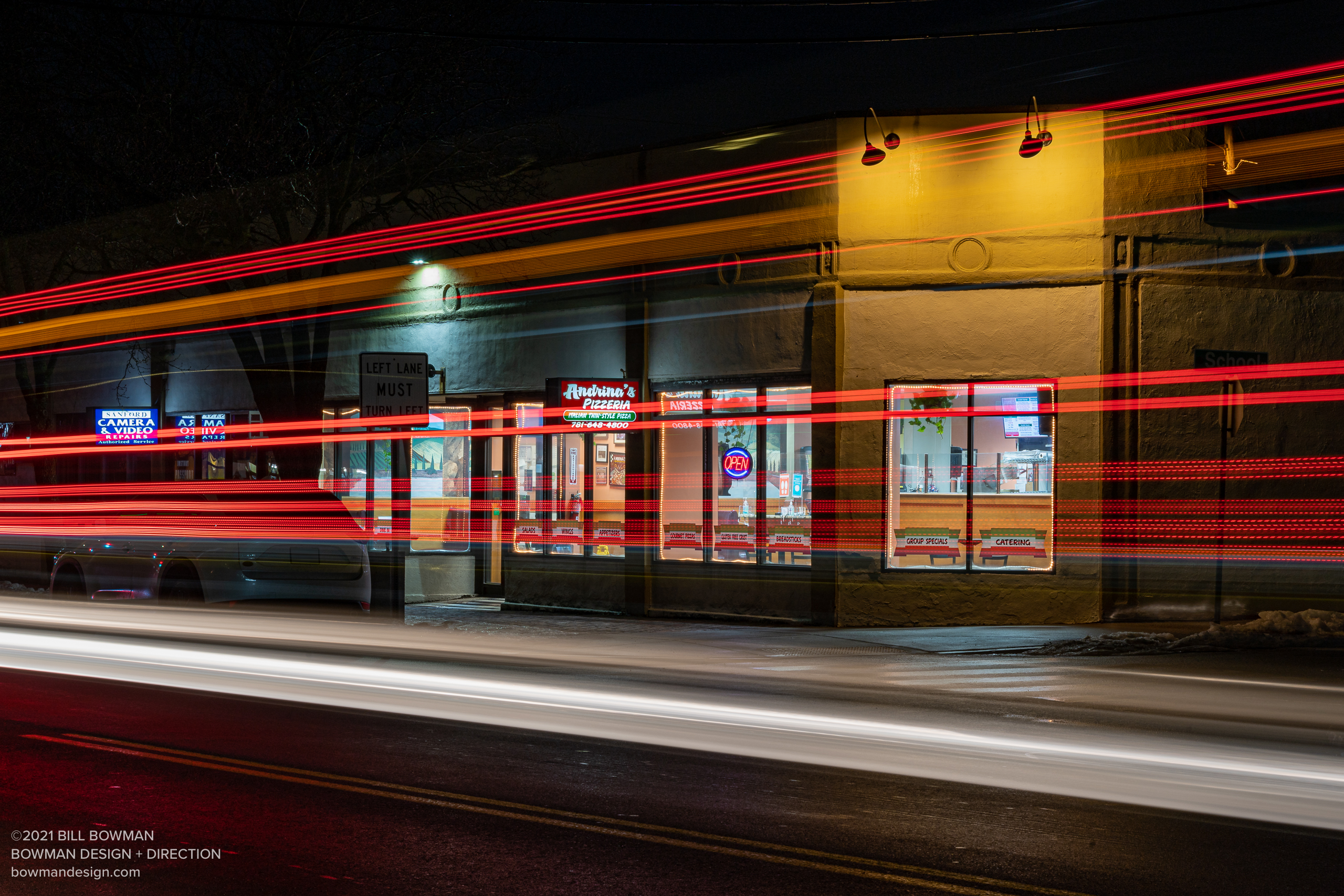
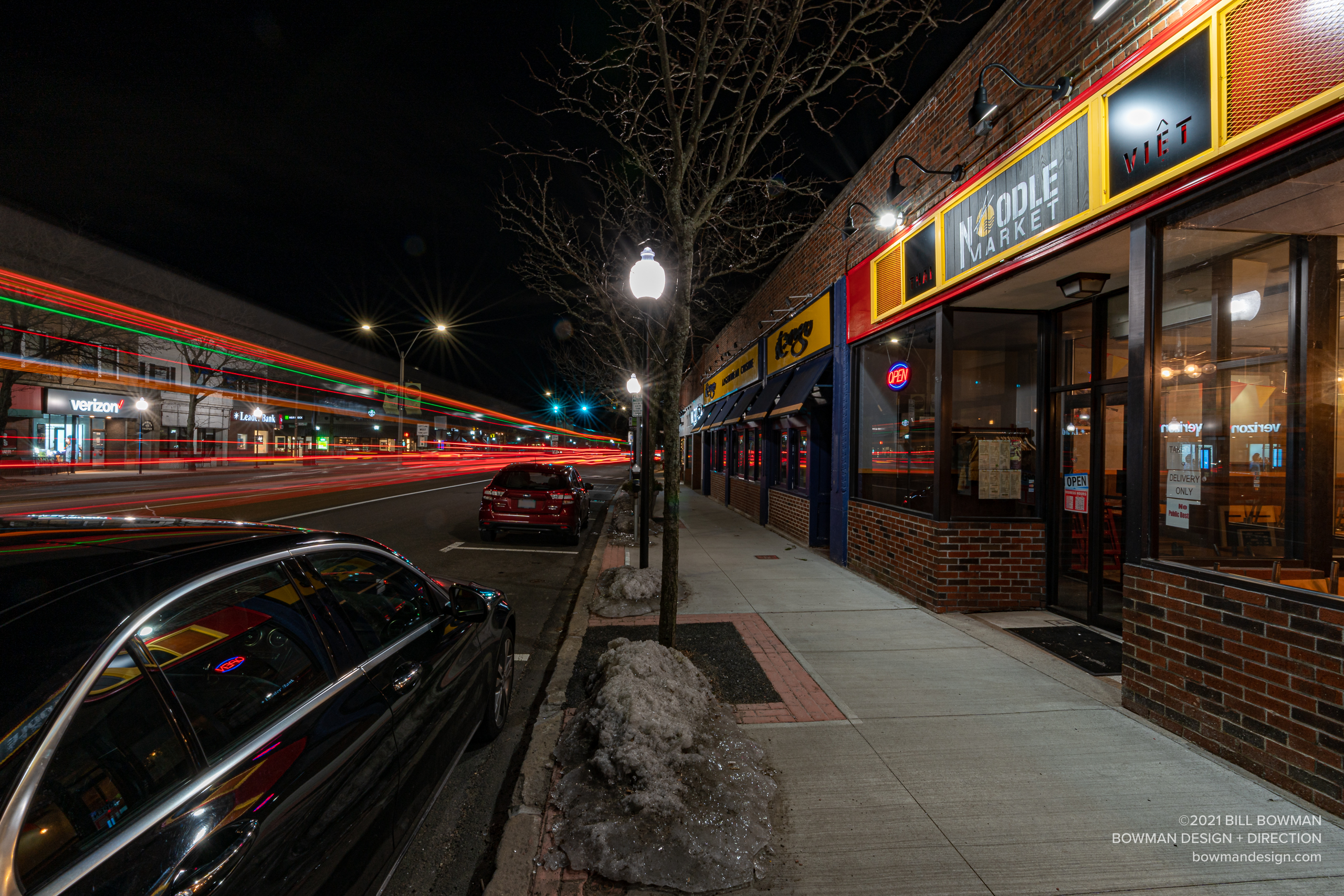
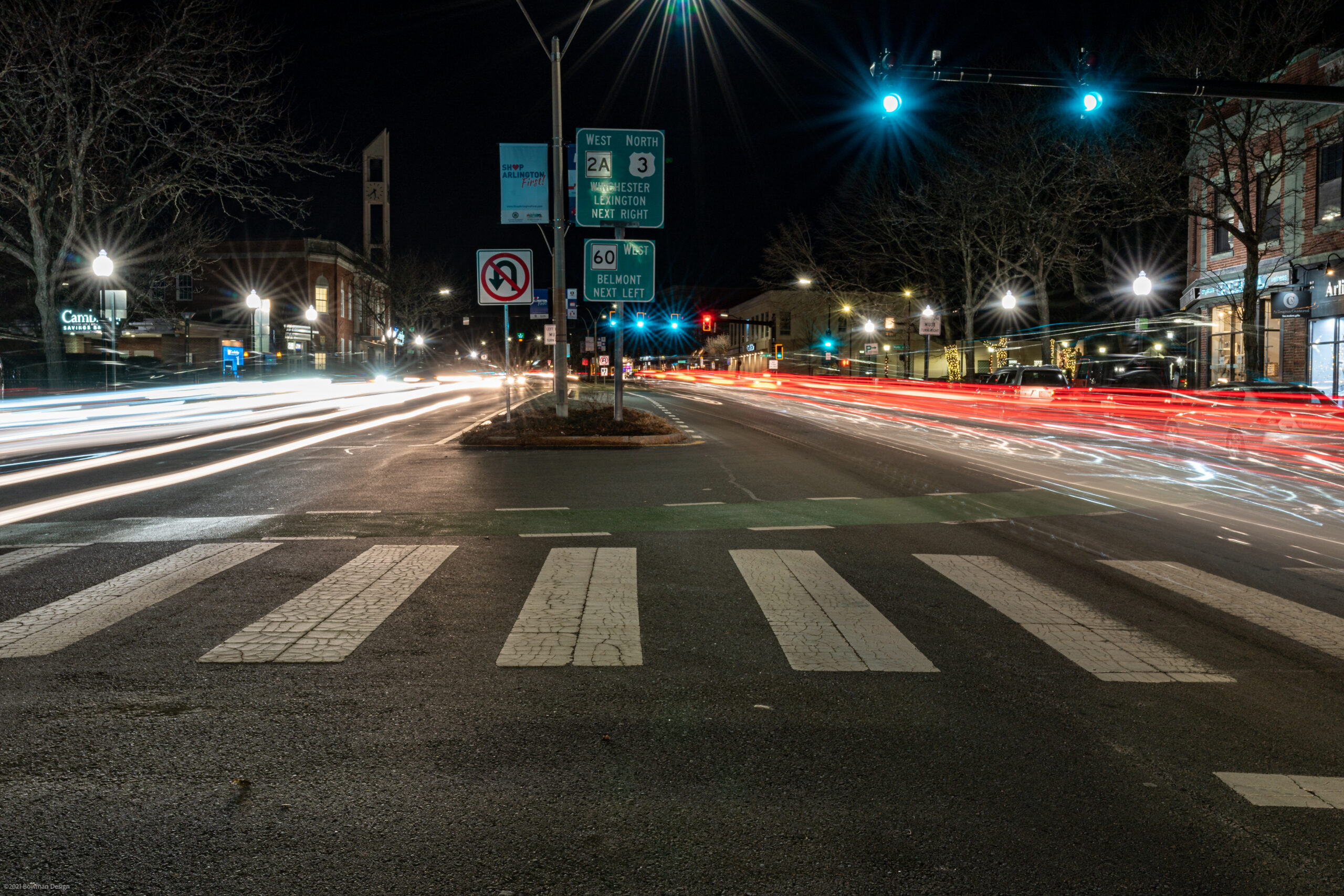
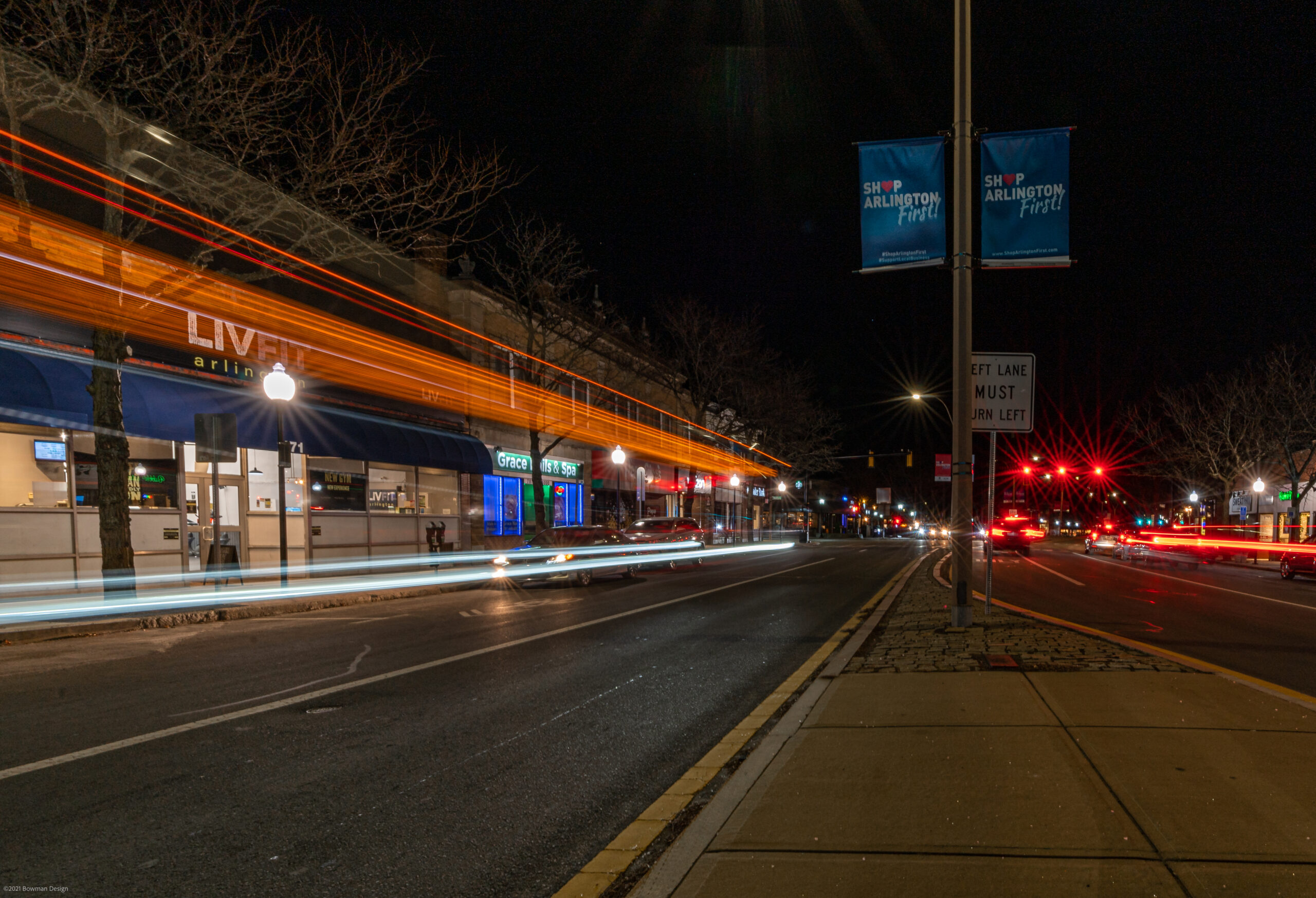
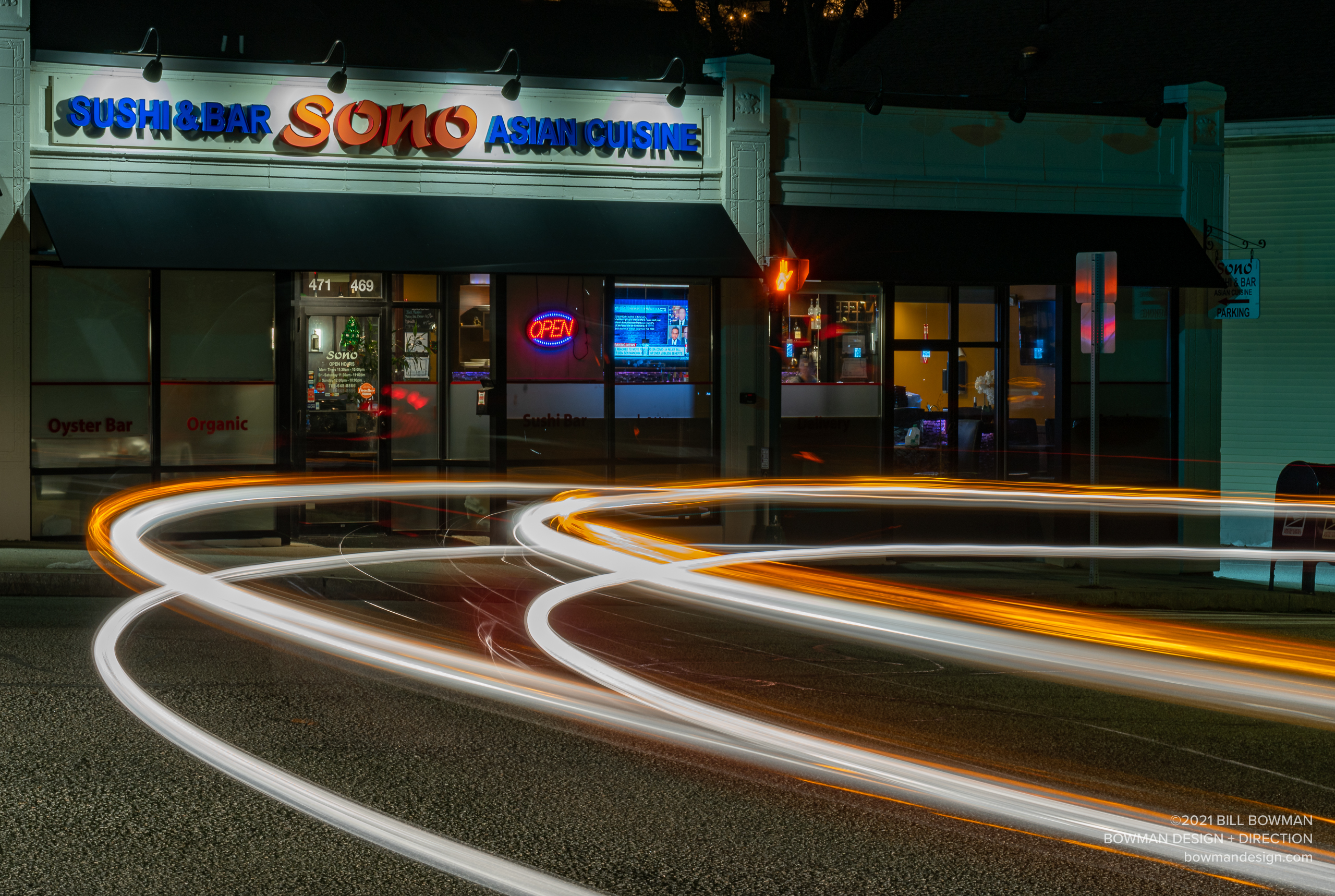
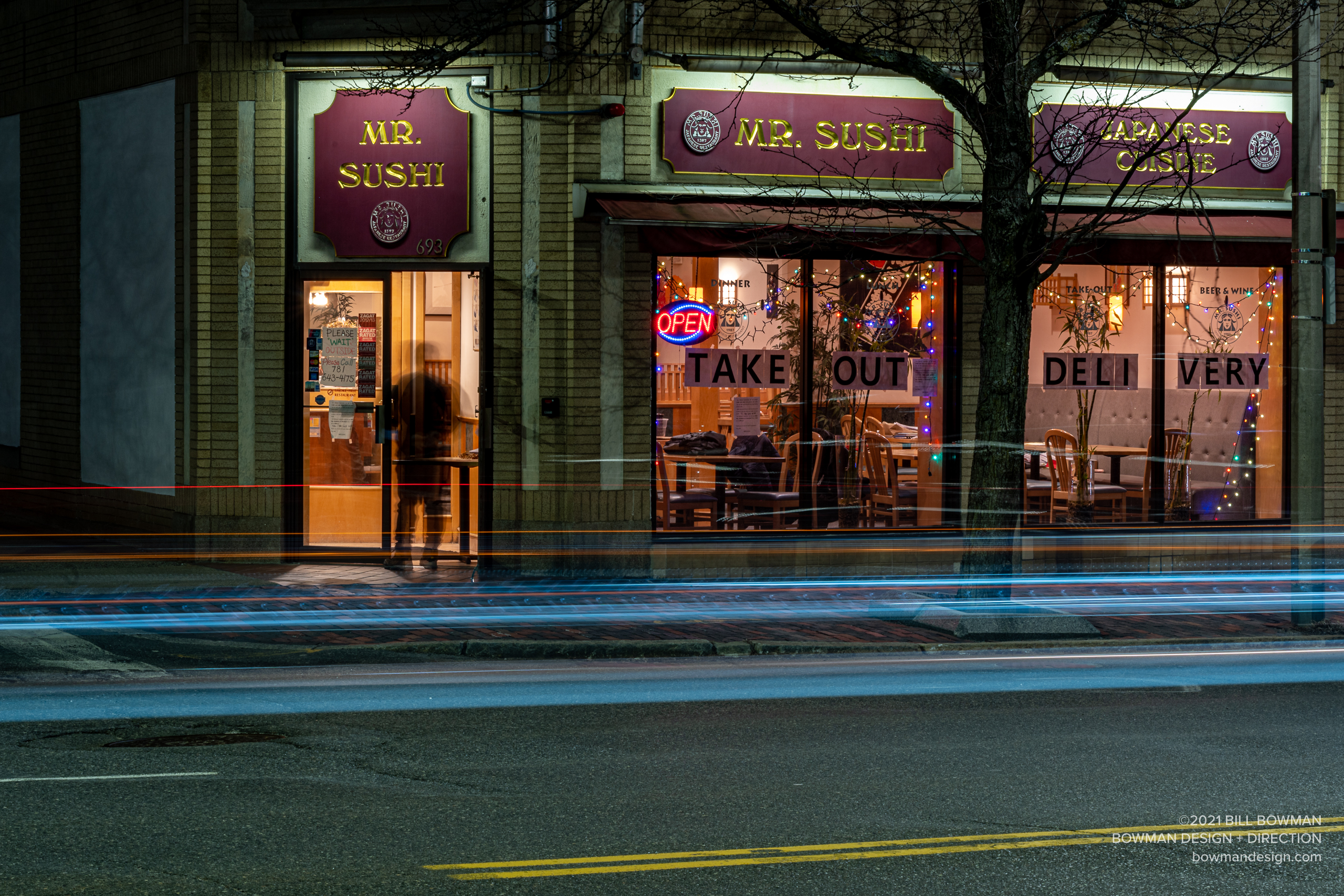
A long exposure holds the shutter open until faint light adds up to a picture. Thirty seconds of a winter street turned passing cars and MBTA buses into ribbons of light running past lit kitchens and full takeout counters. In one frame, that was proof the community was still moving and the restaurants were still cooking. The photographs made Arlington look alive because it was alive. Each one then carried a post written to close the distance between wanting to help and placing an order: the standout dishes, an owner’s story, the curbside and delivery routine, hours, phone, and a public setting so the restaurant could share it as its own.
Outcome
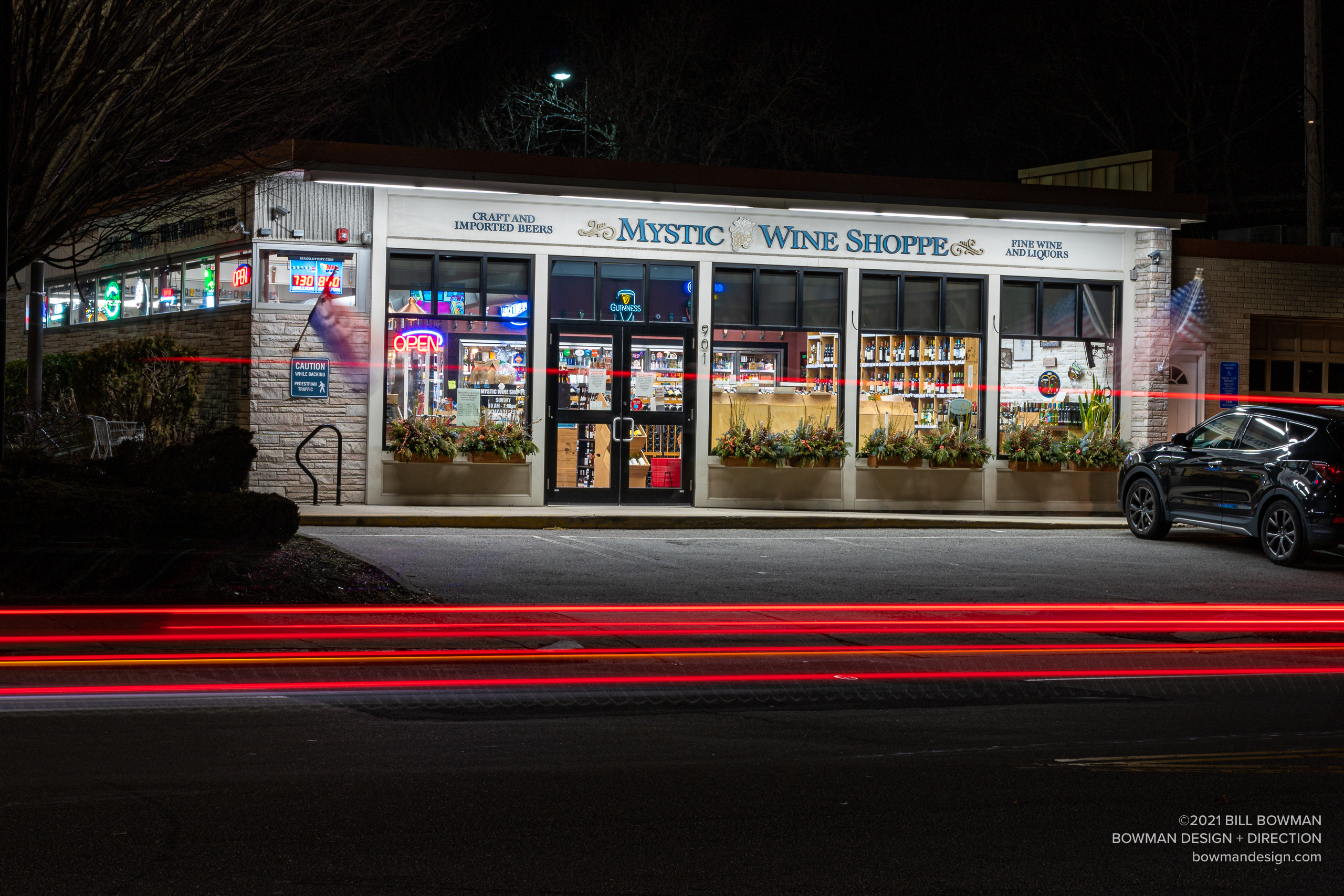
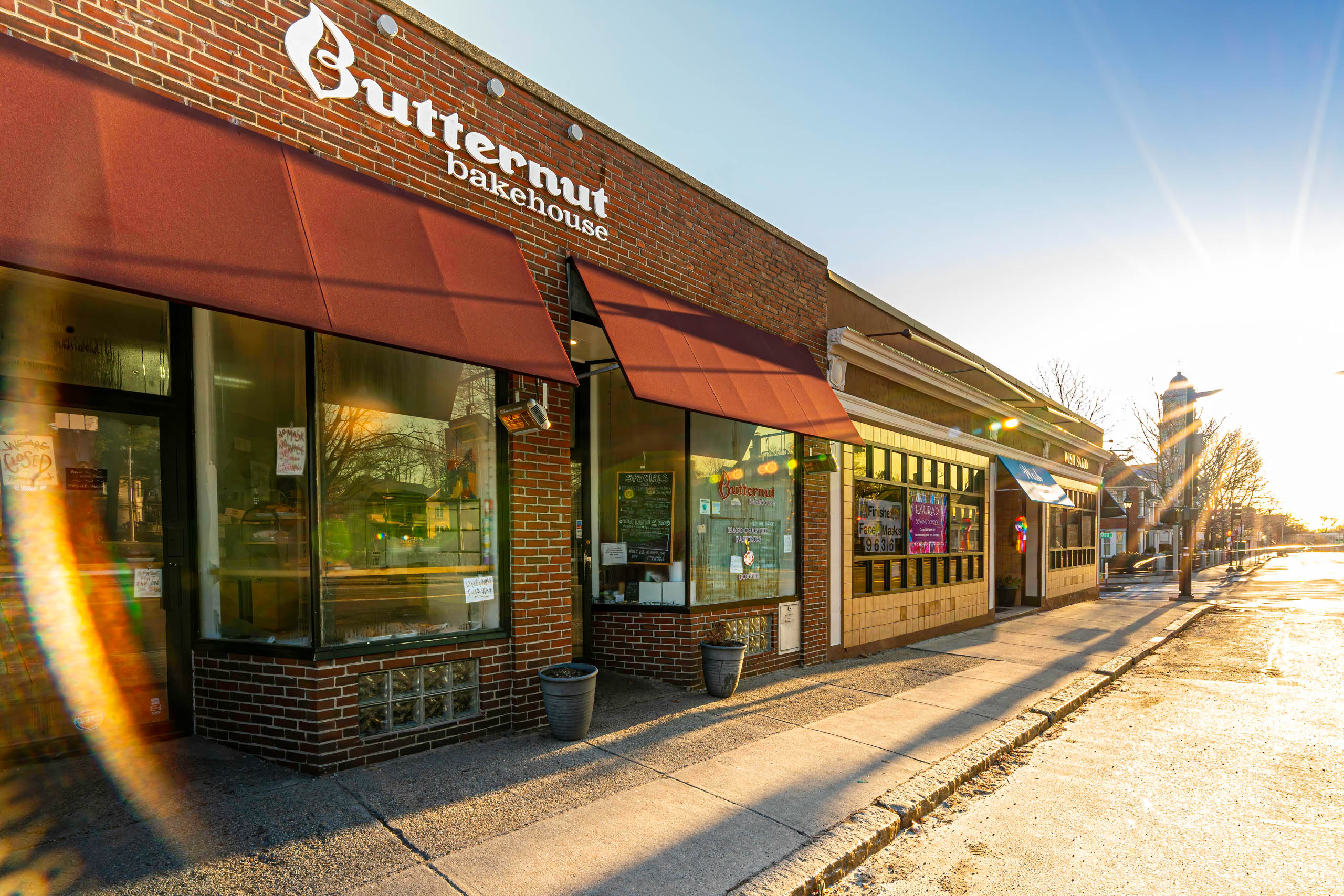
Residents saw their town again and acted on it. Across the tracked posts on Facebook and The Arlington List, the series drew 3,953 reactions and 569 comments. One boosted post reached 17,400 people and generated 7,700 engagements at $0.07 each. Butternut Bakehouse reported revenue as much as 30% higher while its promotion ran, I heard similar from most of the owners featured, and The Arlington List asked for more: 23 more restaurants, then bakeries, florists, a wine shop, a Japanese grocery. The second round, Sweet and Savory Arlington, followed in daylight, and one of its bakeries became a client: I designed and built Arlington Bakery’s new website.
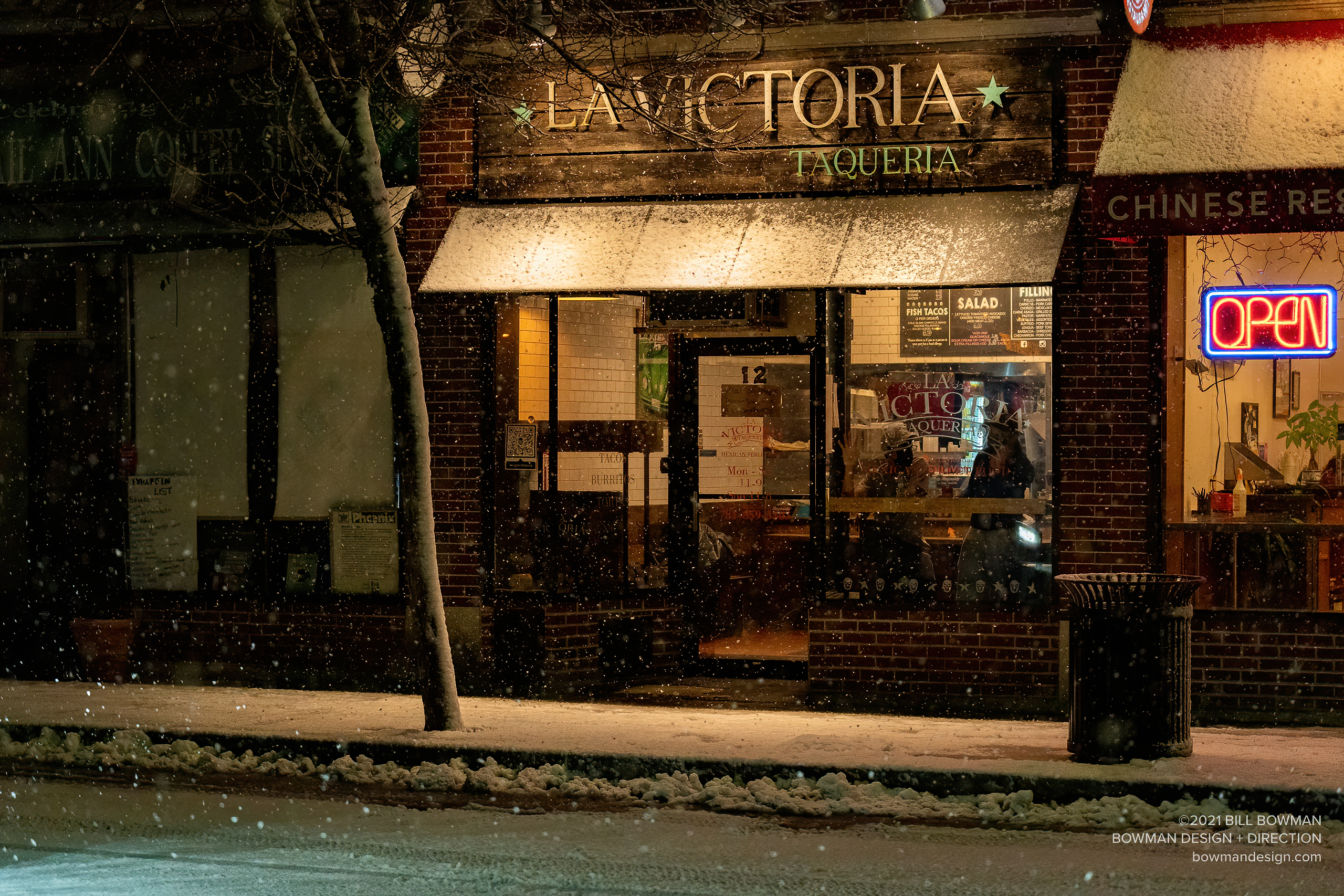
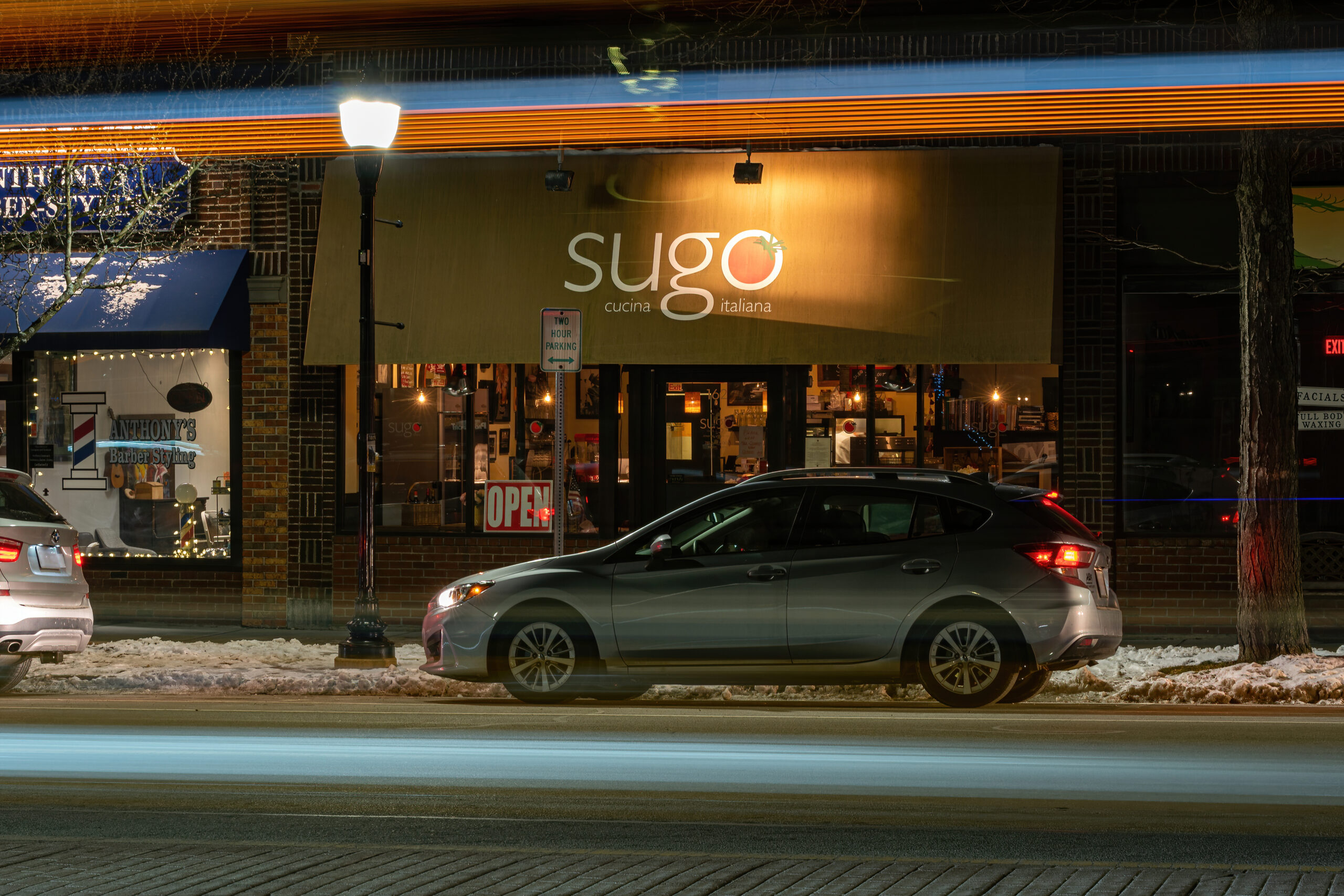
The photographs kept working after the posts scrolled away. Placed on Google Maps beside each restaurant’s listing, where people decide where to eat tonight, they have been viewed more than 4 million times. Sugo Cucina Italiana alone has passed 2 million, La Victoria Taqueria is near 1 million, and Twyrl Pasta Bistro had passed 340,000. Five years later, a campaign begun during one month of winter walking is still open for dinner.
Takeaway
The campaign worked the way the photographs did. It stayed open long enough for the light to add up: one storefront a night, one post at a time, placed where neighbors were already deciding where to eat, until a town that looked dark could see itself open for business. The same discipline I bring to a client’s brand sat underneath a walk through my own town. Find the one uncertainty standing in the way, then remove it everywhere it appears.
The goodwill was already there. What Arlington lacked was a picture, a menu, and a phone number. Heart supplied the picture. Experience supplied the menu and the phone number, and made sure all three arrived together, at the moment a neighbor was deciding where dinner would come from.
What We Built
Night Photography
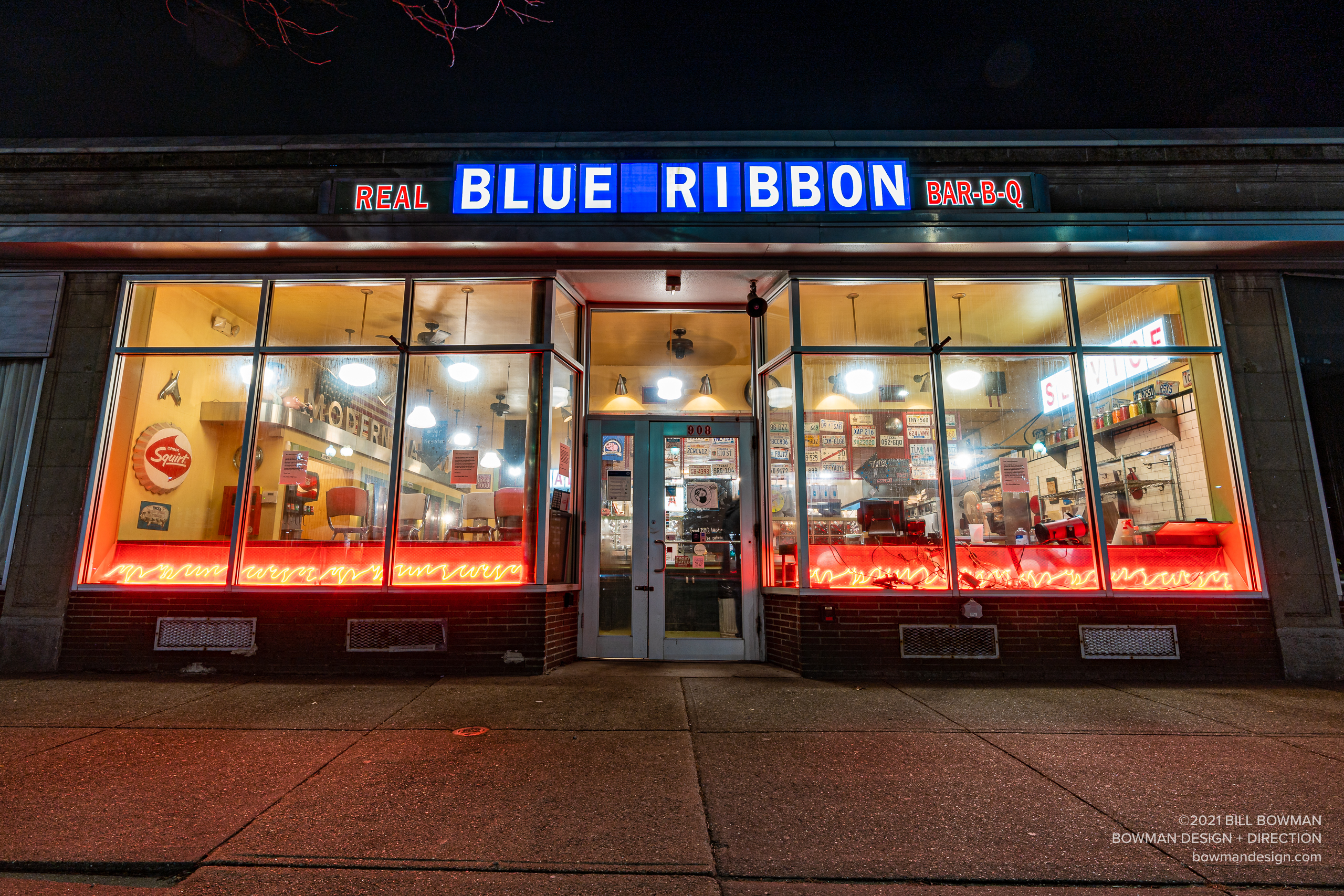
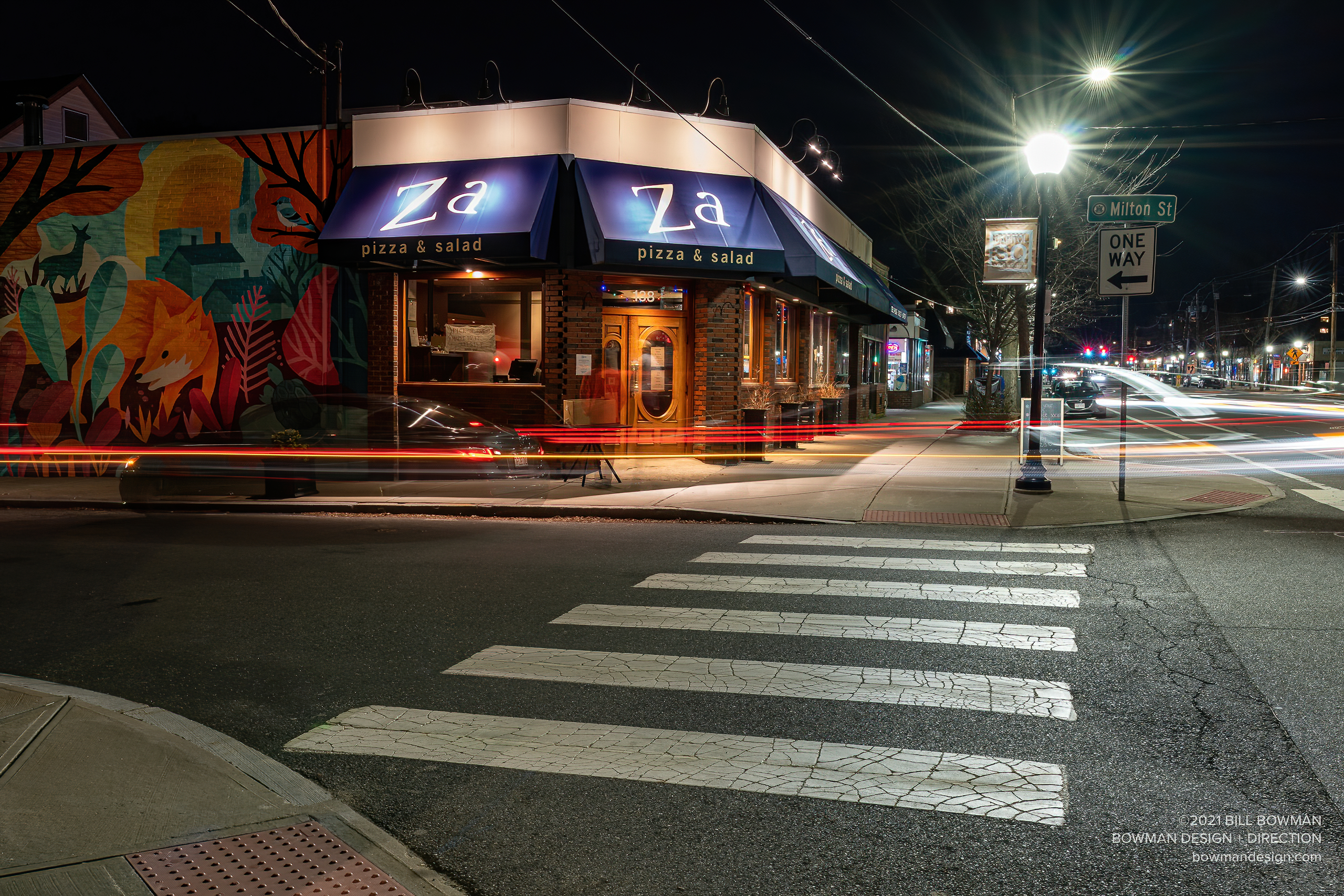
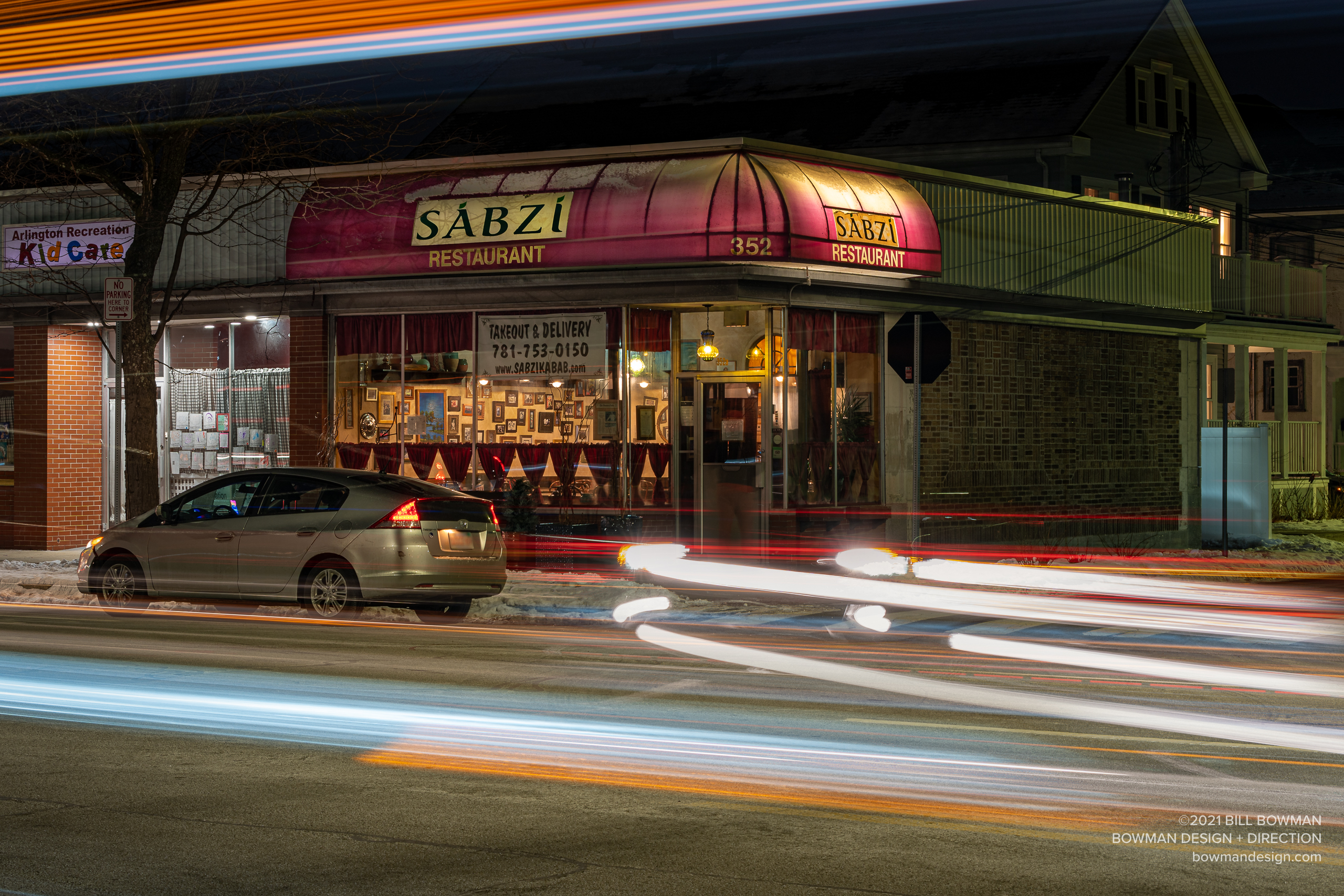
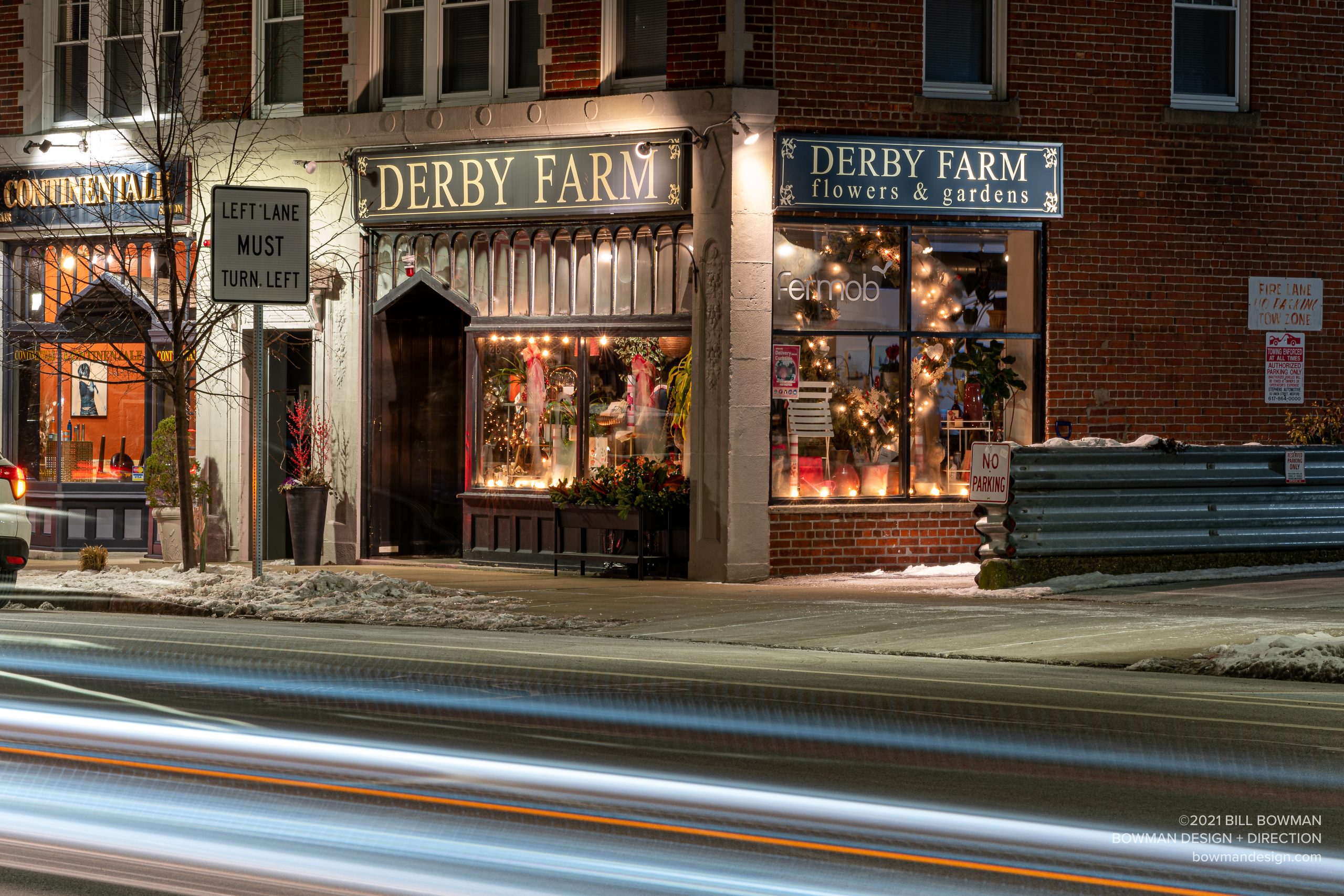
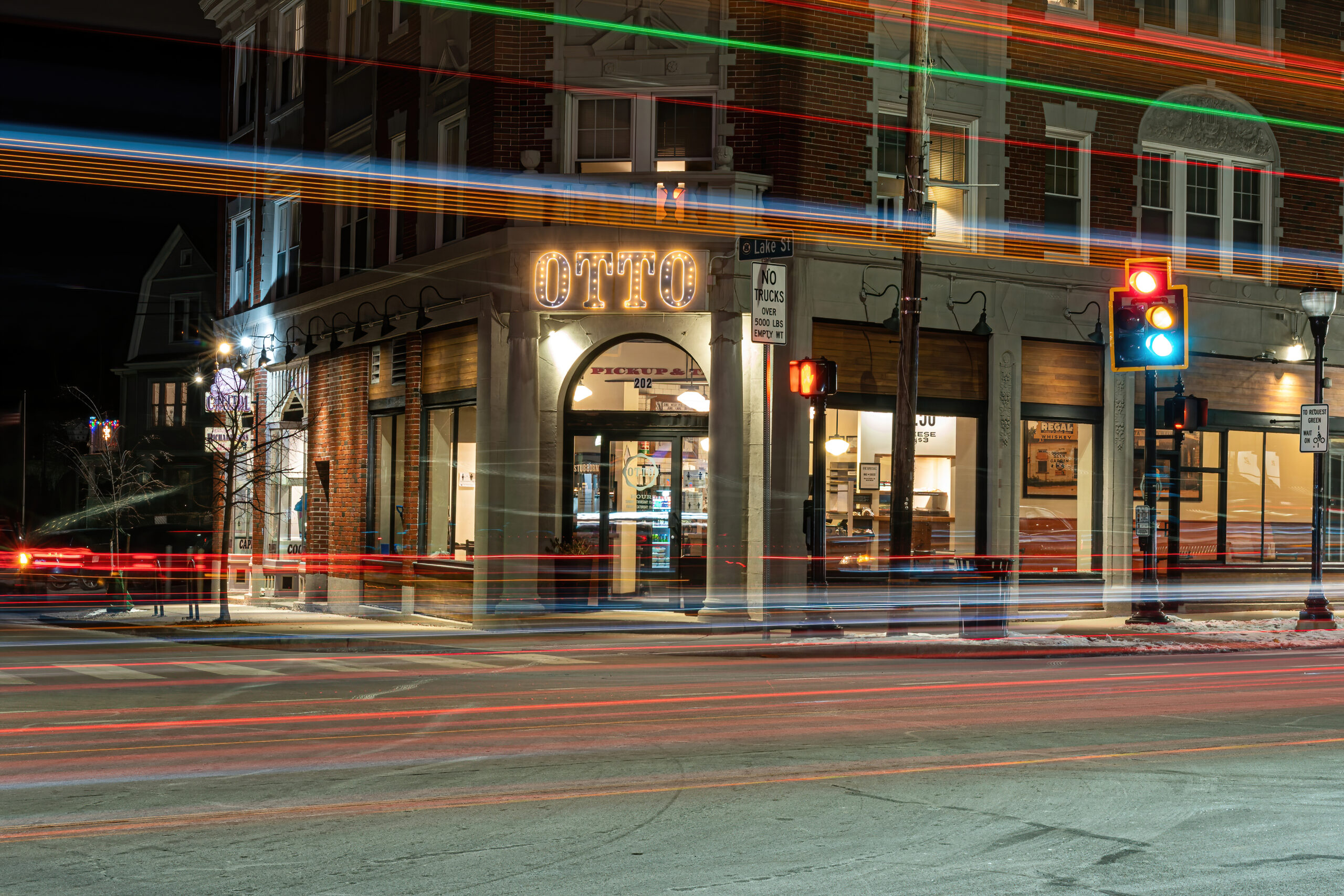
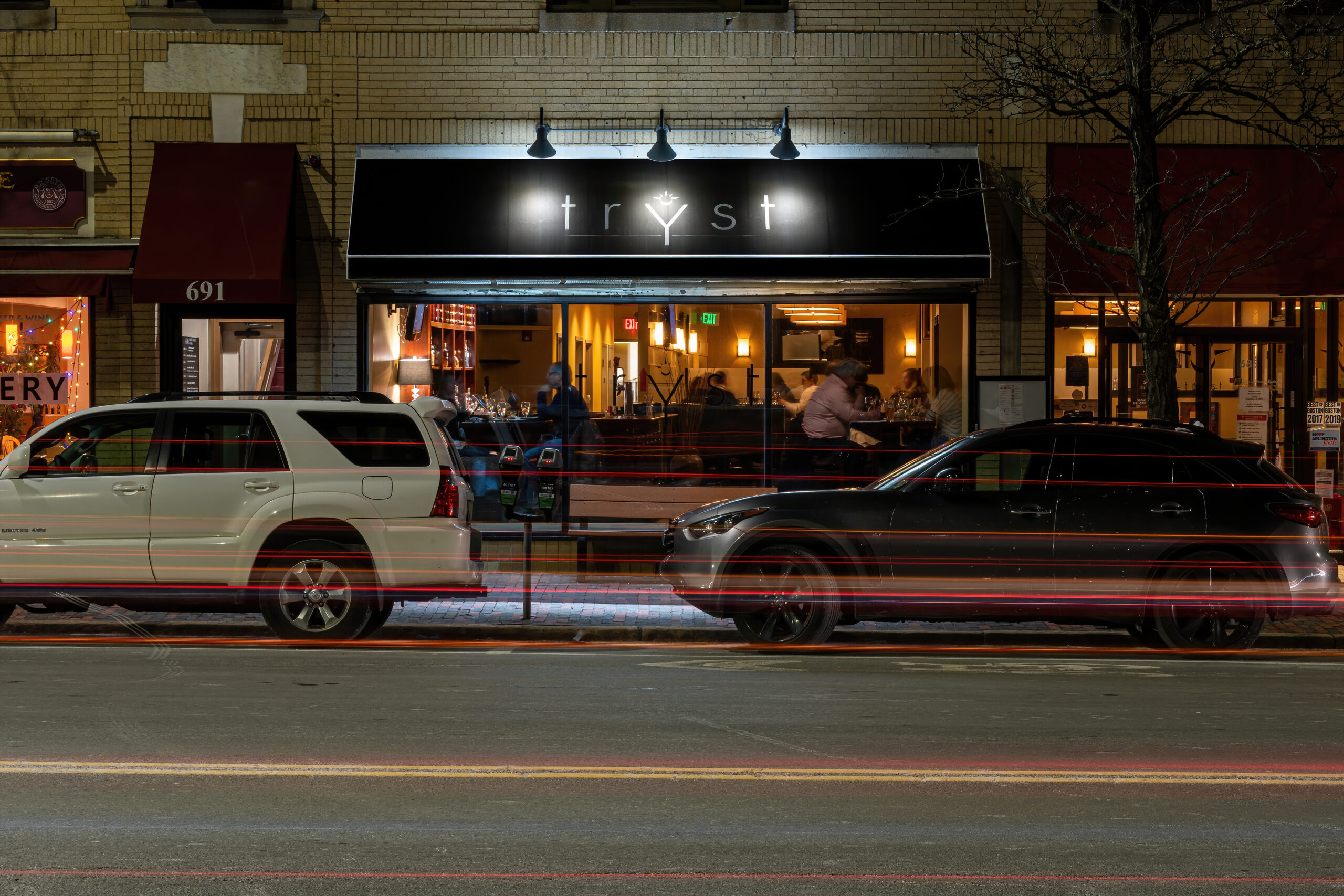
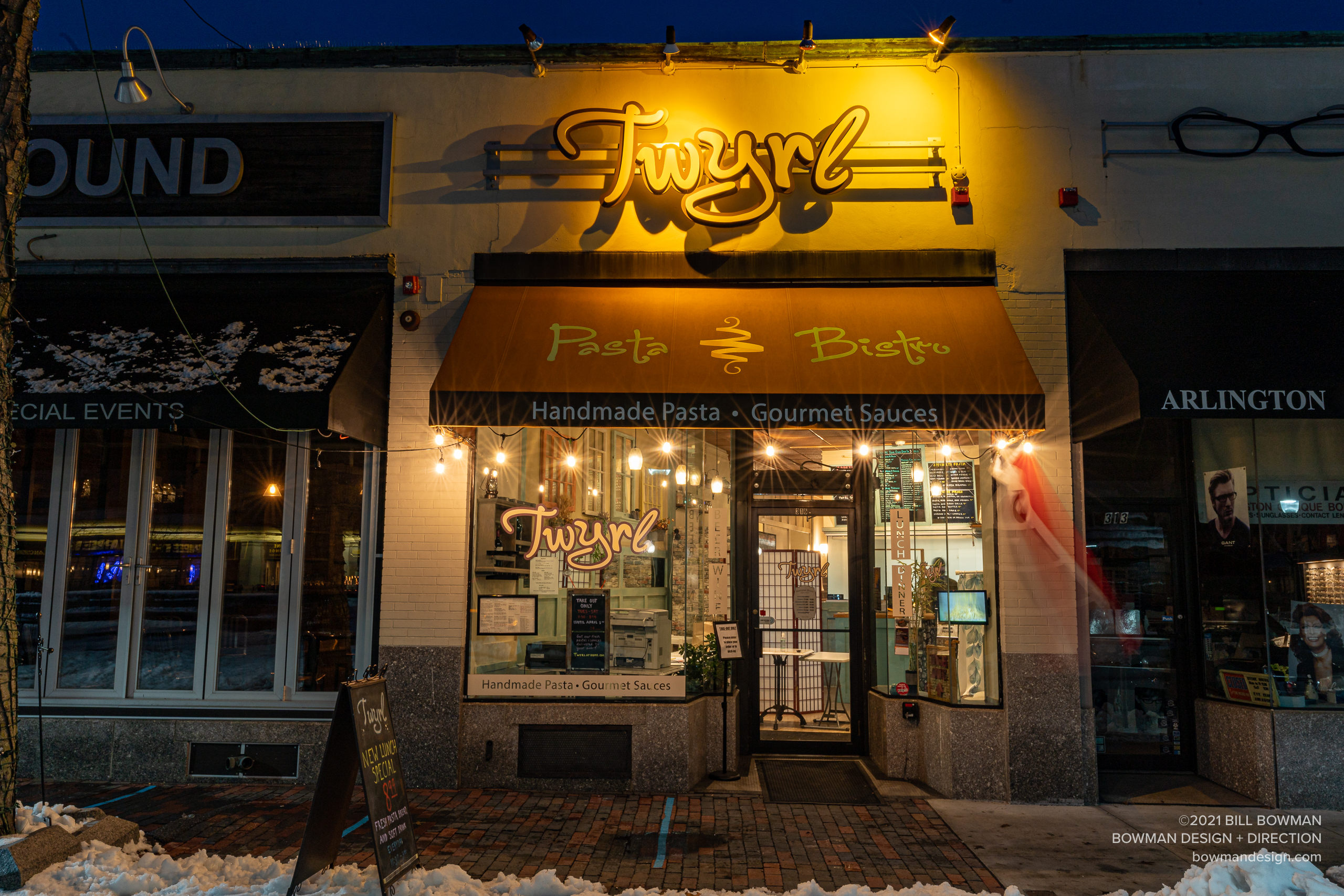
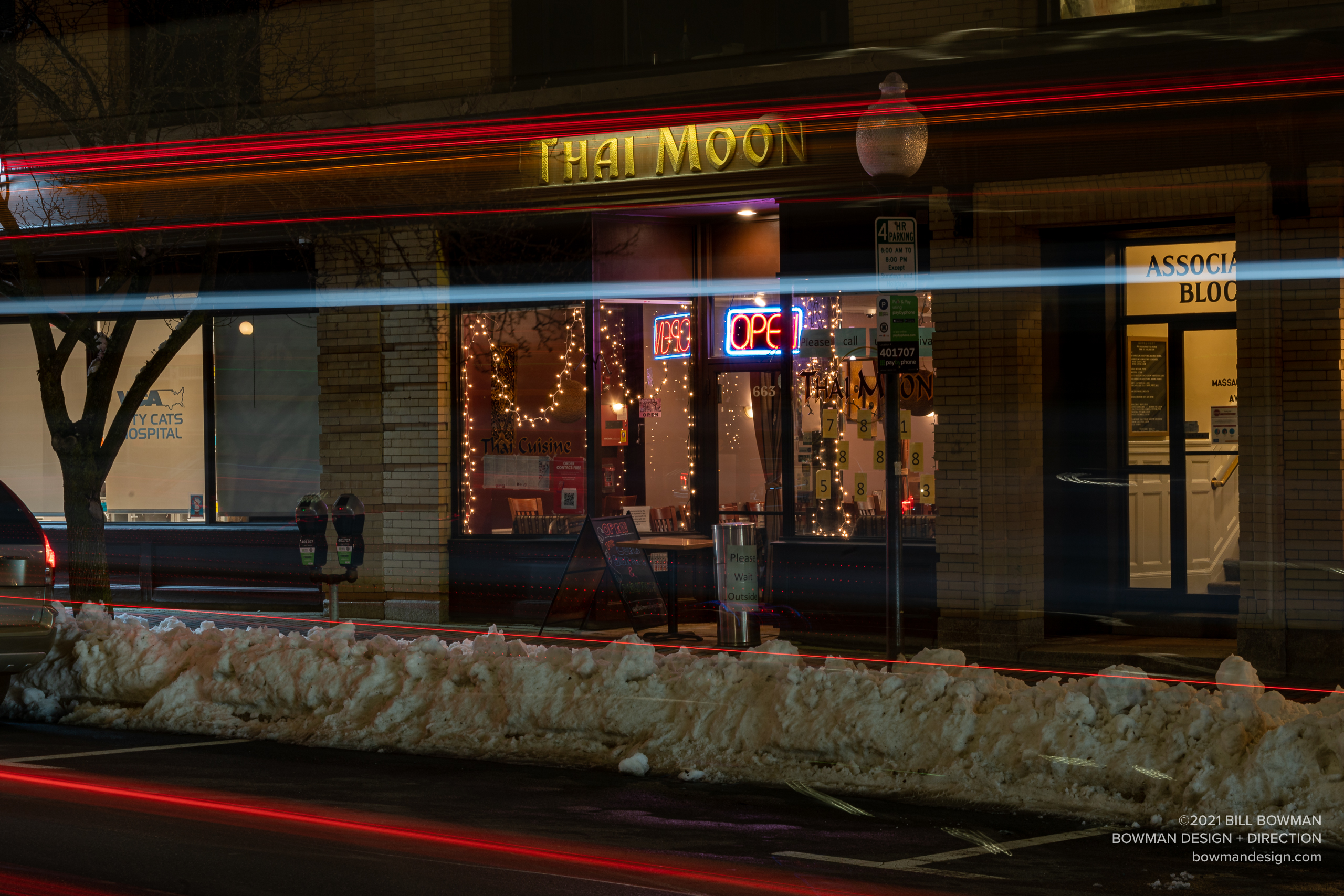
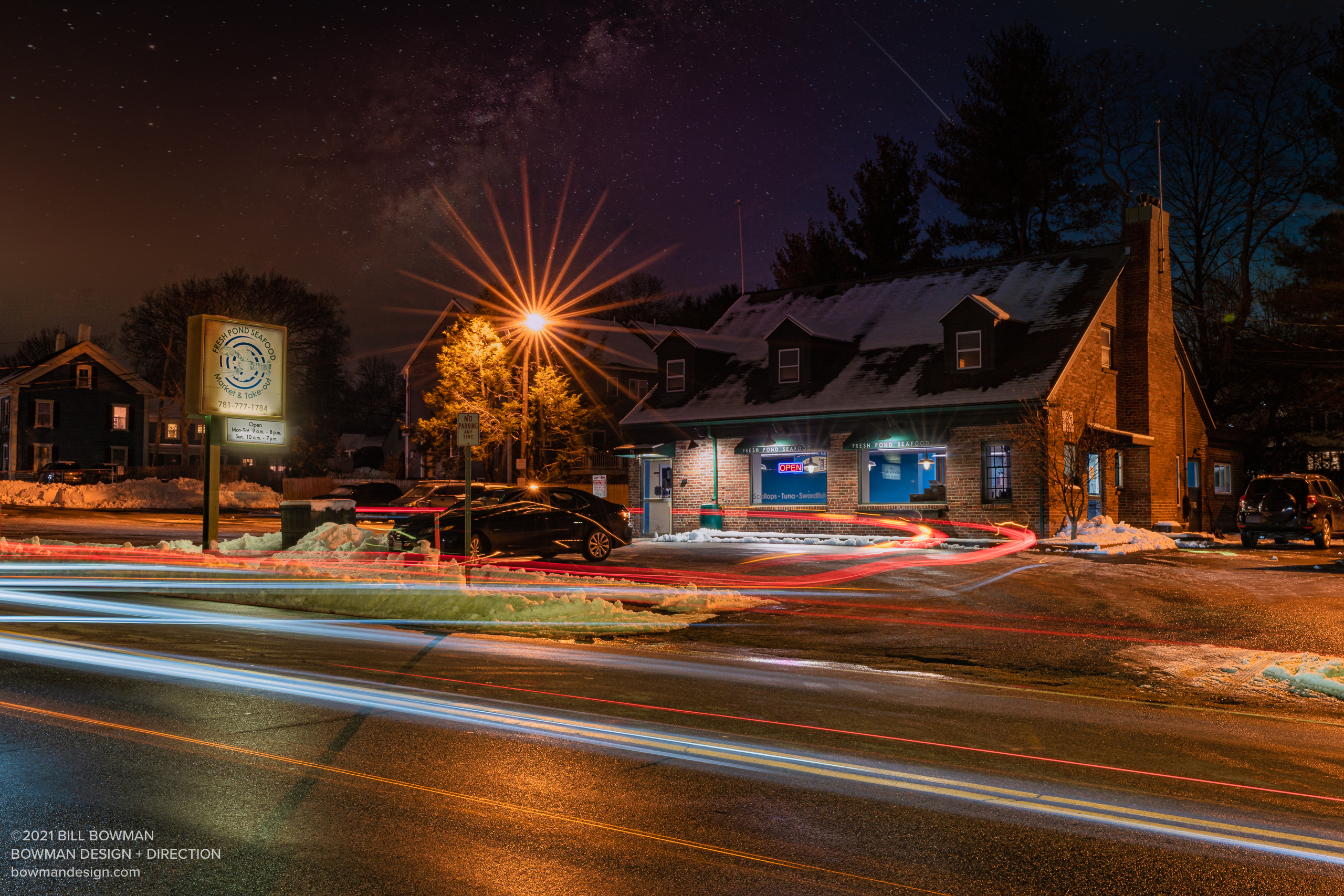
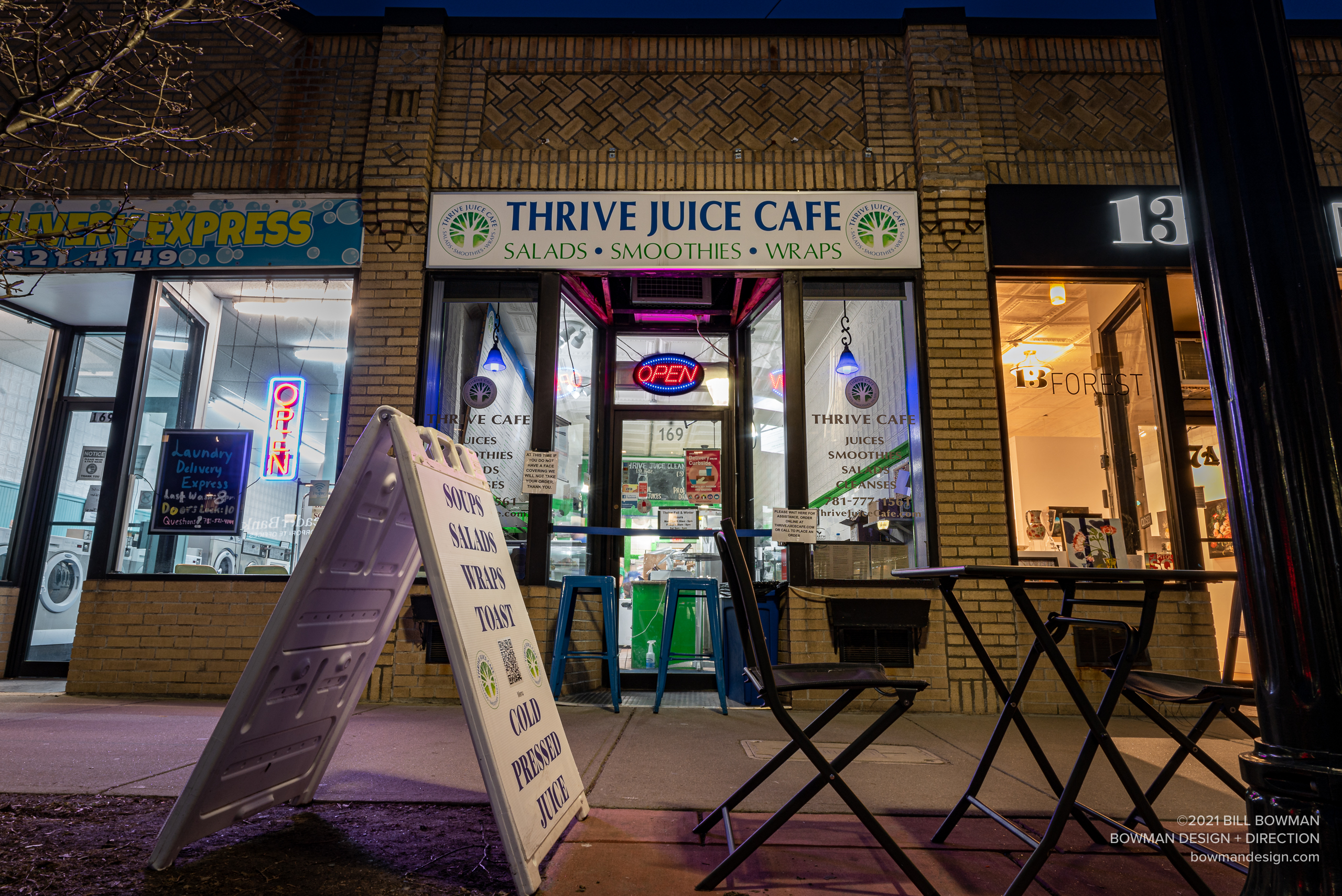
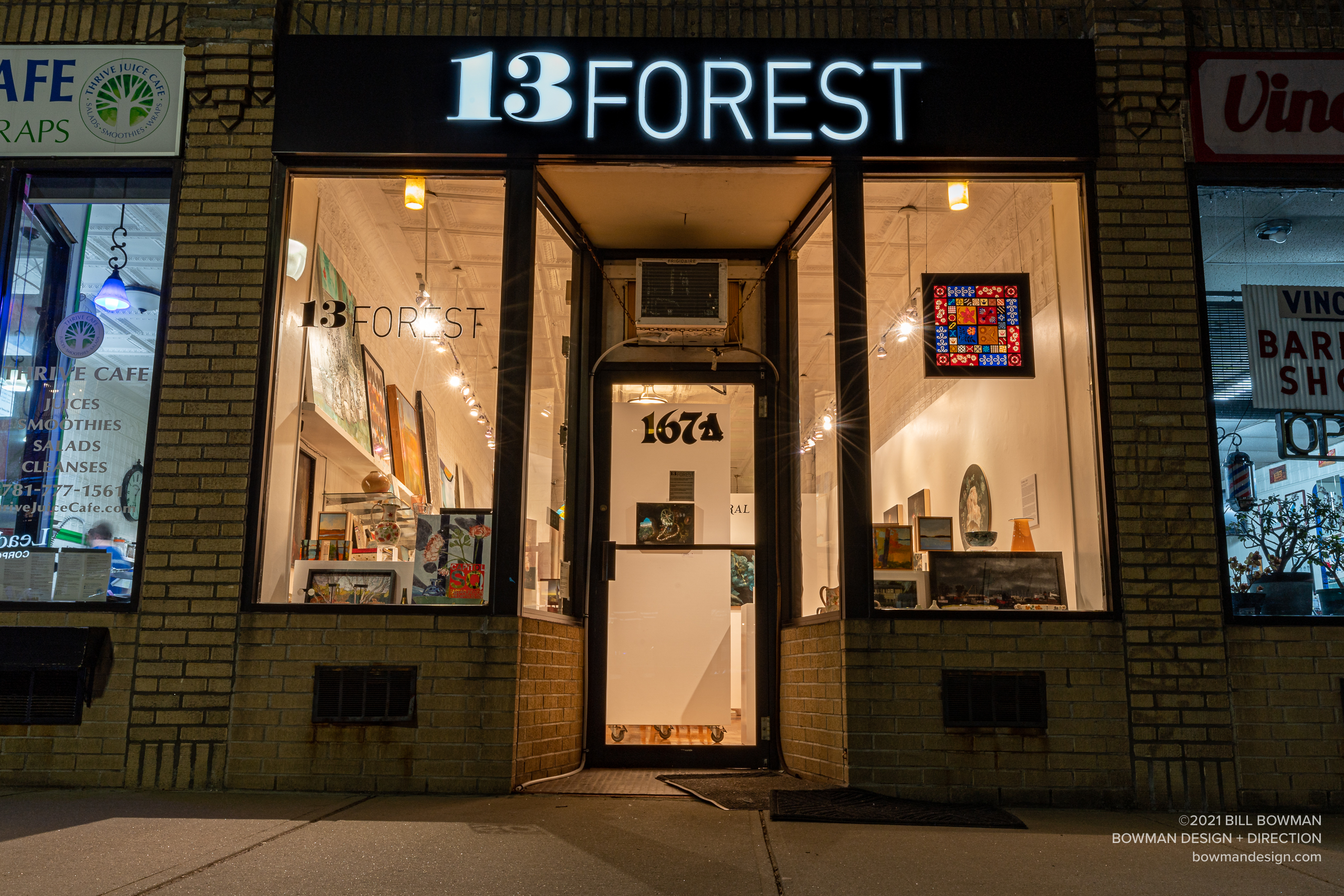
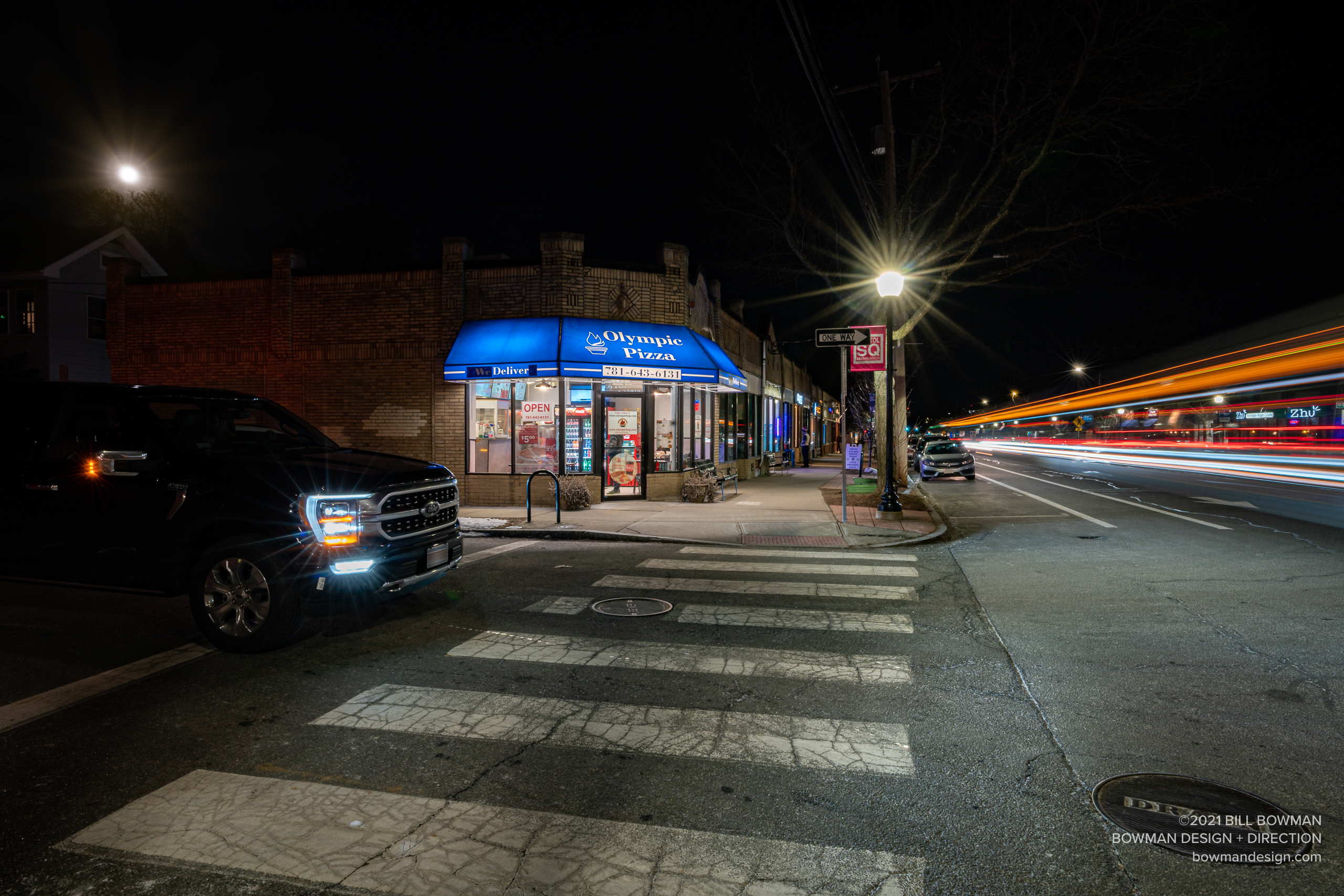
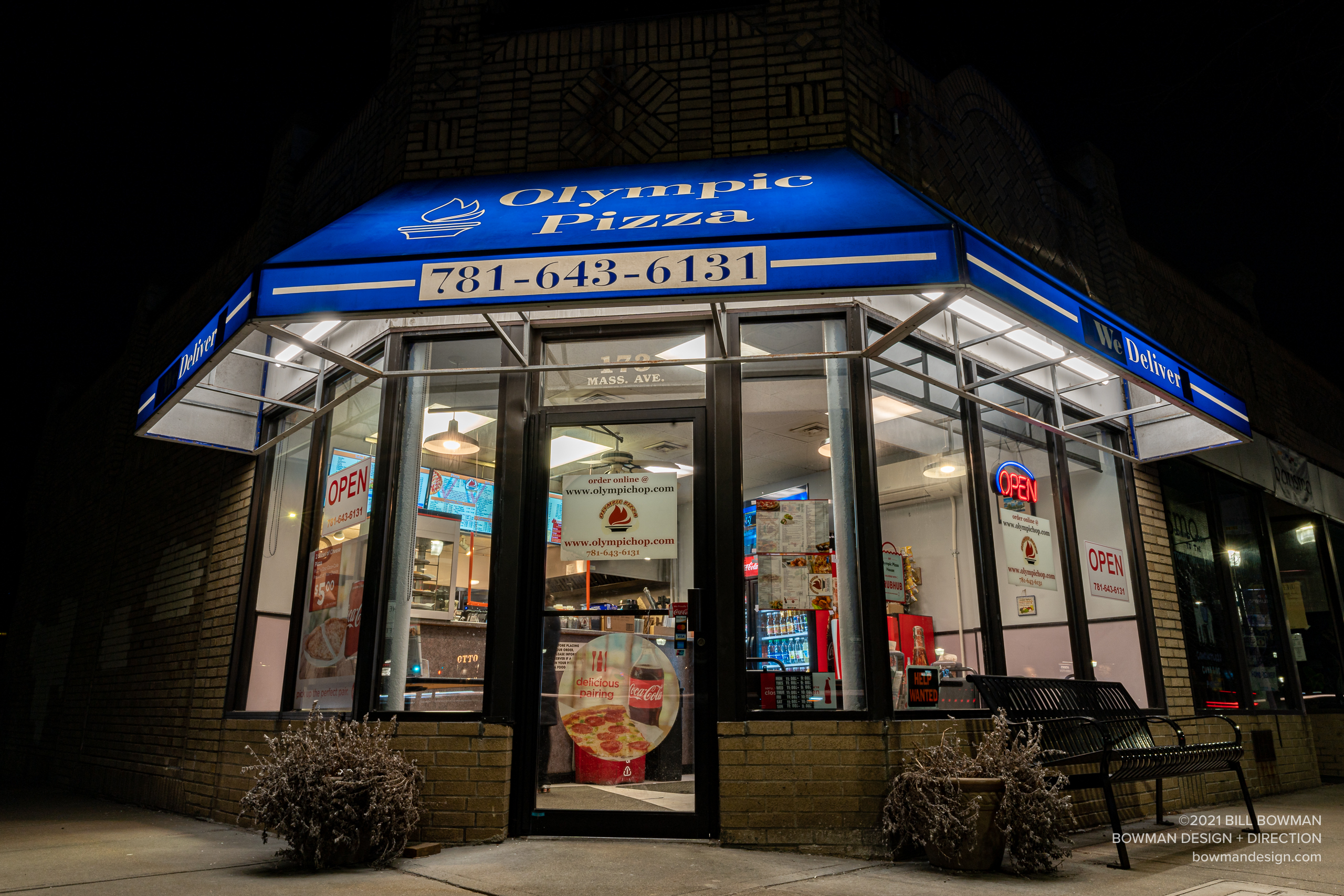
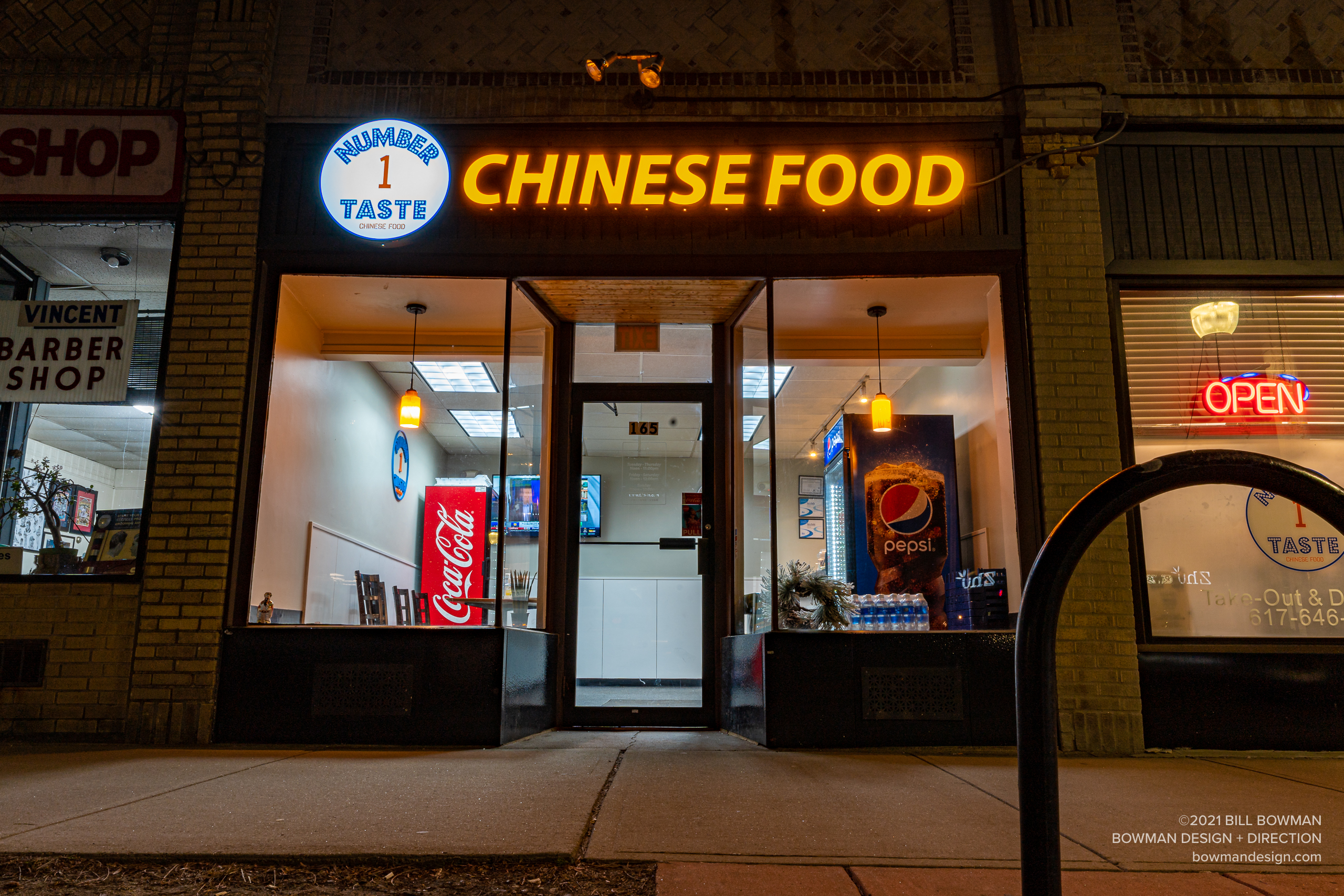
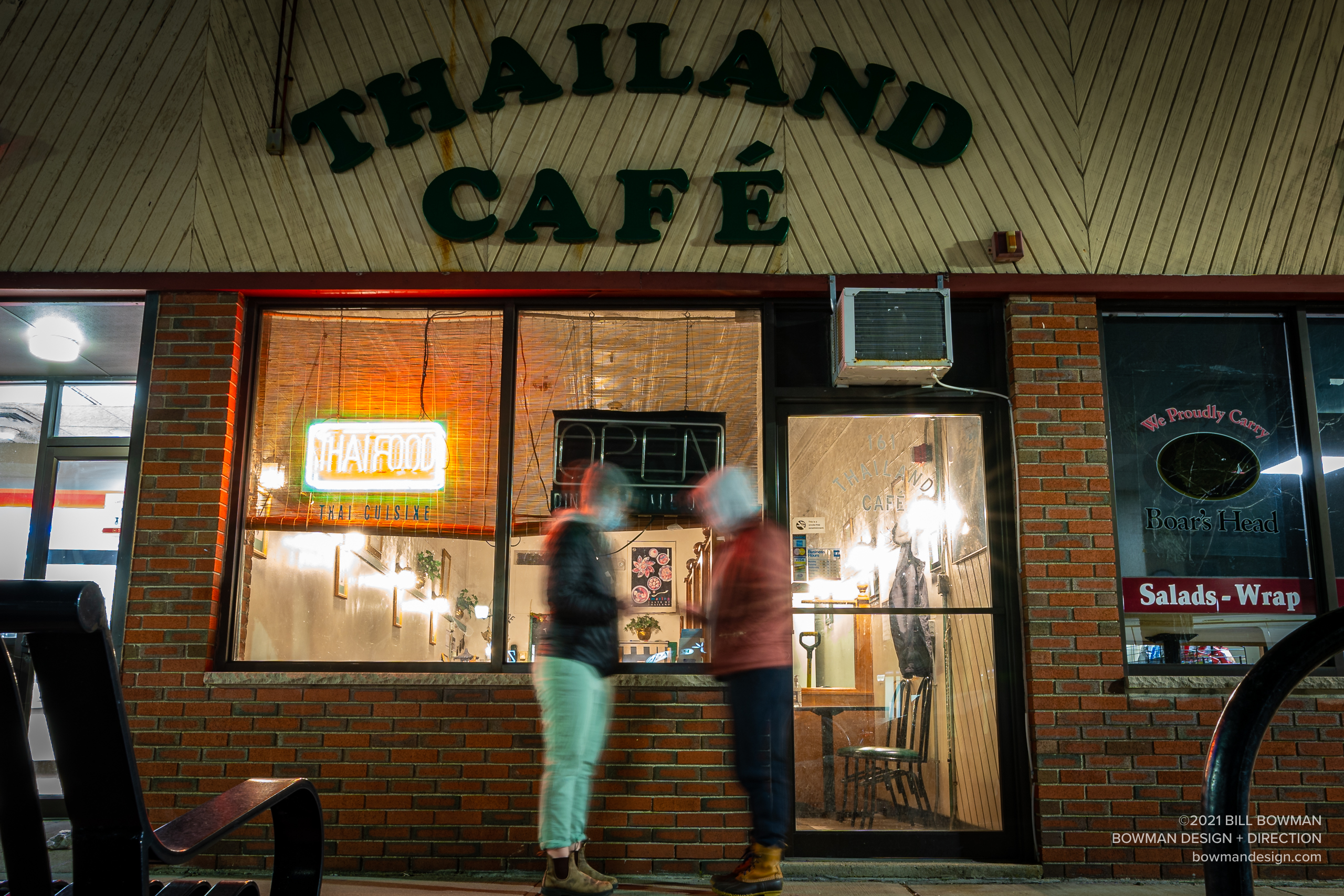
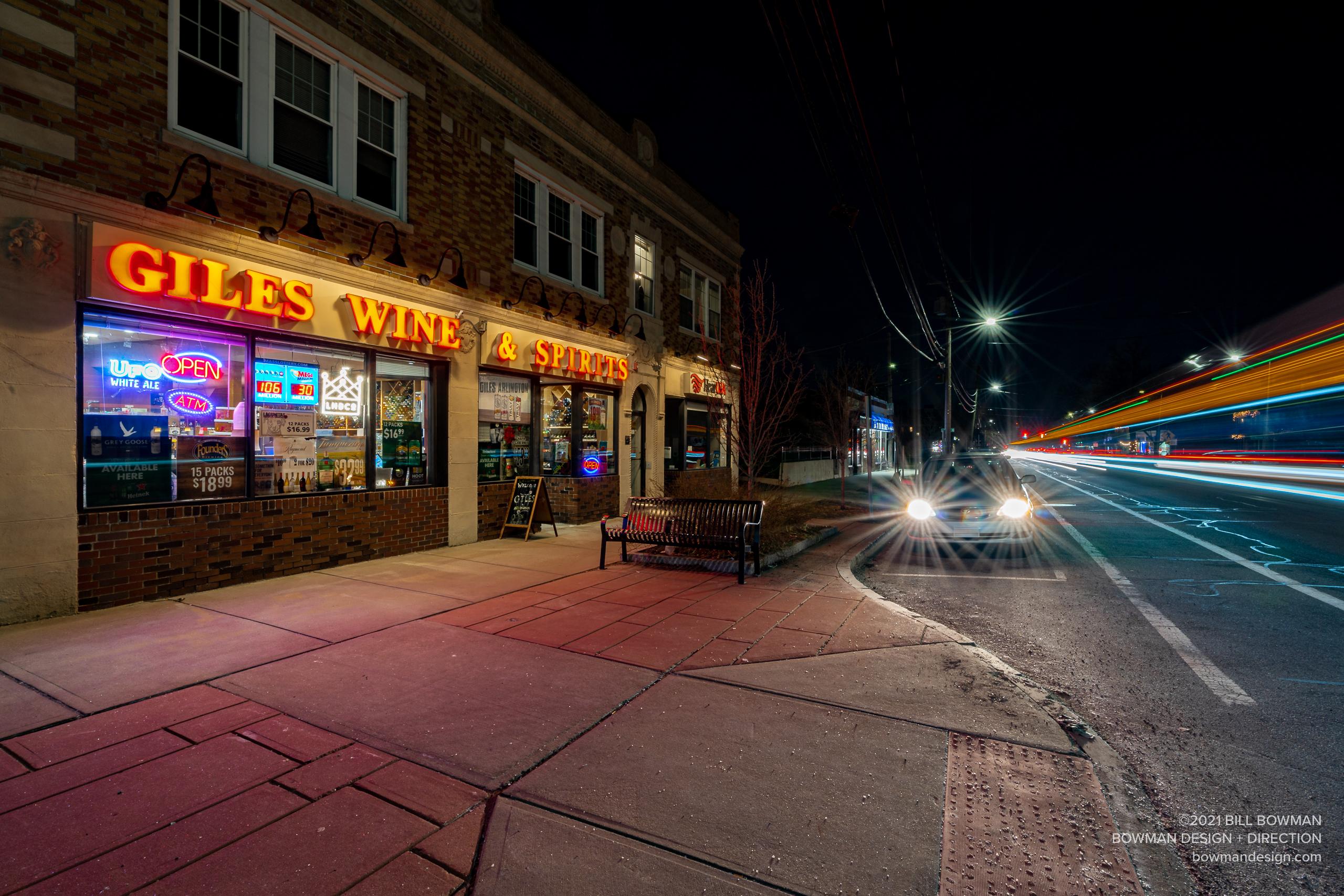
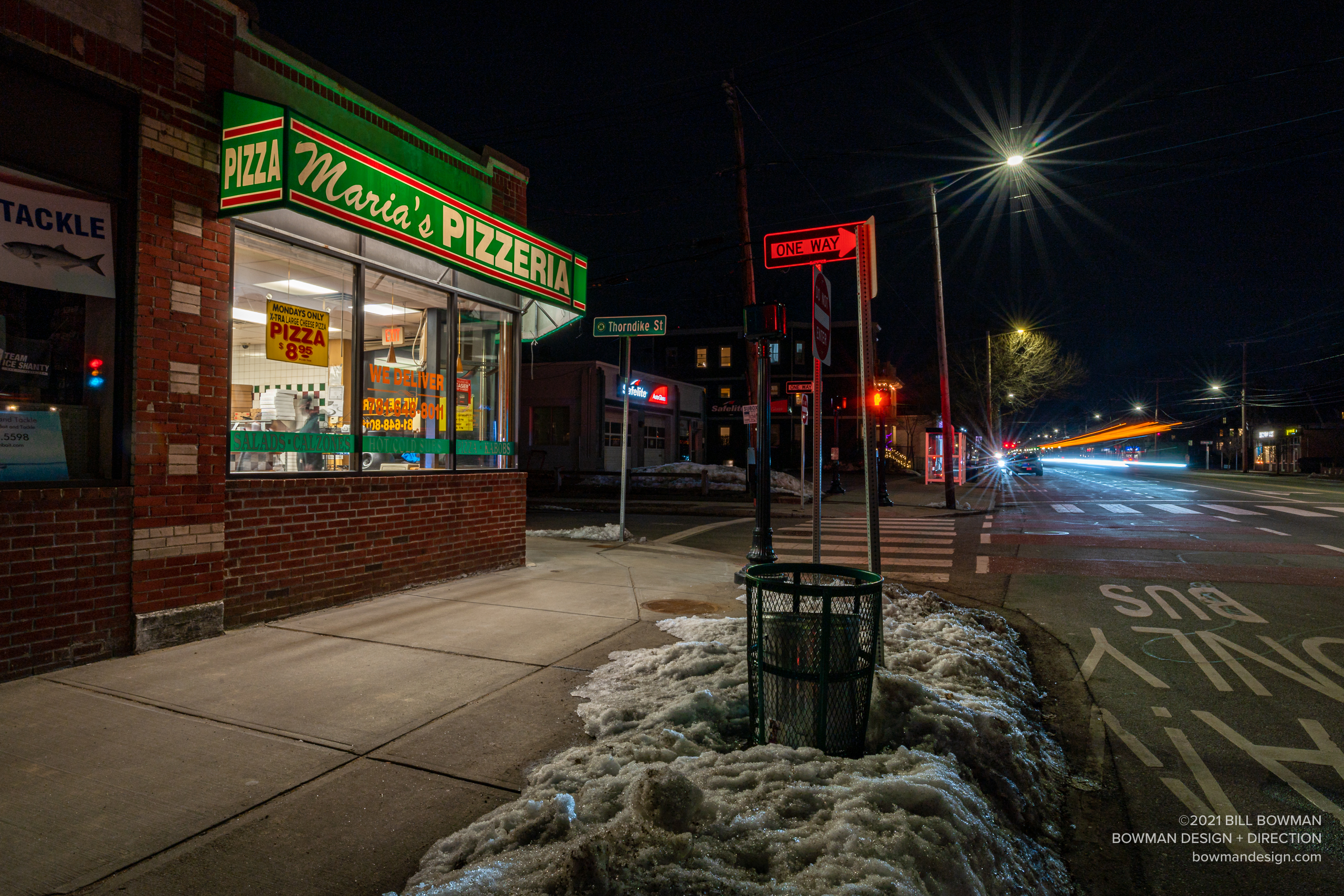
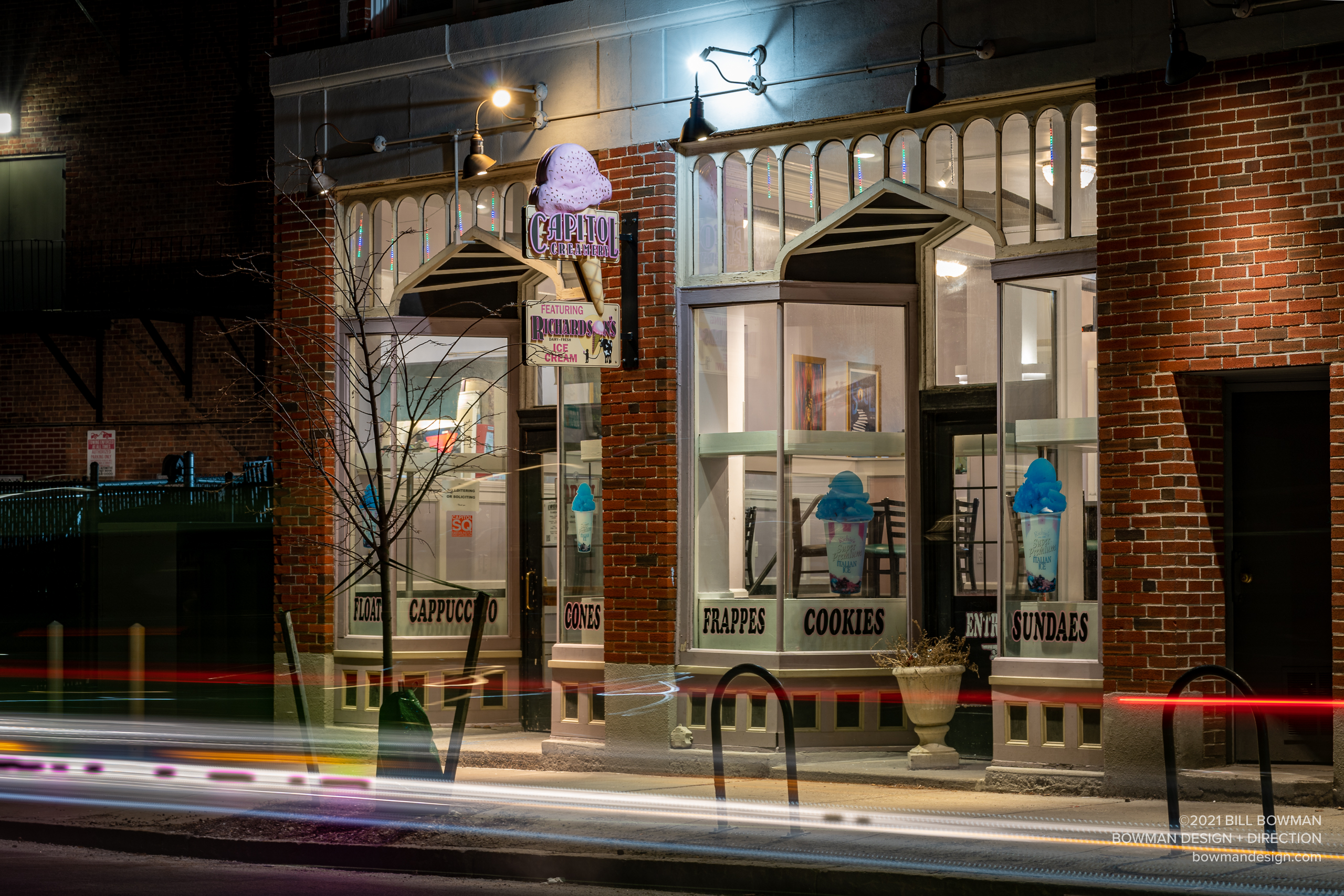
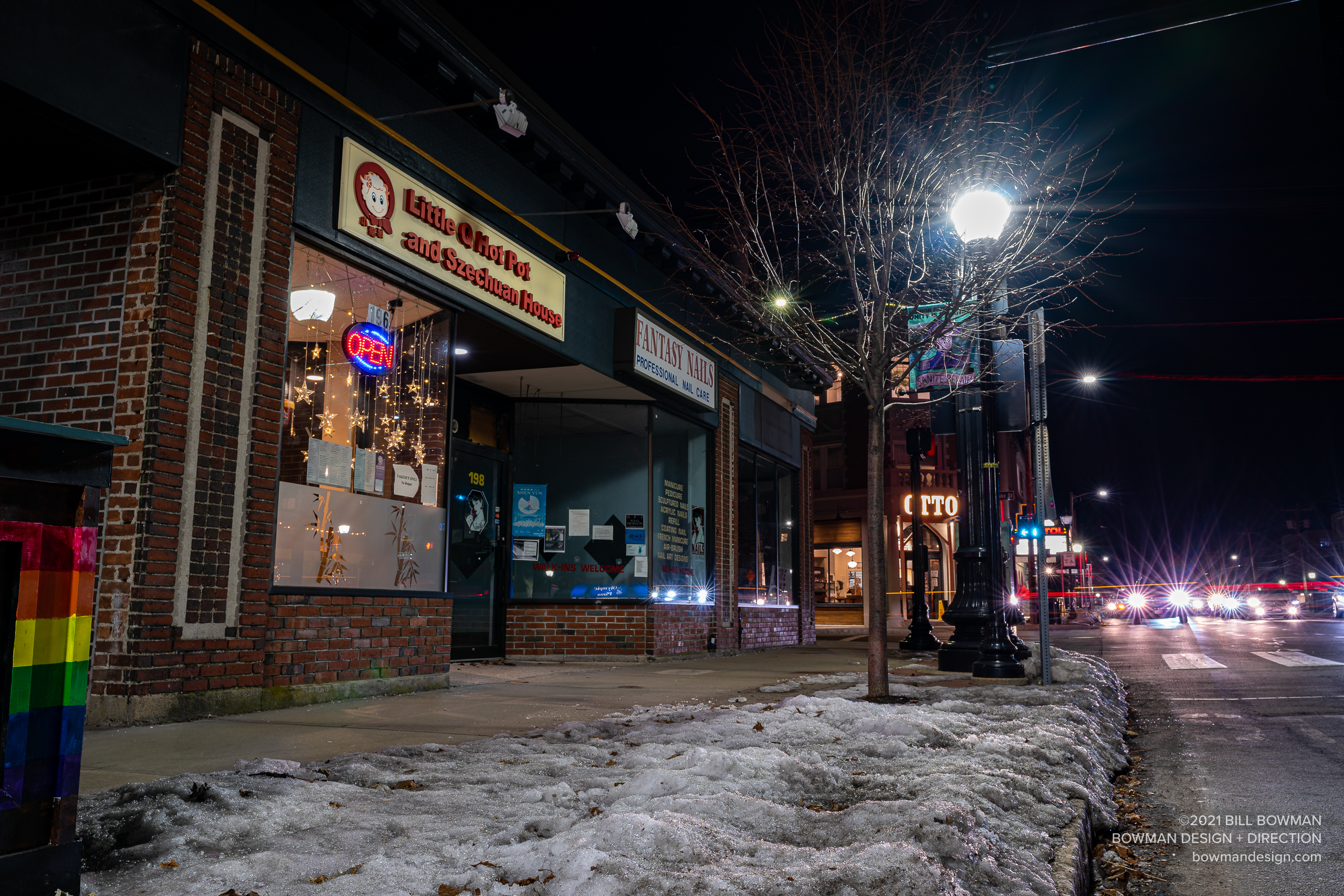
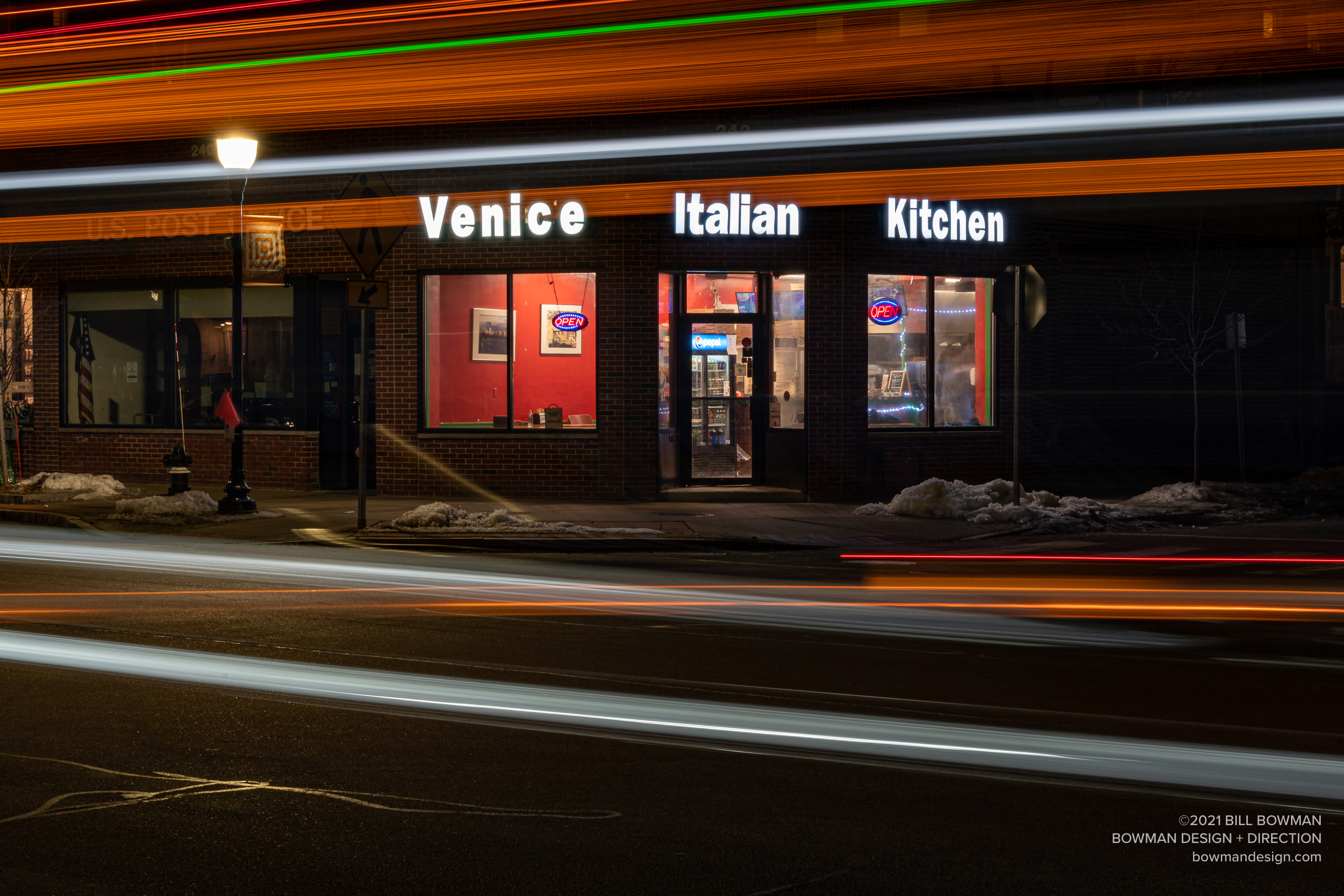
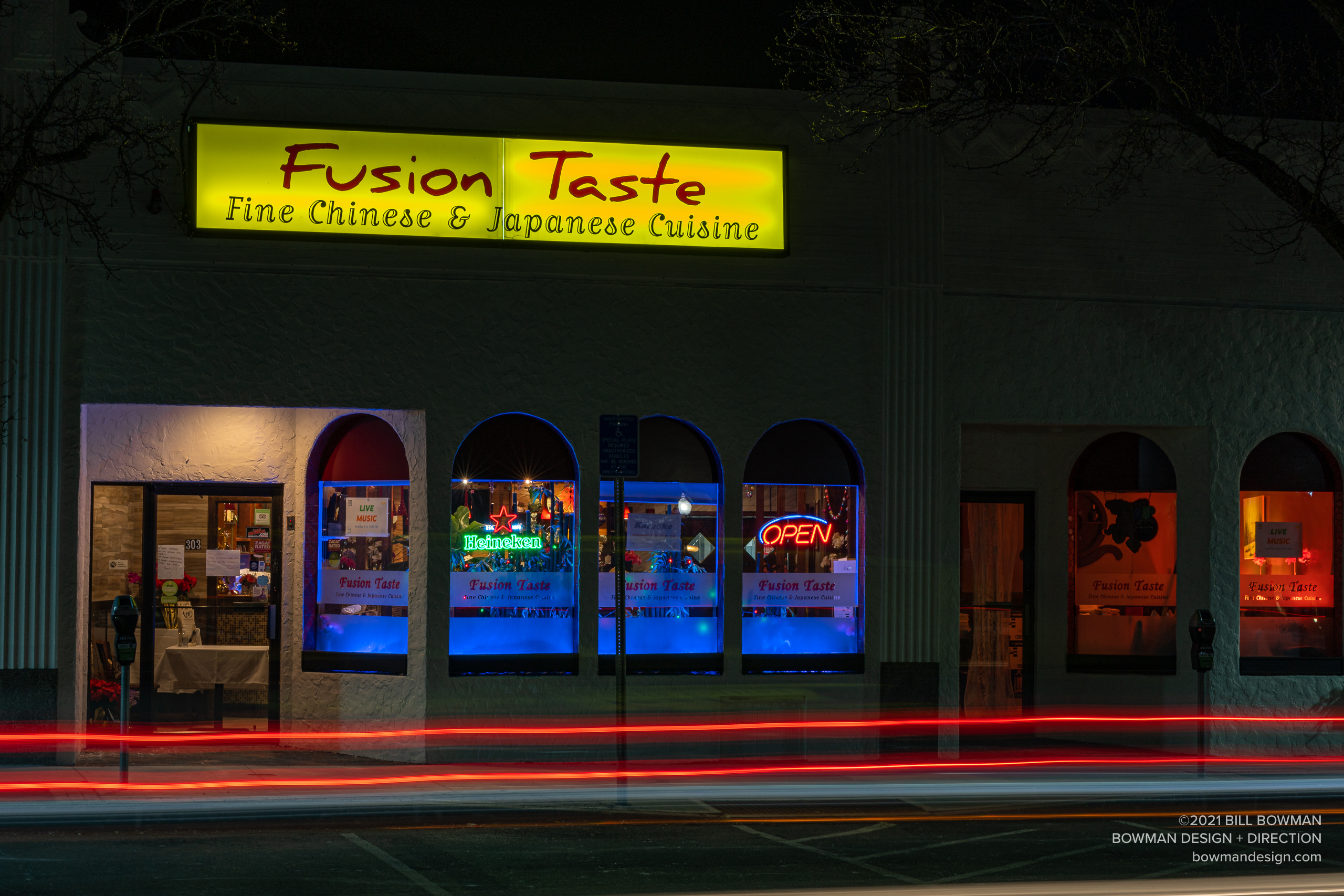
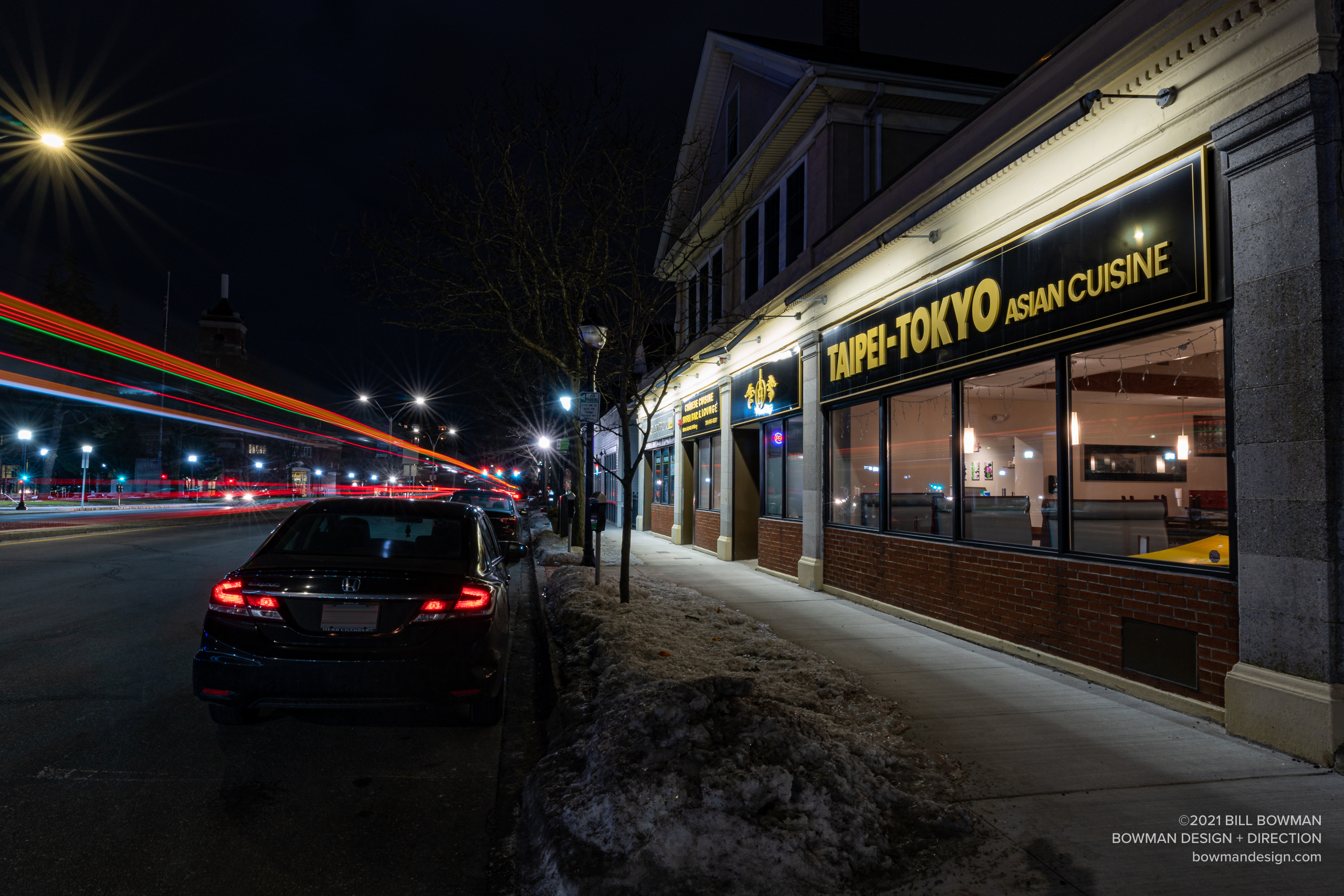
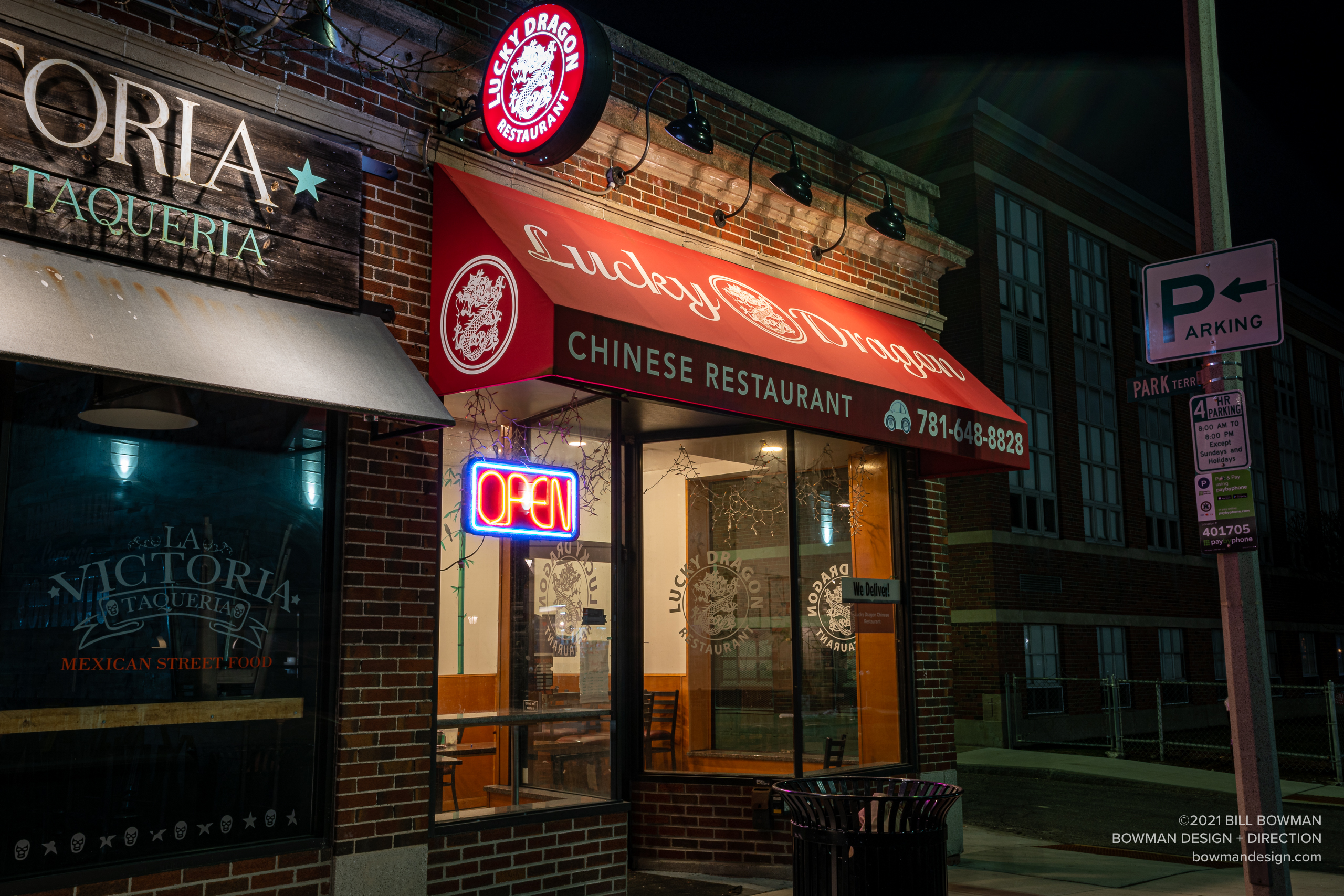
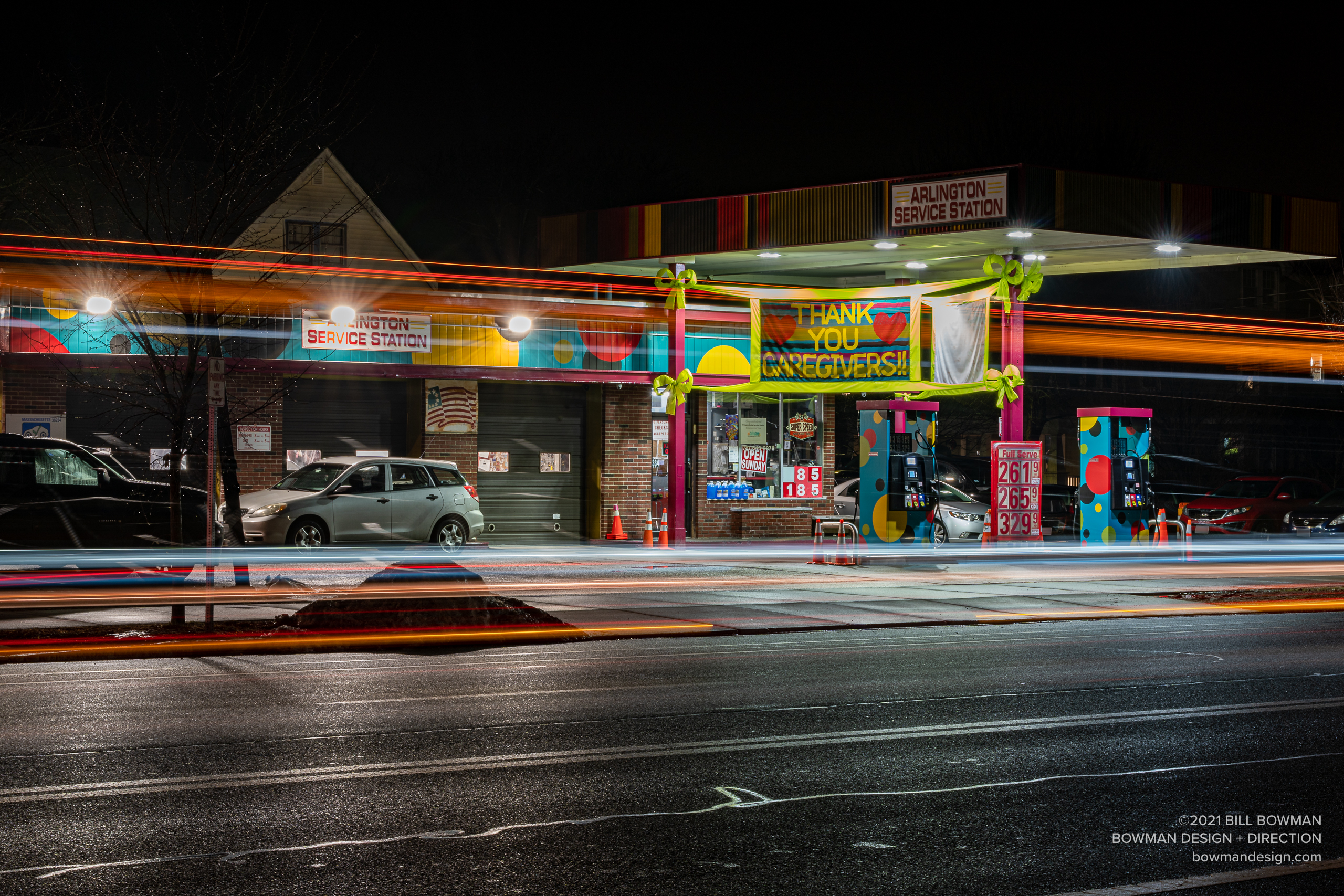
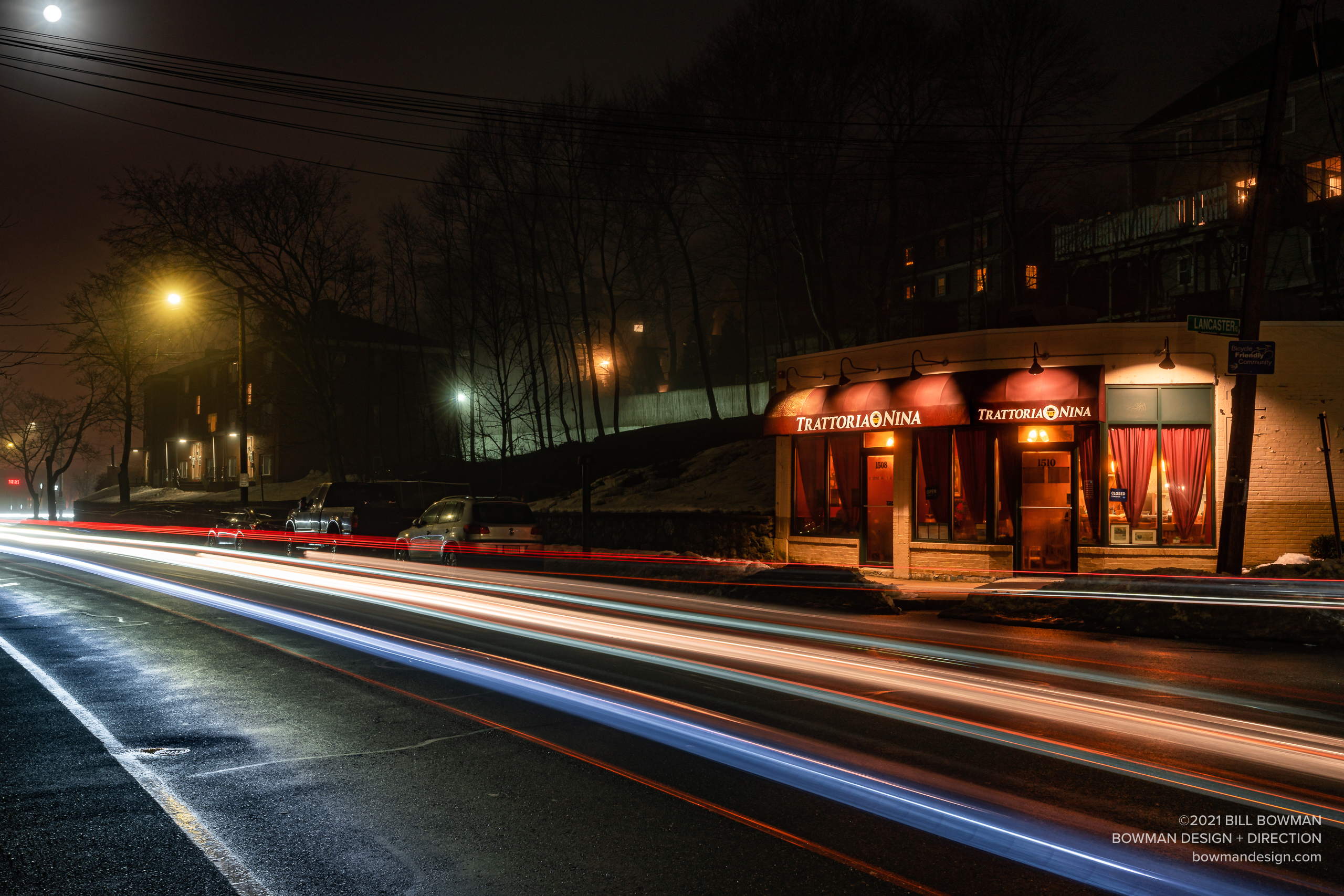
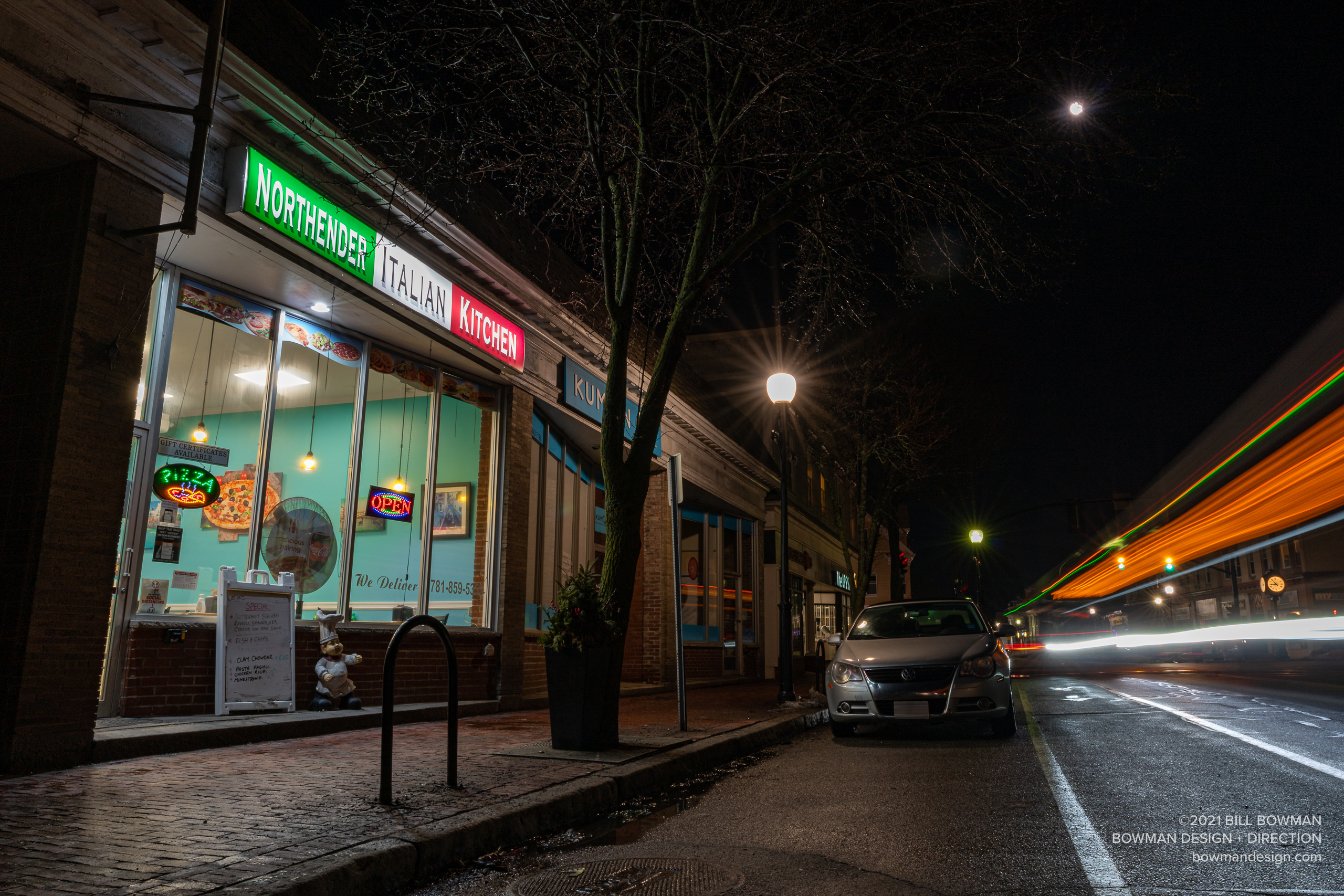
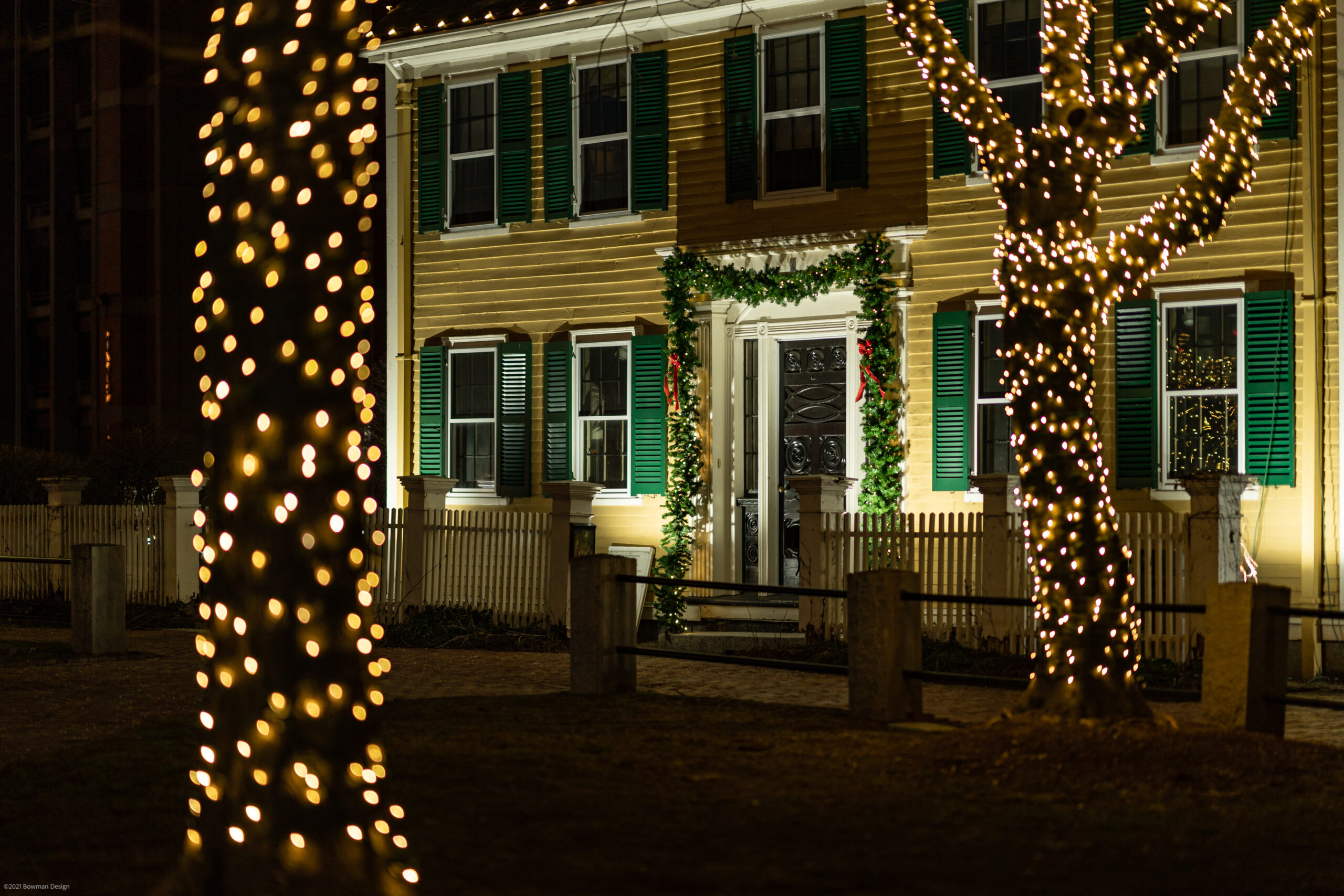
Long-exposure photographs of more than 50 restaurant and shop storefronts, made on foot over one winter month. The shutter stayed open long enough for cars and MBTA buses to draw light across the frame, so every picture showed two things at once: a lit kitchen and a town still moving past it.
Editorial Posts
Every photograph shipped with a post written the way a regular recommends a place, because I was one. Standout dishes, an owner’s story, how the restaurant was serving during the pandemic, hours, phone, address, and website, so a reader could go from seeing to ordering without leaving the post.
Distribution and Advertising
Posts ran on Facebook and The Arlington List, were boosted on my own budget at $0.07 per engagement, and were published publicly so each restaurant could share them as its own. A hashtag system (#PayItForward, #ArlingtonAtNight, #ShopArlingtonFirst) tied the series together and invited neighboring towns to copy it.
Google Maps Placement
Each photograph was added to the restaurant’s Google Maps listing with a review, where people already decide where to eat. Social posts fade in a day. Those photographs have been viewed more than 4 million times and are still working.
The Through-Line
Every piece did the same job: show the town it was still open.
Evidence came first, in the photographs. A lit window said open, the light trails said alive, and the long exposure made a month of cold nights read as one warm picture of a community in motion.
An order needs more than a feeling, so the posts supplied the rest. Naming the dish, the owner, the curbside routine, and the phone number removed every small hesitation between a reader’s goodwill and a restaurant’s register.
Where the proof appeared mattered as much as what it said. Public posts let owners share their own story, a small boost bought reach for pennies per engagement, and Google Maps set each picture beside the listing a hungry neighbor was already reading.
When residents asked for bakeries, the same anatomy moved into daylight. Owner portraits, 360° photographs, and video carried Sweet and Savory Arlington to the shops that open at six in the morning, and the system proved it could travel.
None of It Was Made to Be Admired. All of It Was Made to Be Ordered From.
Strategy, Applied at Home
There was no formal discovery phase. The understanding came from living here, eating at these restaurants, speaking with their owners, and listening to the town. Years of strategic experience gave that understanding a structure it could travel through.
Community Roadmap
No client, no brief, one month. I set the scope at the restaurants I had eaten at and enjoyed, then let the town extend it. Residents on The Arlington List nominated the next 23, and the bakeries earned a round of their own.
Audience Architecture
Two audiences, one post. Neighbors needed evidence and a way to act. Friends out of state could not order, but they could like, comment, and share, and their engagement carried the posts in front of the people who could.
Proof-of-Life Strategy
The pandemic problem was invisibility, not indifference. Long exposure made the town's pulse visible: cars, buses, and lit kitchens in one frame, so a resident could see that going out for dinner was still something people did.
Post Anatomy
Every post carried the same parts in the same order: photograph, standout dishes, a story, how the restaurant was serving, hours, contact, and the invitation to share. A regular's recommendation with the conversion path written into it.
Placement Strategy
Facebook for the moment, Google Maps for the decision. Posts drove the first days of attention. The Maps photographs met each new diner at the point of choosing, and kept doing so for years.
Measurement
A spreadsheet tracked reactions, comments, shares, reach, cost per engagement, and Google views by restaurant, so the campaign could be judged as marketing and not only as a kind gesture. Beside the measured activity sat a planning model for what the engagement could mean in orders, and beside the model sat what the owners themselves reported.
Photography: Arlington at Night
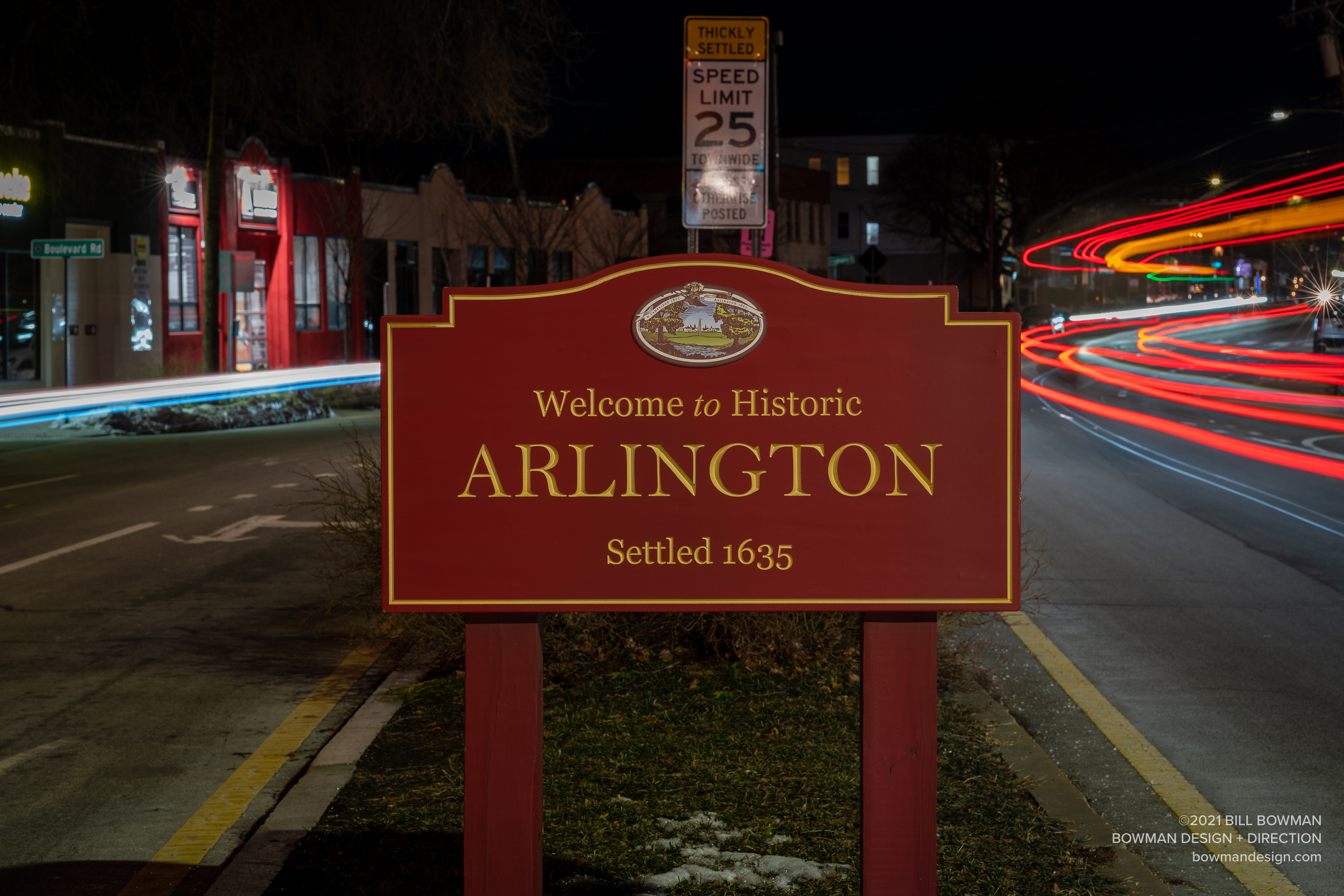
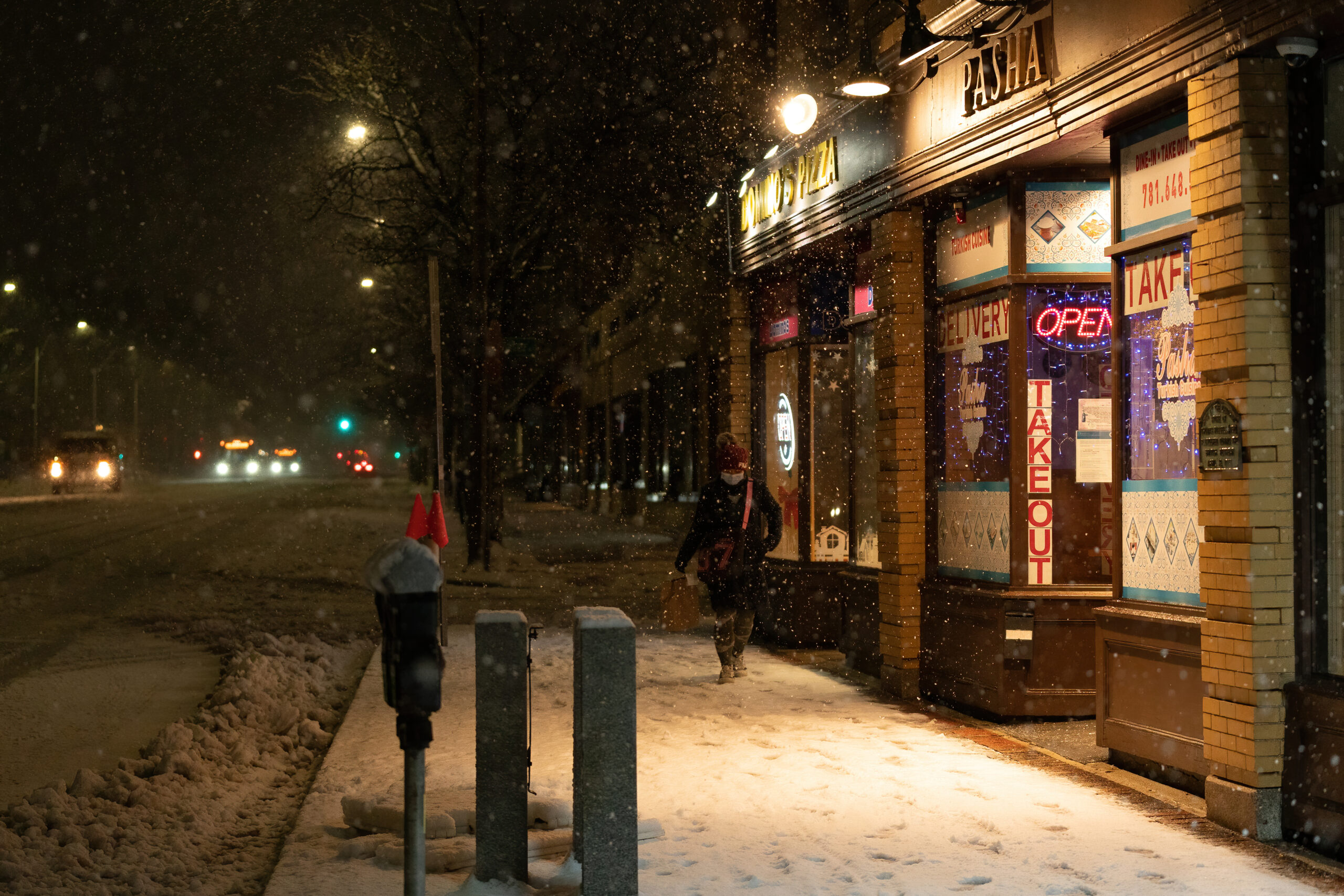
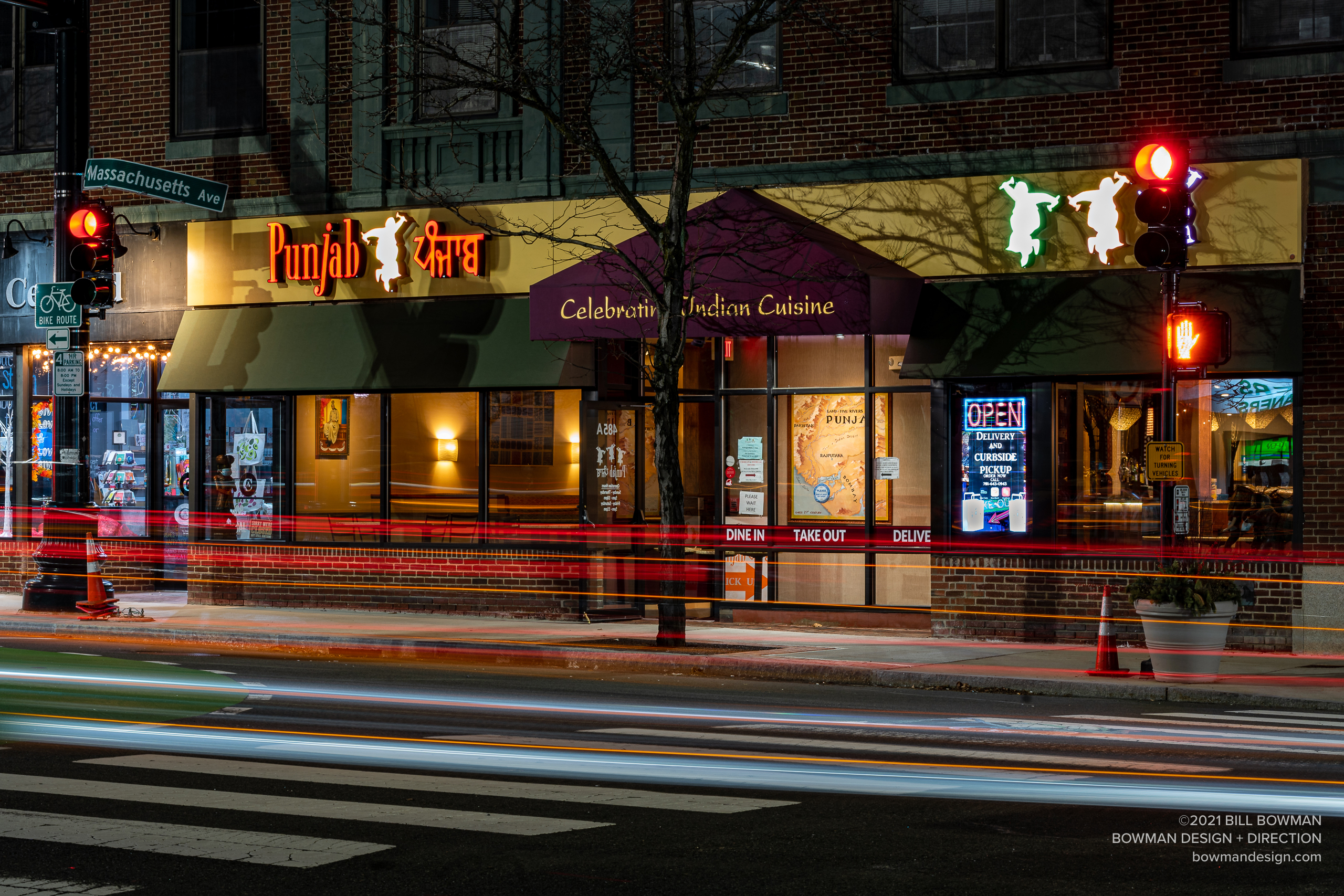
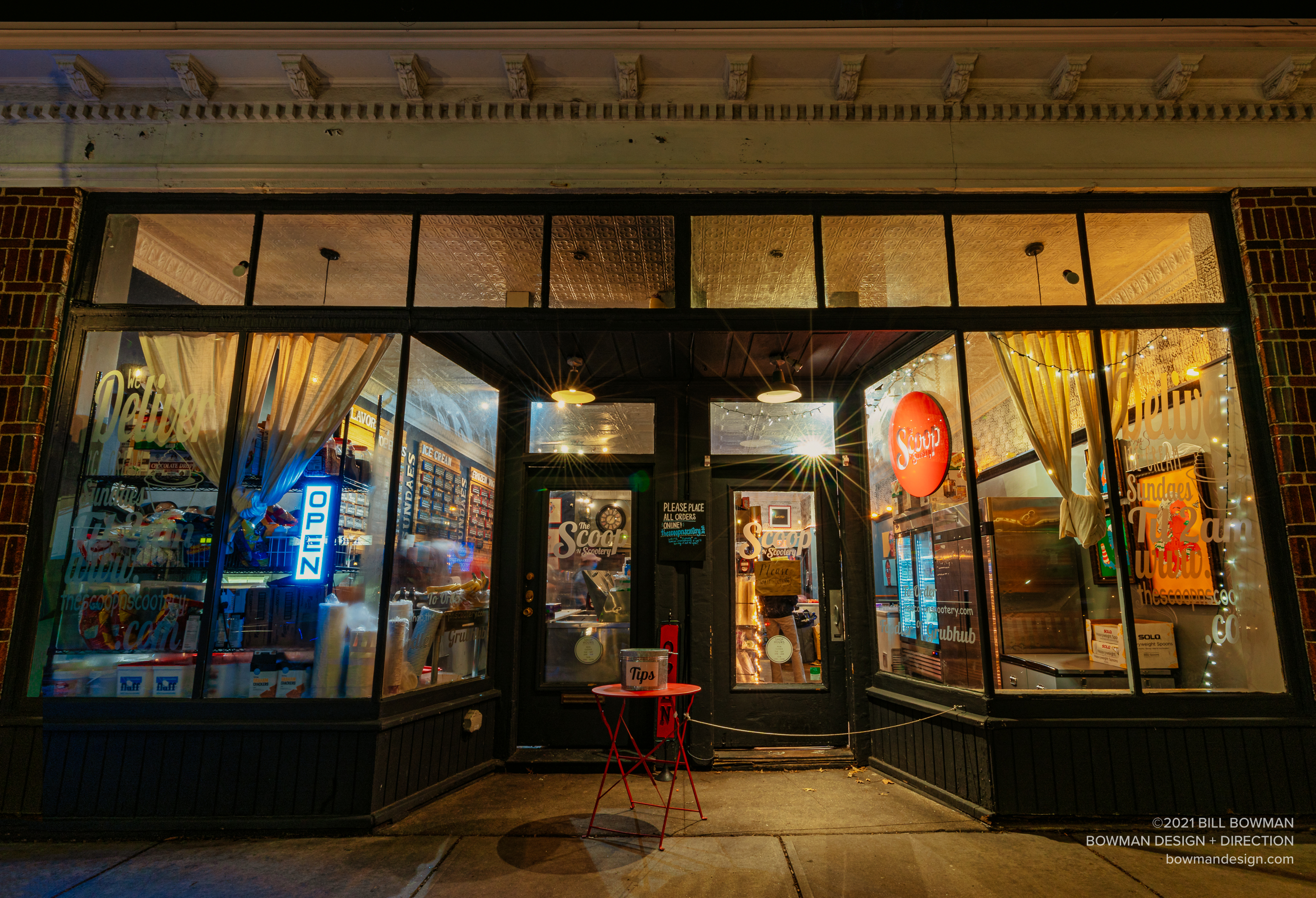
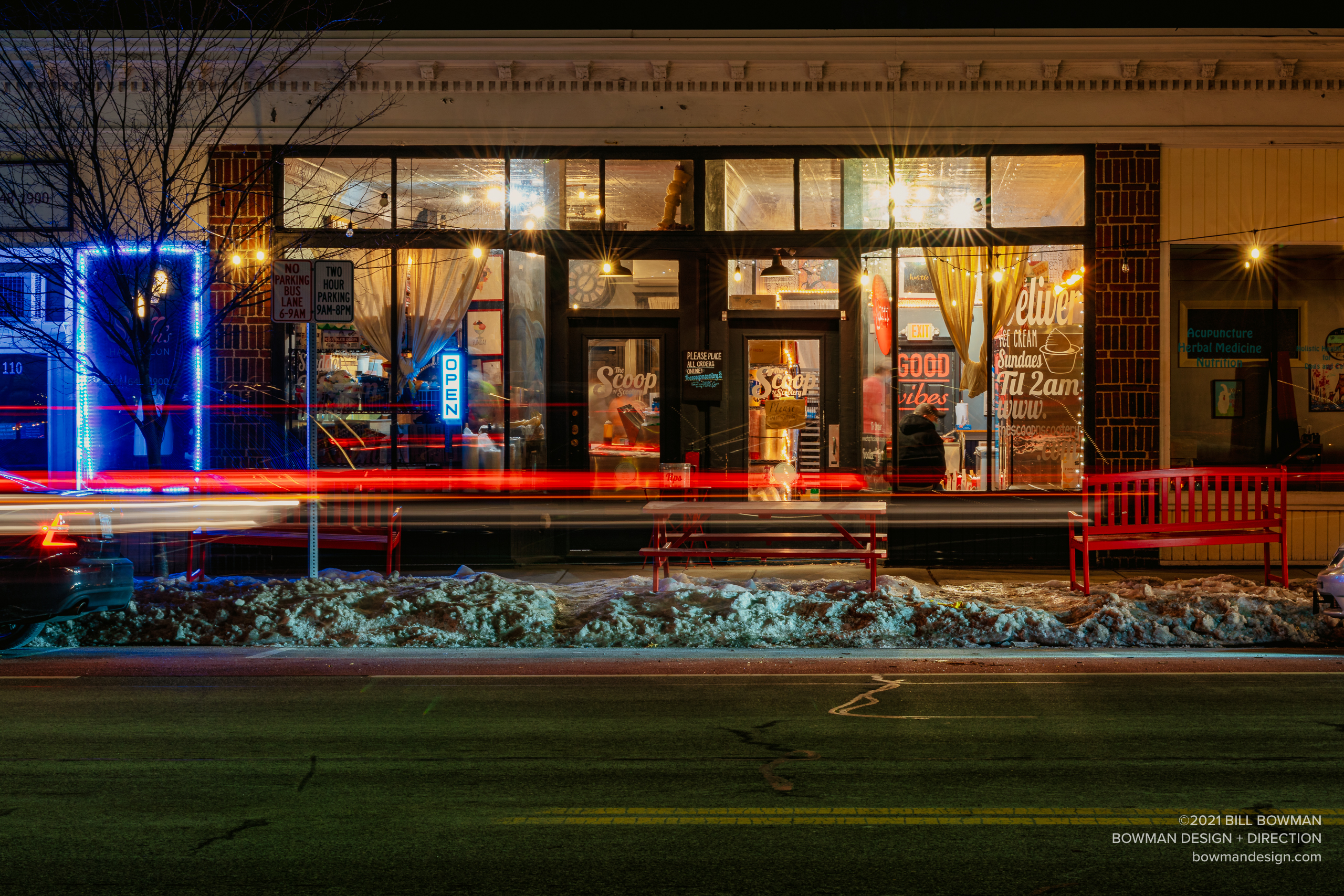
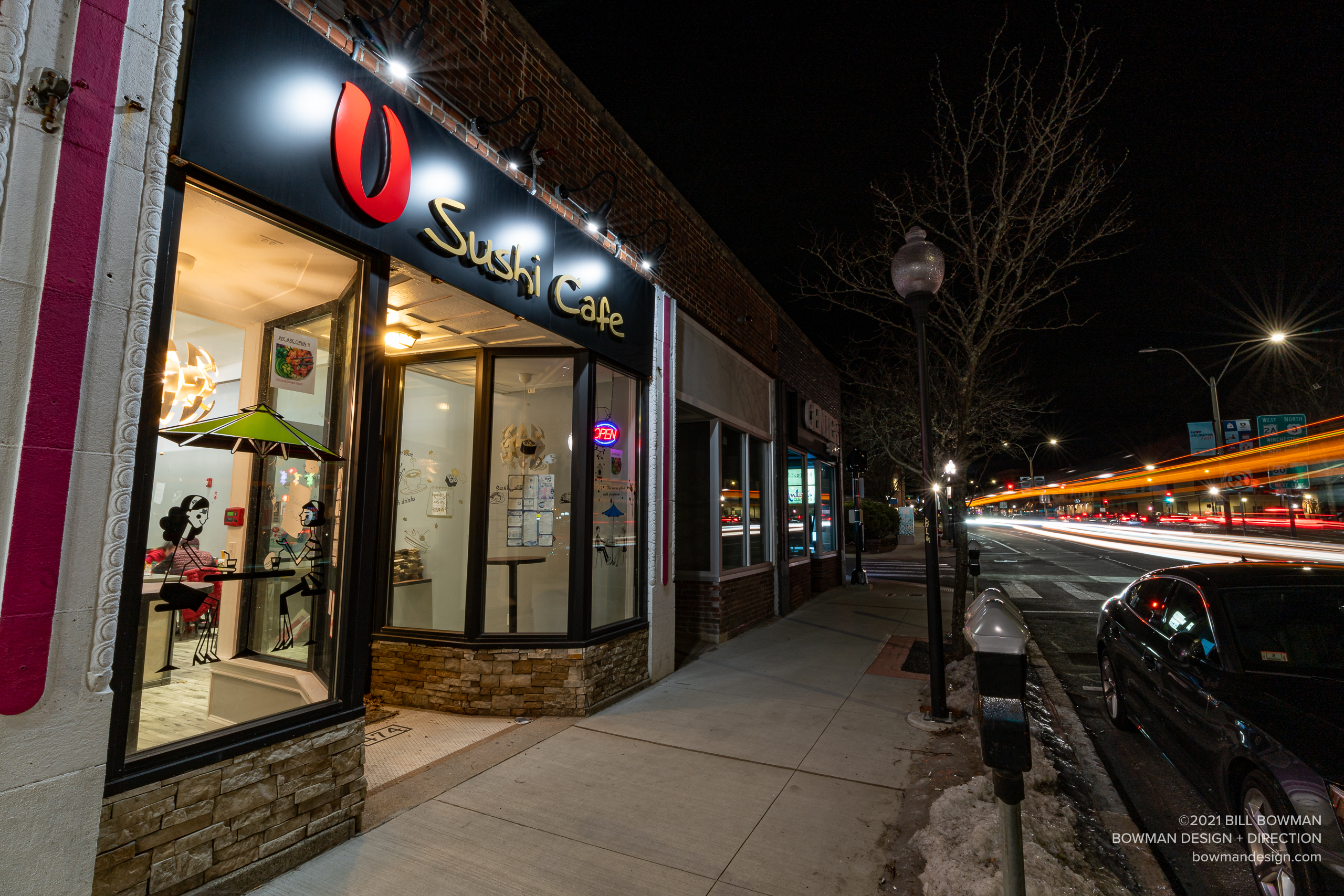
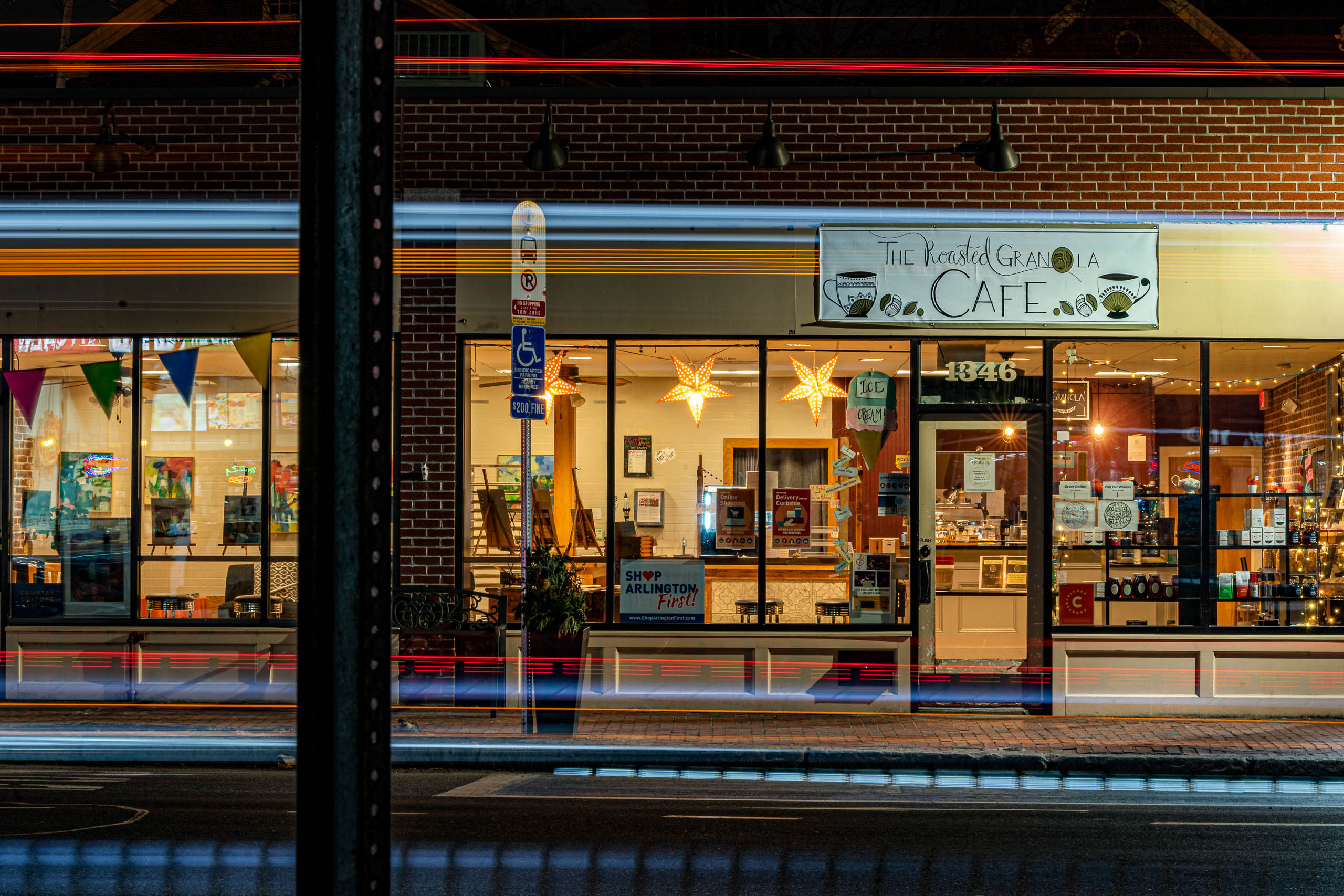
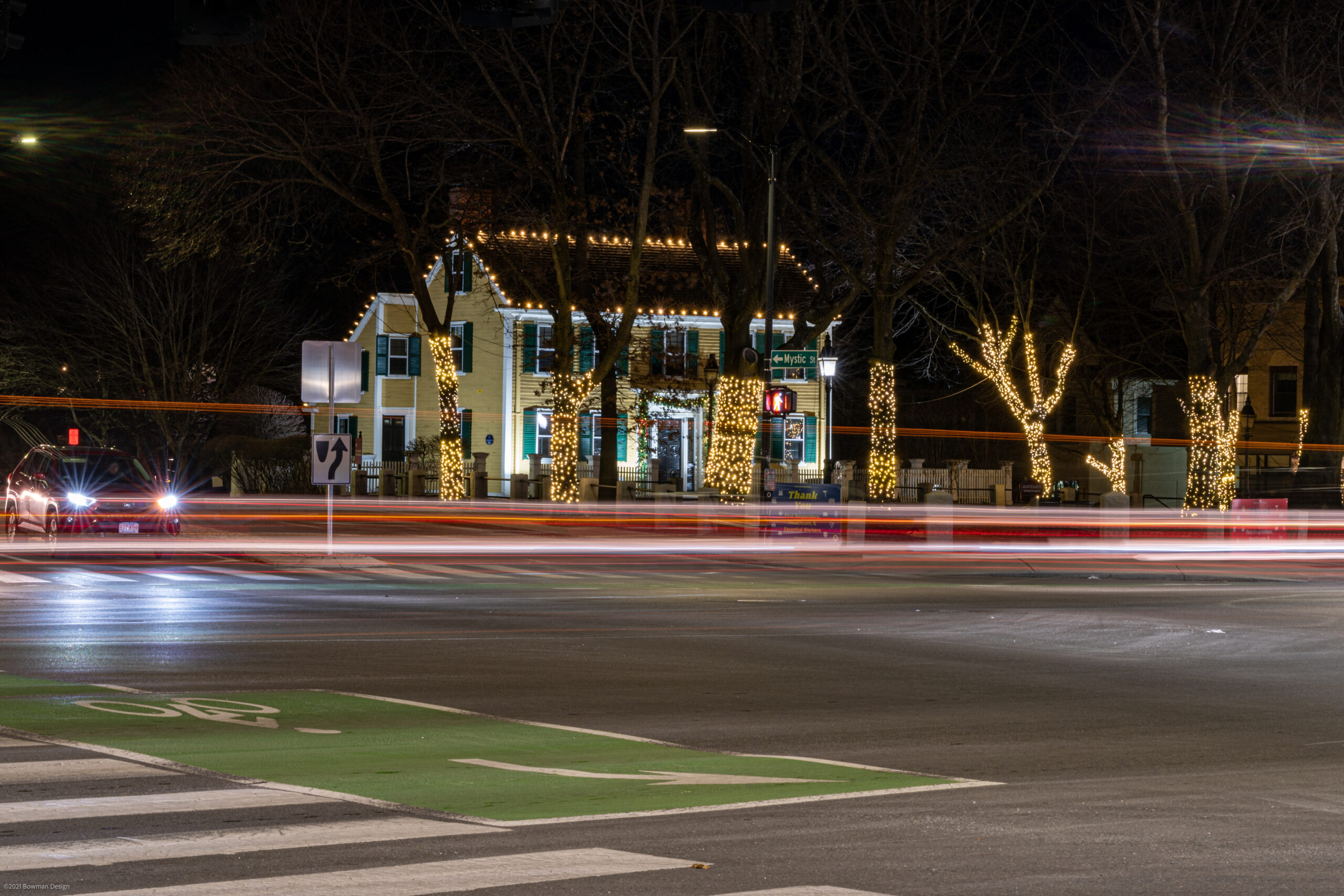
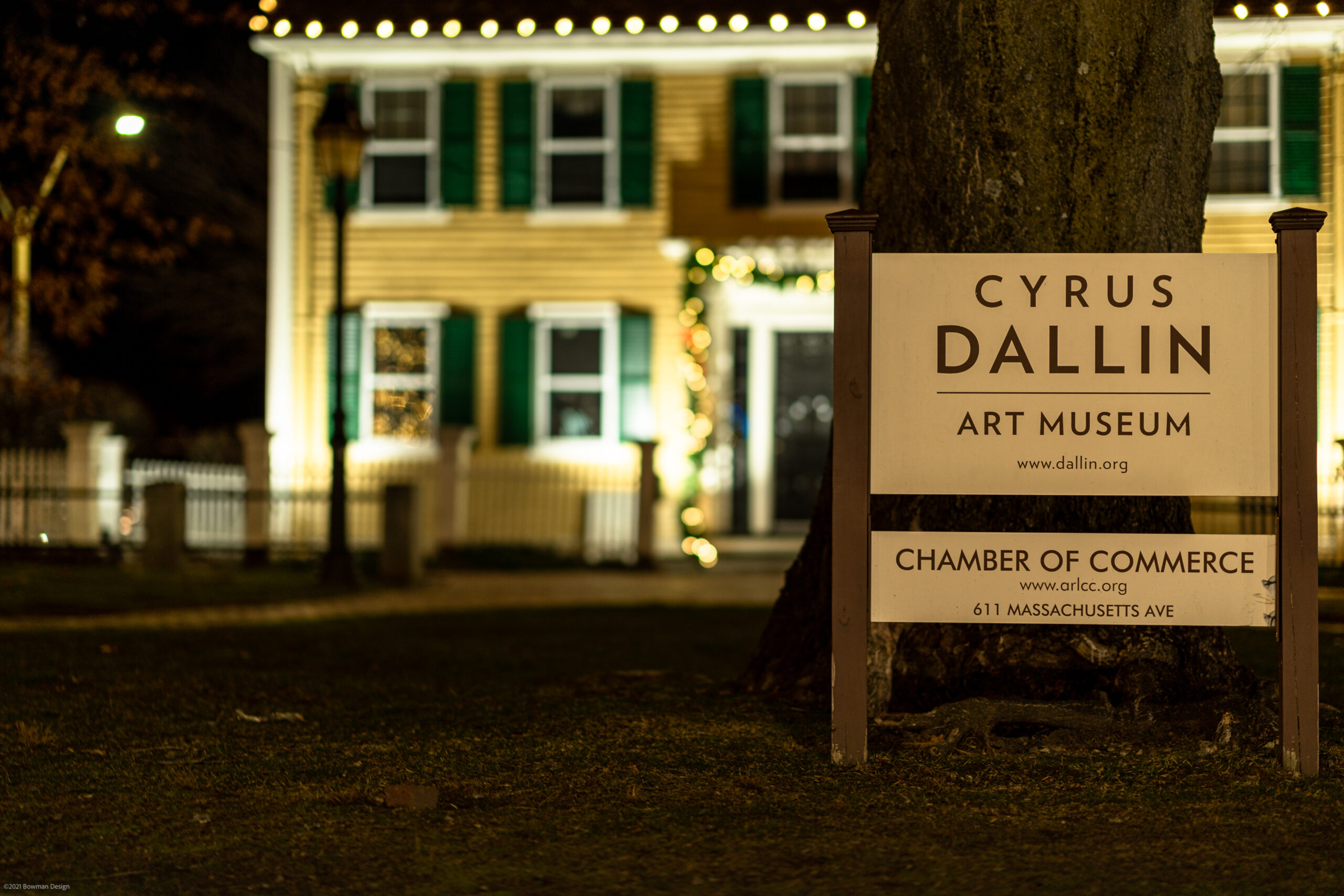
The pictures were made between January and March of 2021, on foot, on the coldest nights of a pandemic winter. A tripod, a wide lens, and shutter speeds of twenty to thirty seconds. I chose the restaurants I knew and had eaten at, and walked more than 24 miles to reach them all.
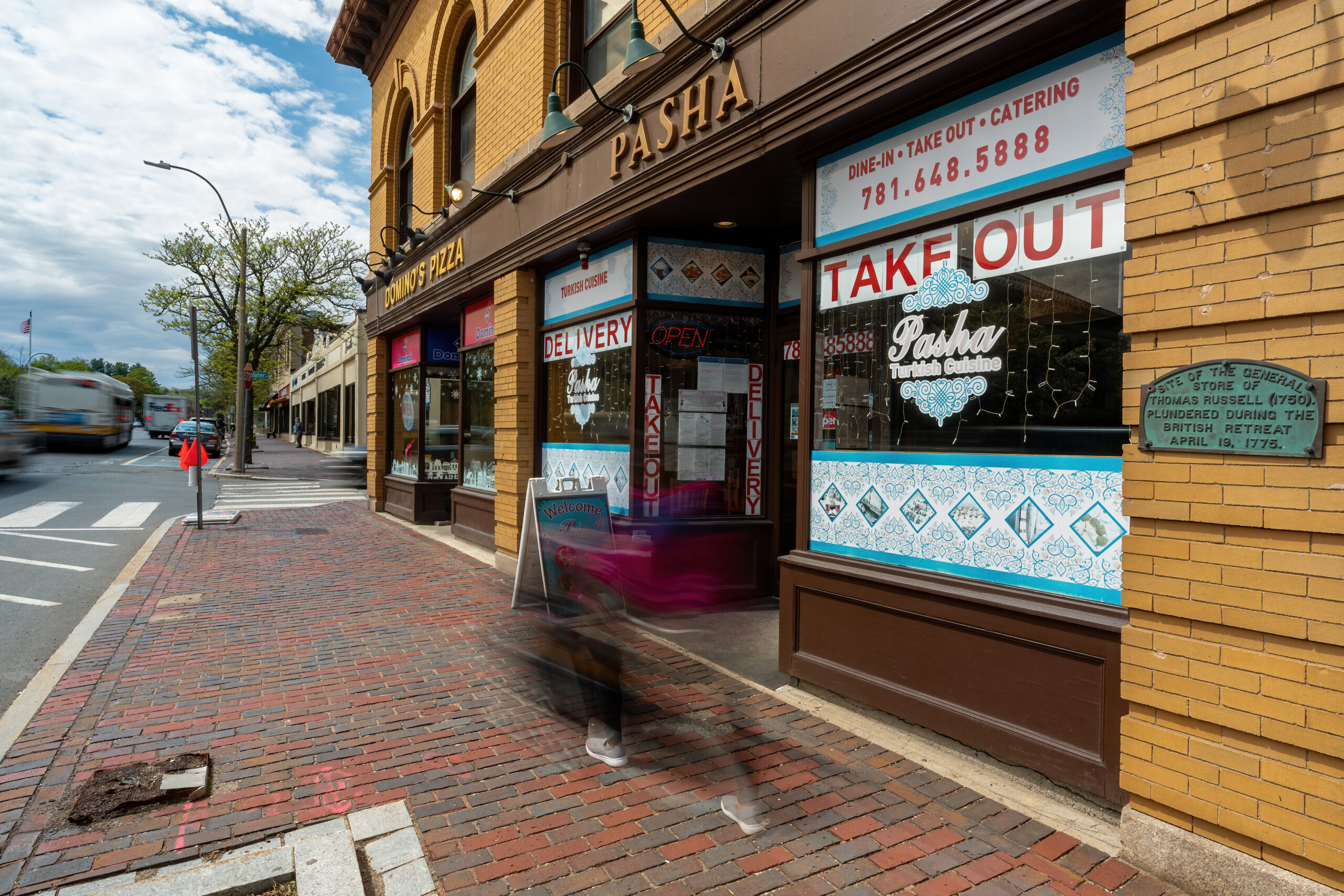
The long exposure did the storytelling. Headlights became ribbons, taillights became red thread, and the MBTA buses, orange and green above and blue and white below, drew the best lines of all. A frame that would have shown an empty street at a sixtieth of a second showed a town in motion at thirty.
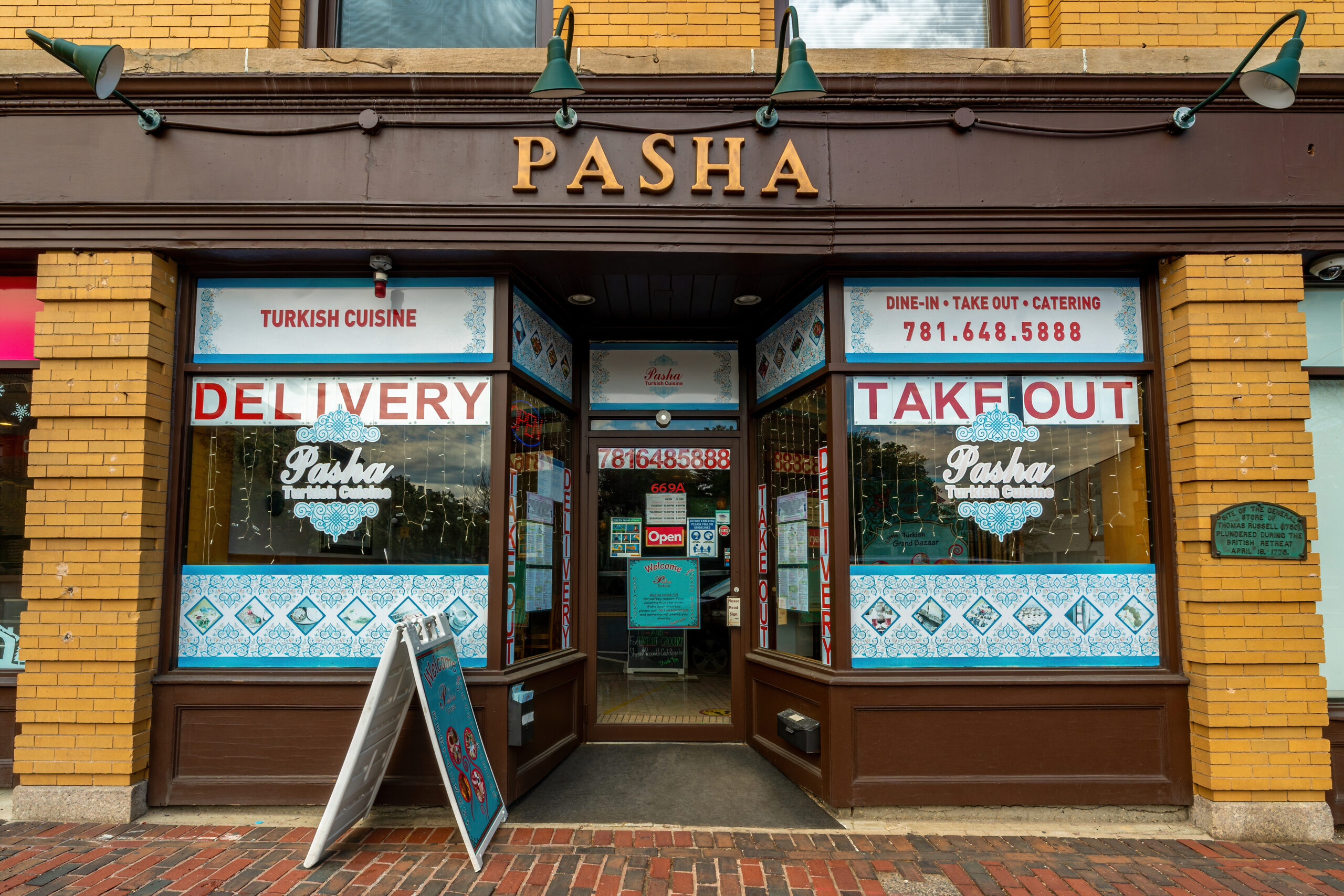
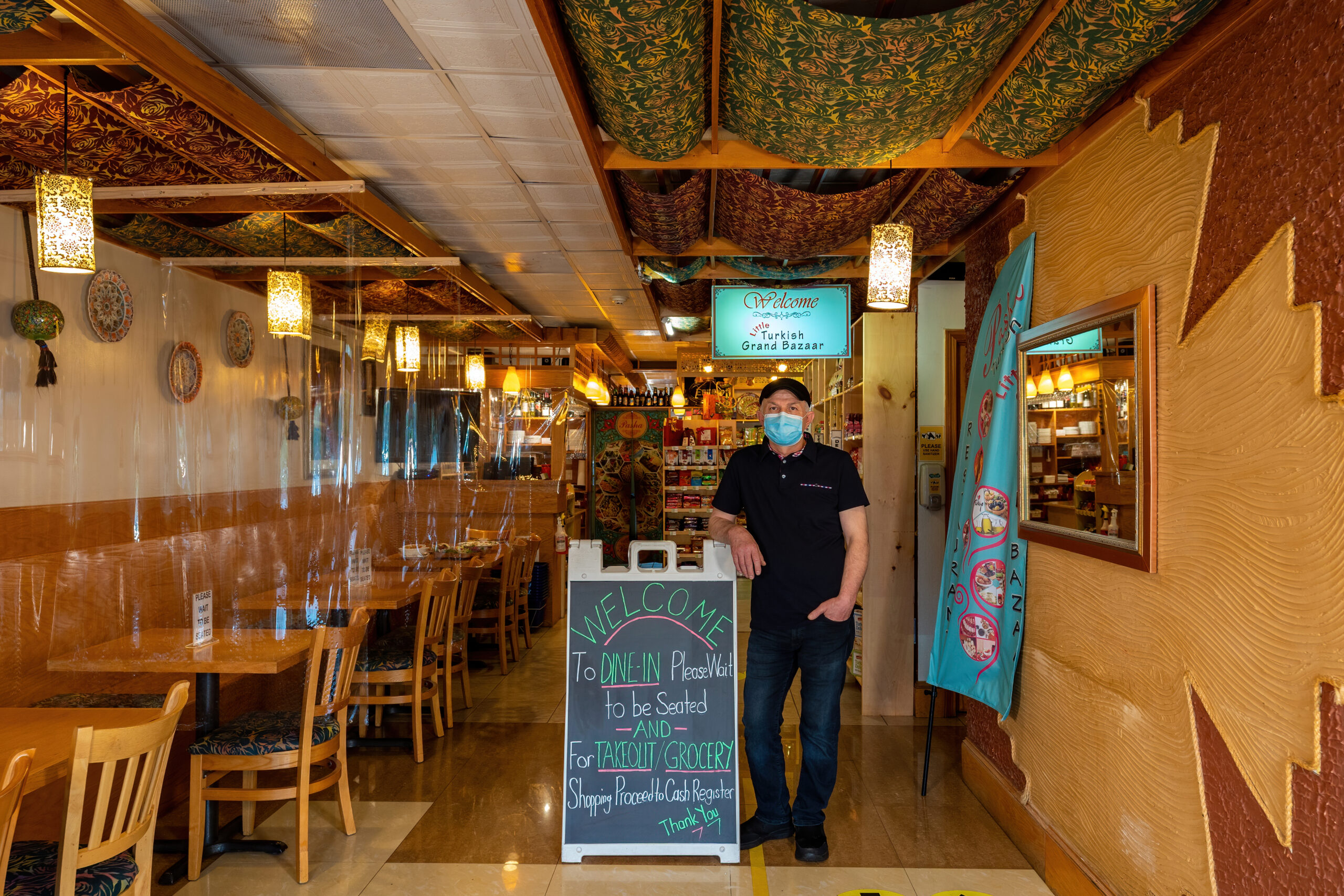
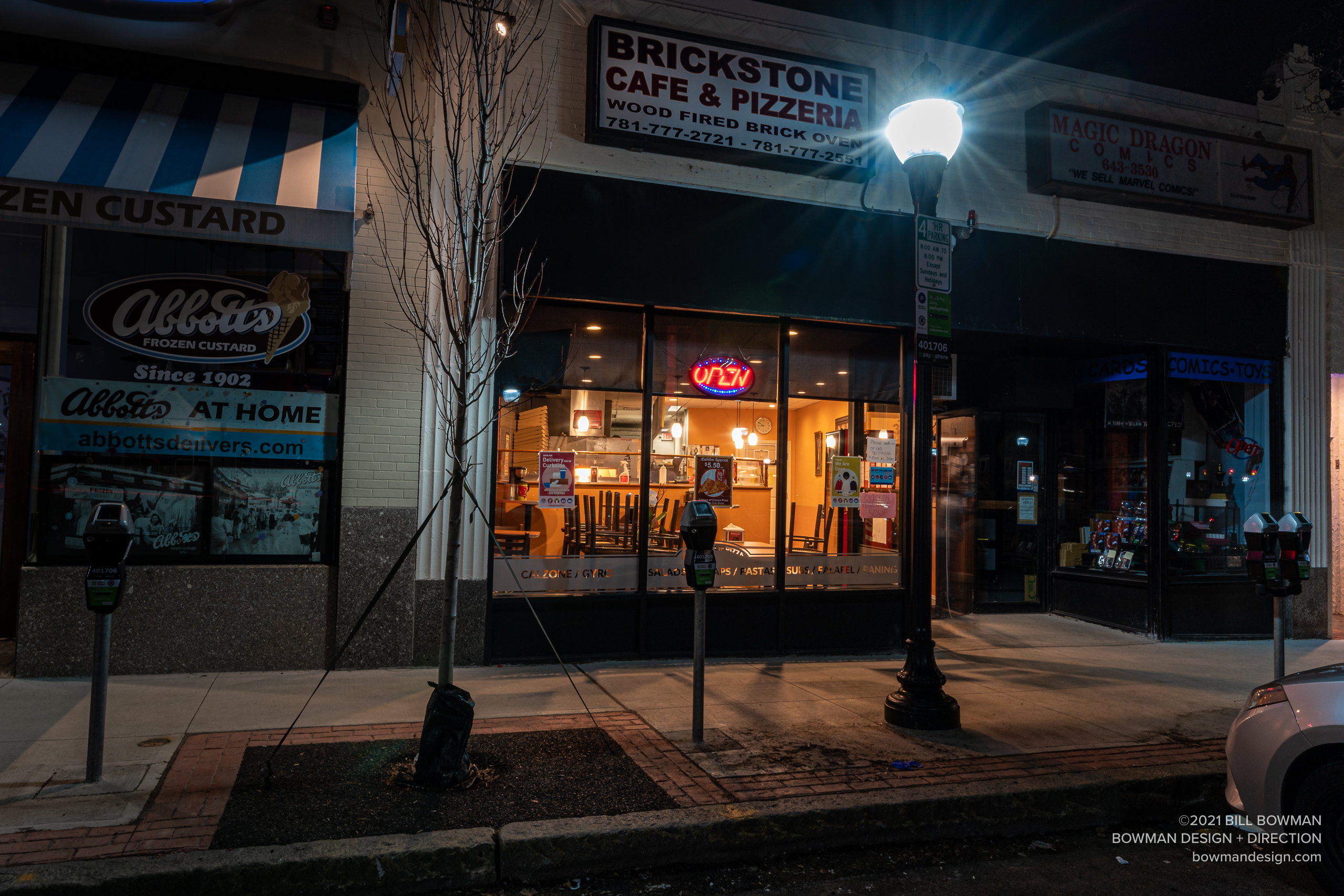
Inside the frames, the restaurants told their own stories: cooks at the pass, takeout bags on a counter, a neon OPEN sign, and plexiglass between the tables at Pasha. At Brickstone Cafe the sign’s timer had failed, so I lit it in post, after the owner ran across the street in the cold to make sure I had not given up on him.
Nothing was staged and no one was asked to pose. The pictures had to be true, because their job was to be believed. A neighbor scrolling at nine at night needed to know, without a doubt, that the light in that window was on right now.
The camera did not dramatize a closed town. It gathered enough light to reveal the activity already there.
Sweet and Savory Arlington
The town asked for the second round. Residents on The Arlington List wanted the bakeries and coffee shops that were open by dawn and closed before the night walk began, so the series moved into daylight and I gave each story more room.
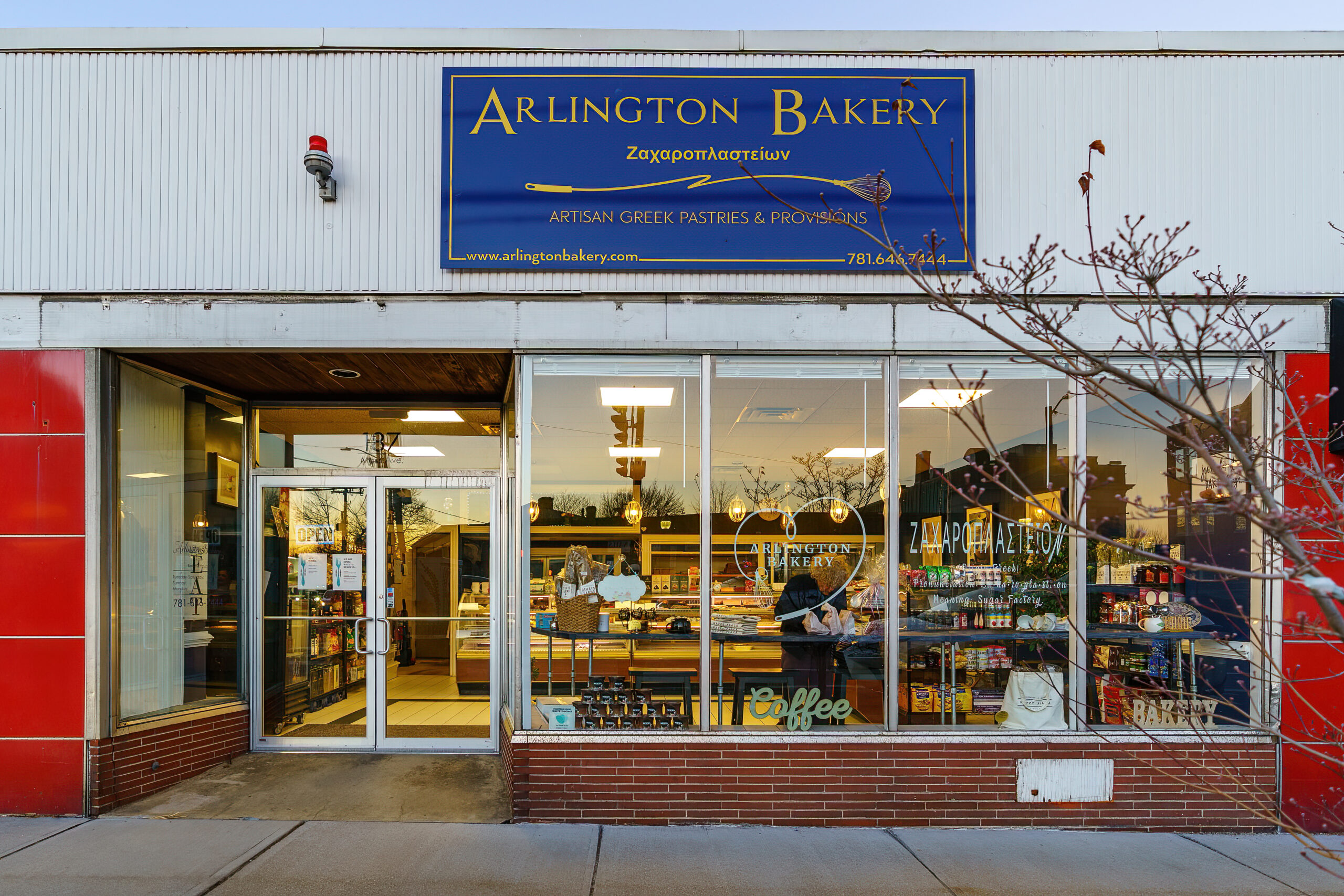
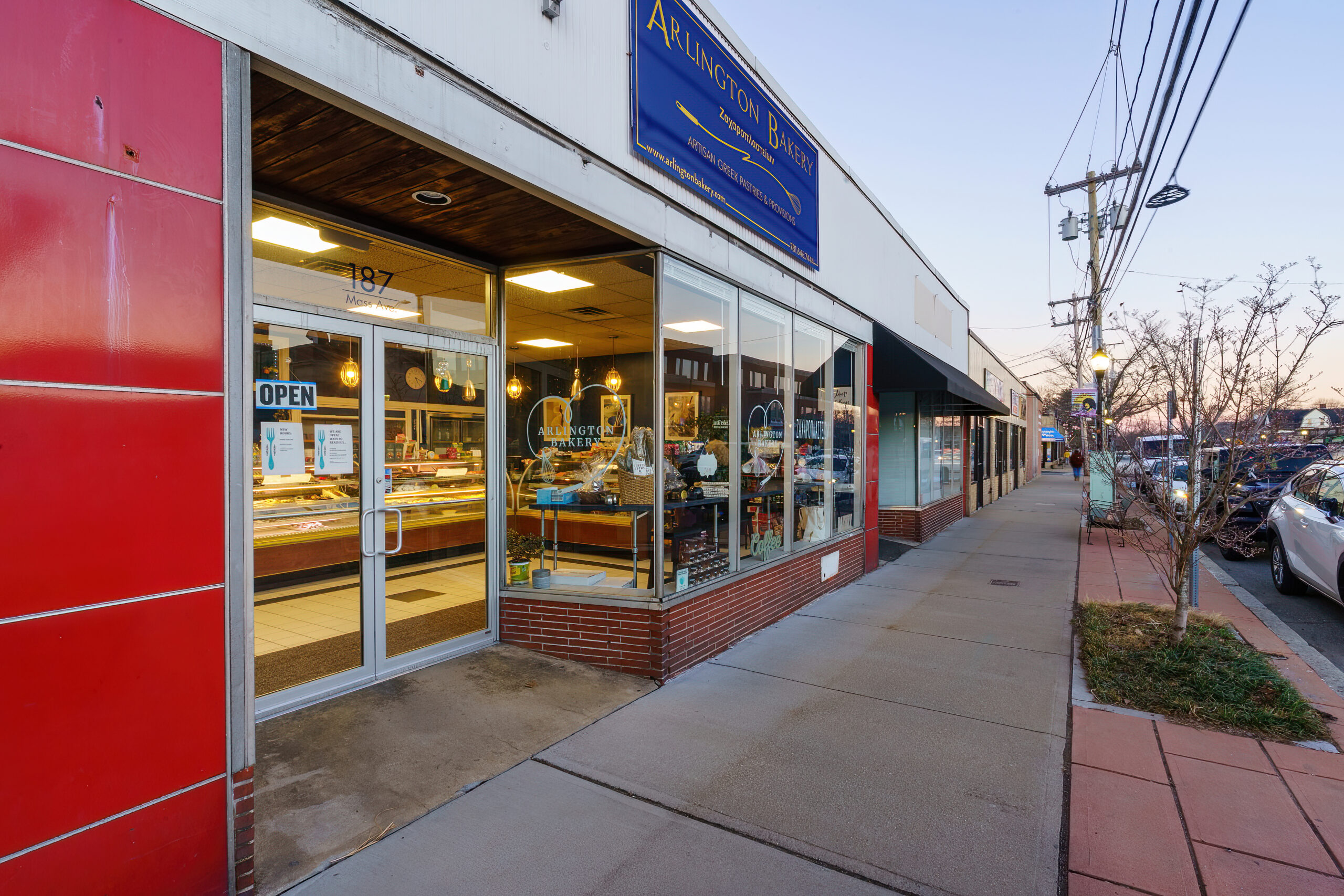
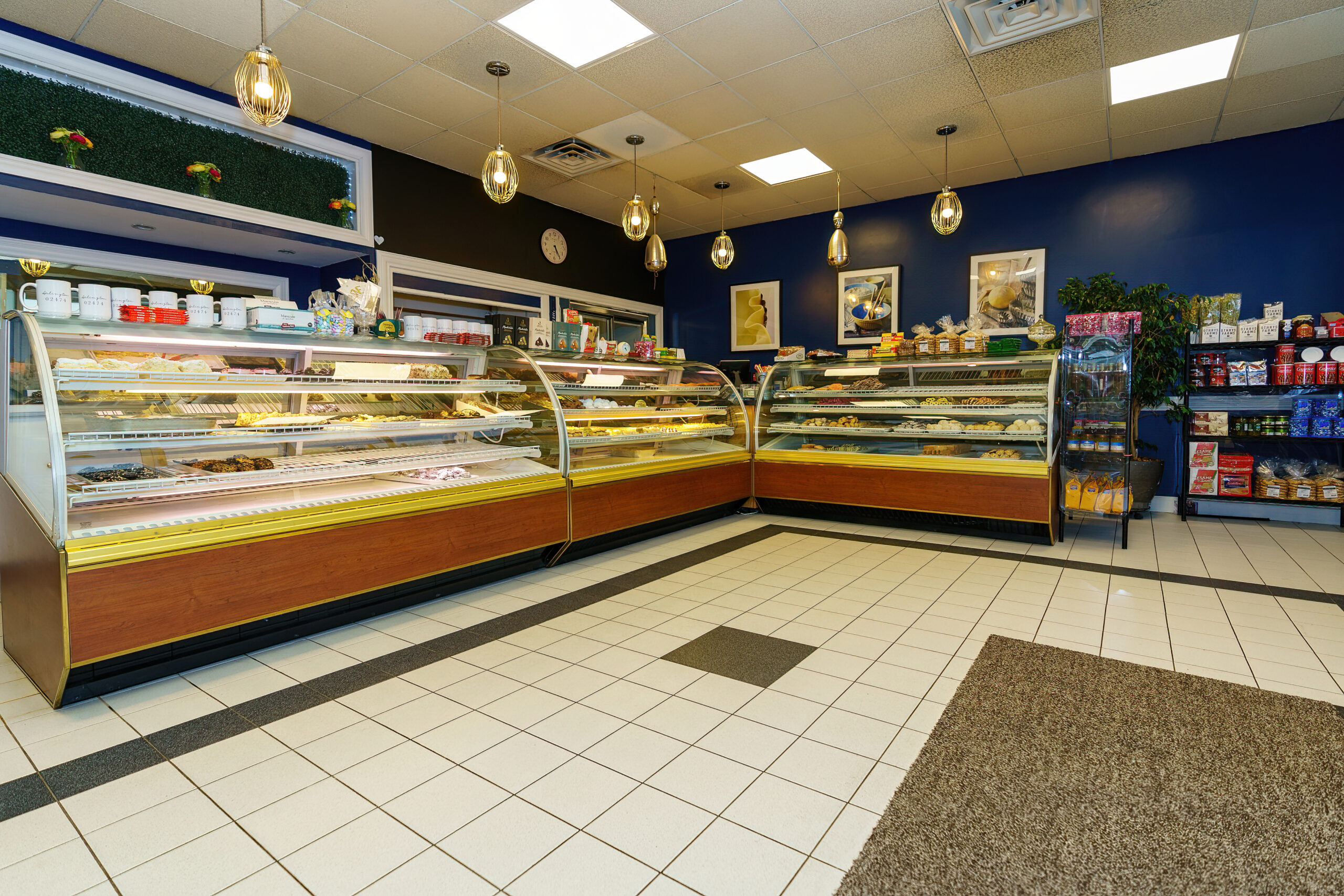
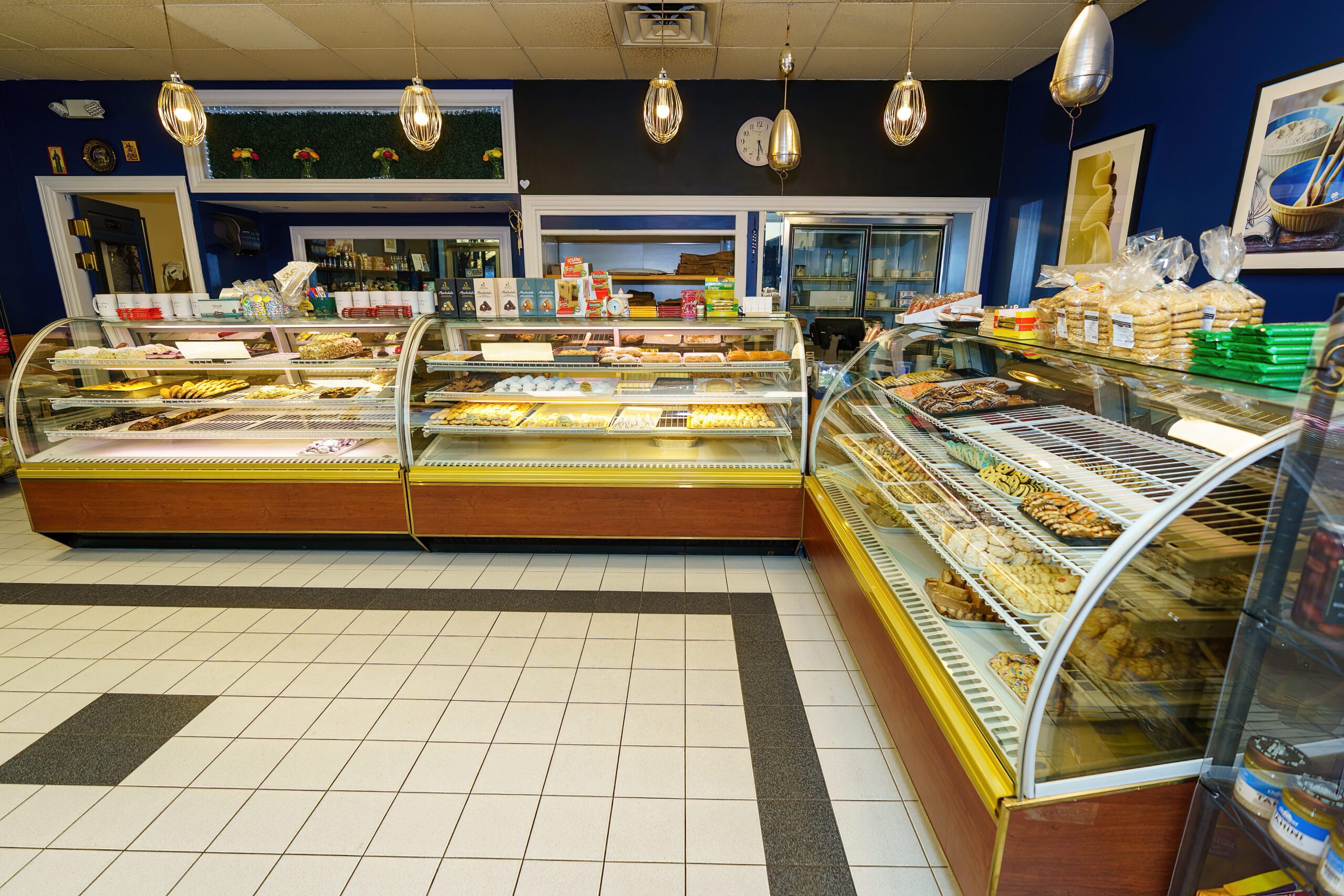
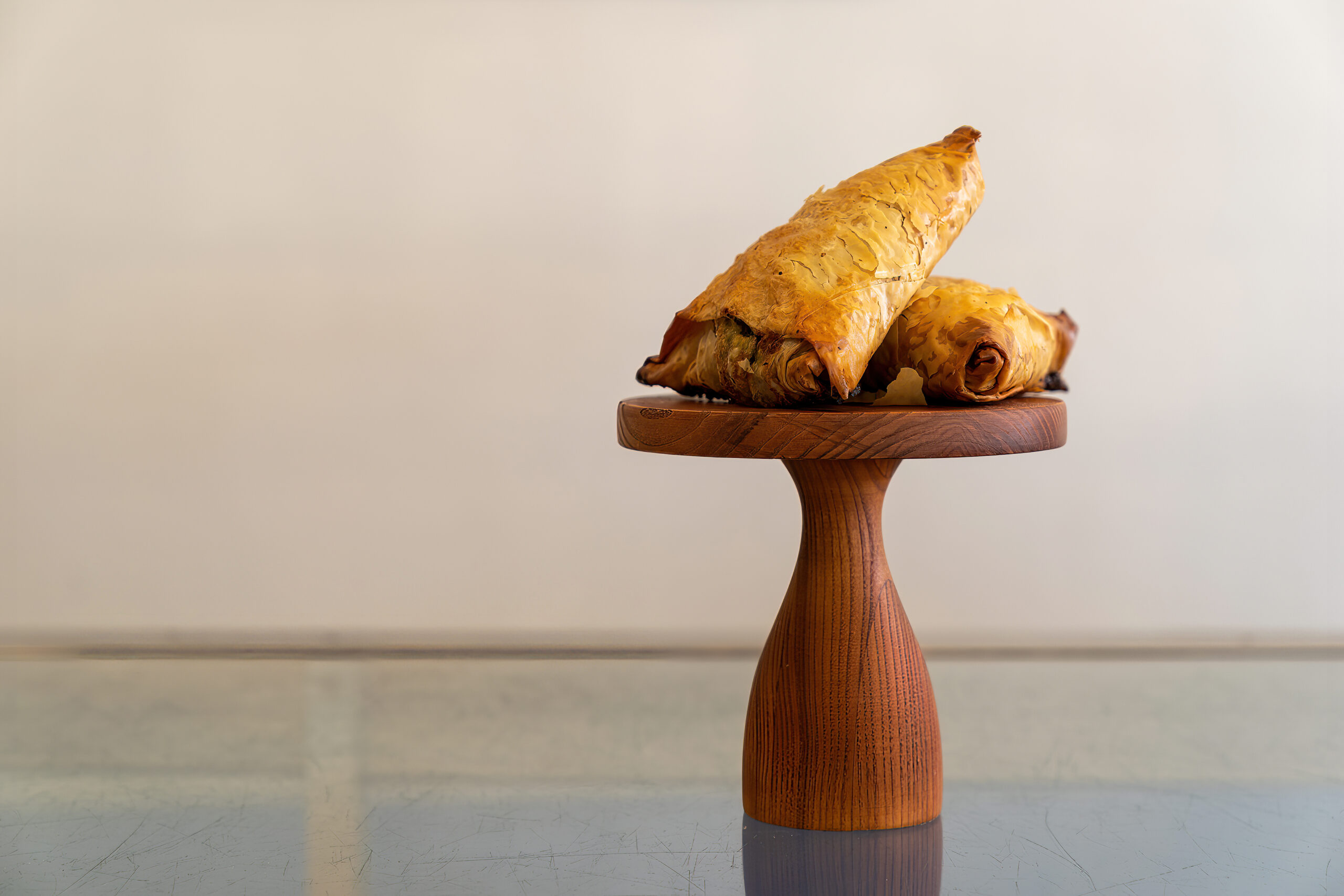
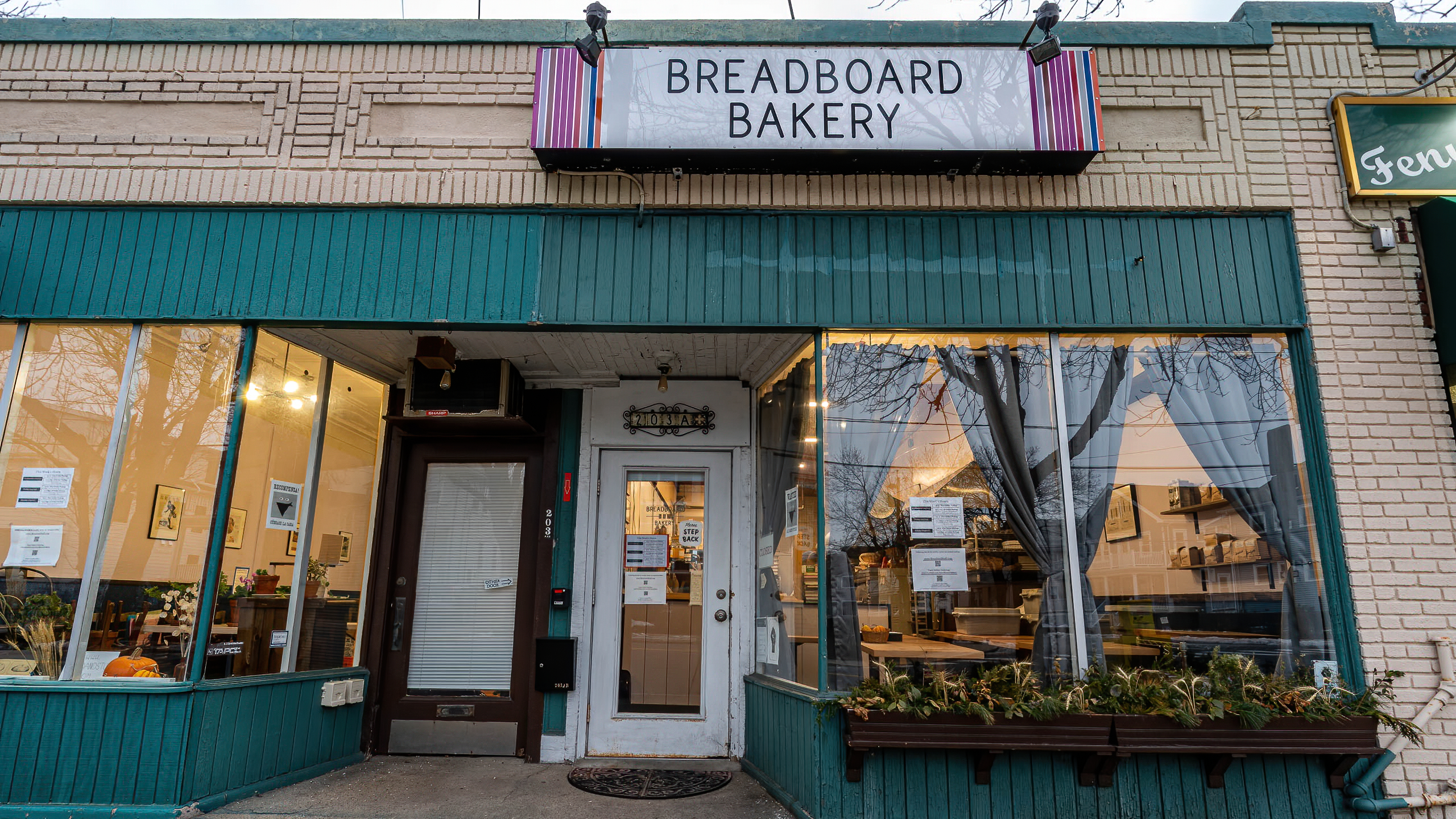
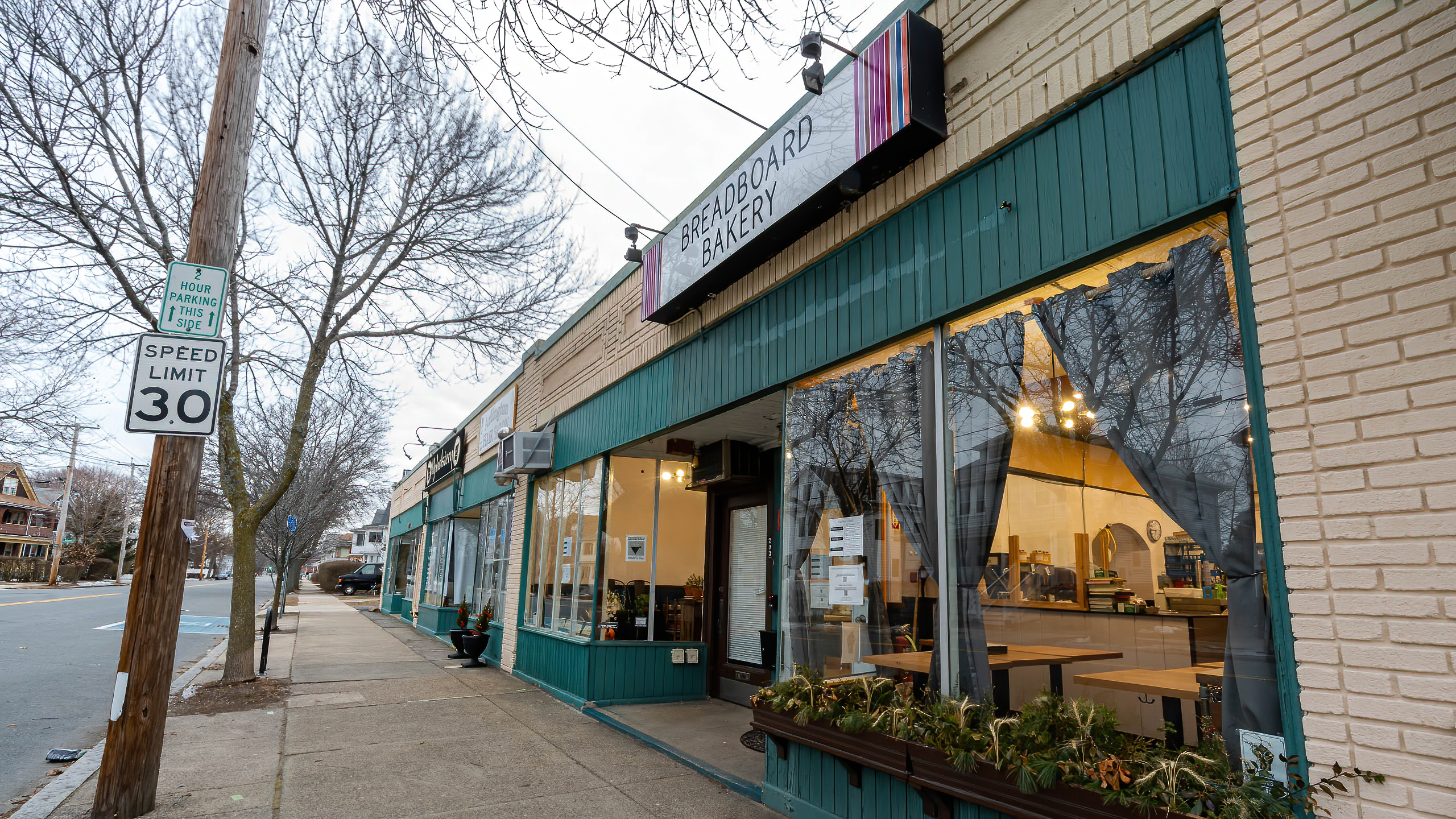
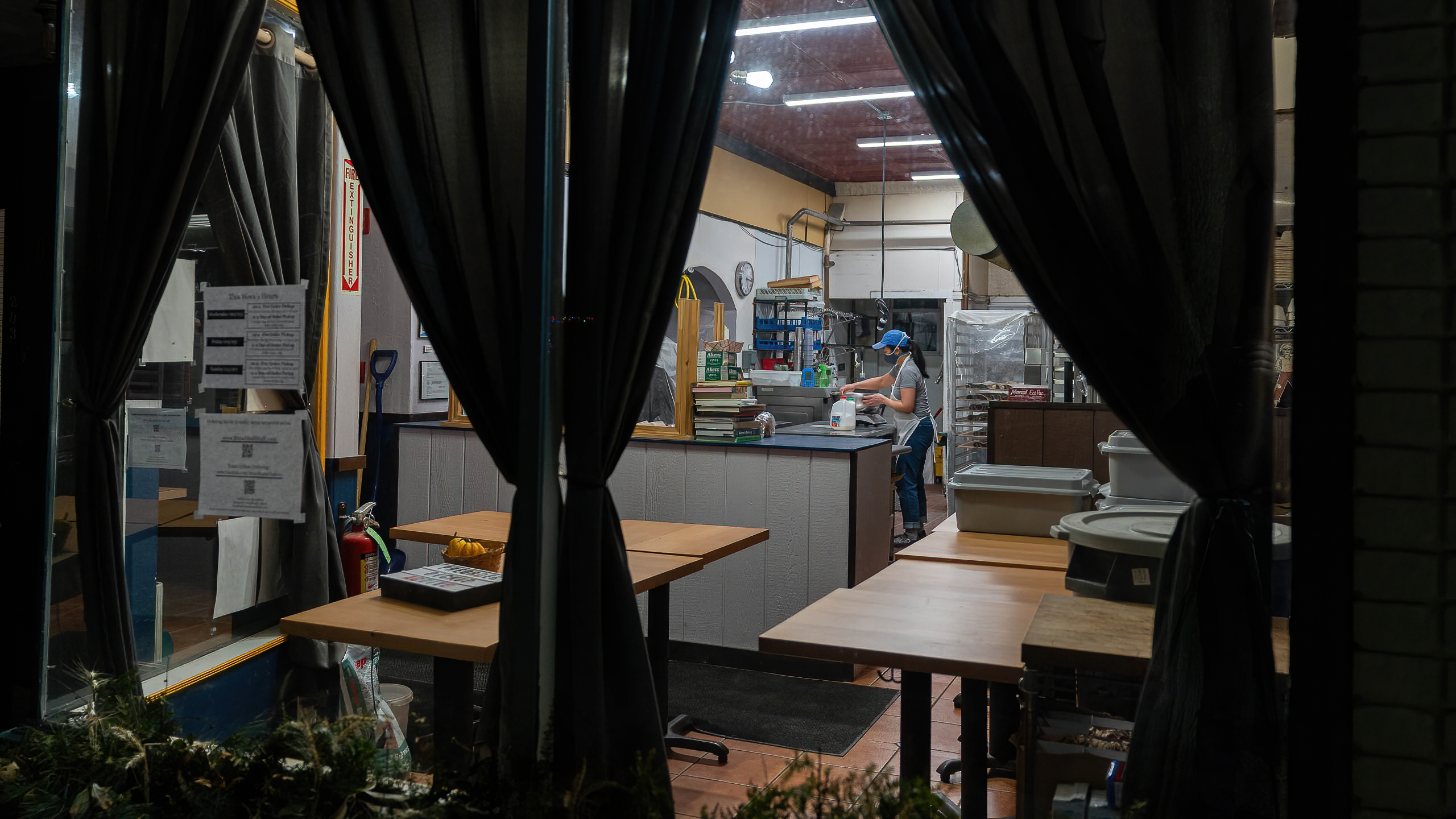
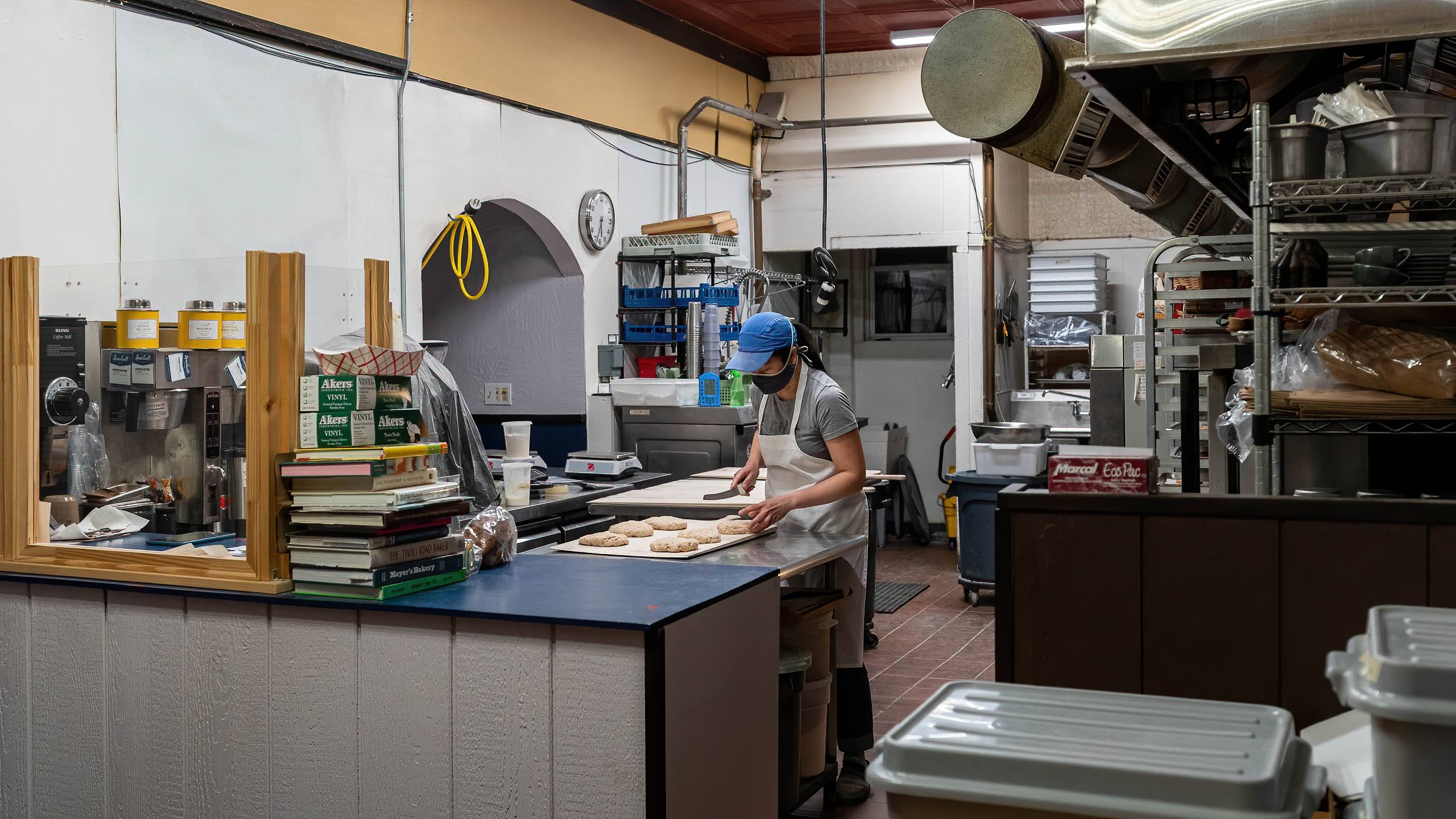
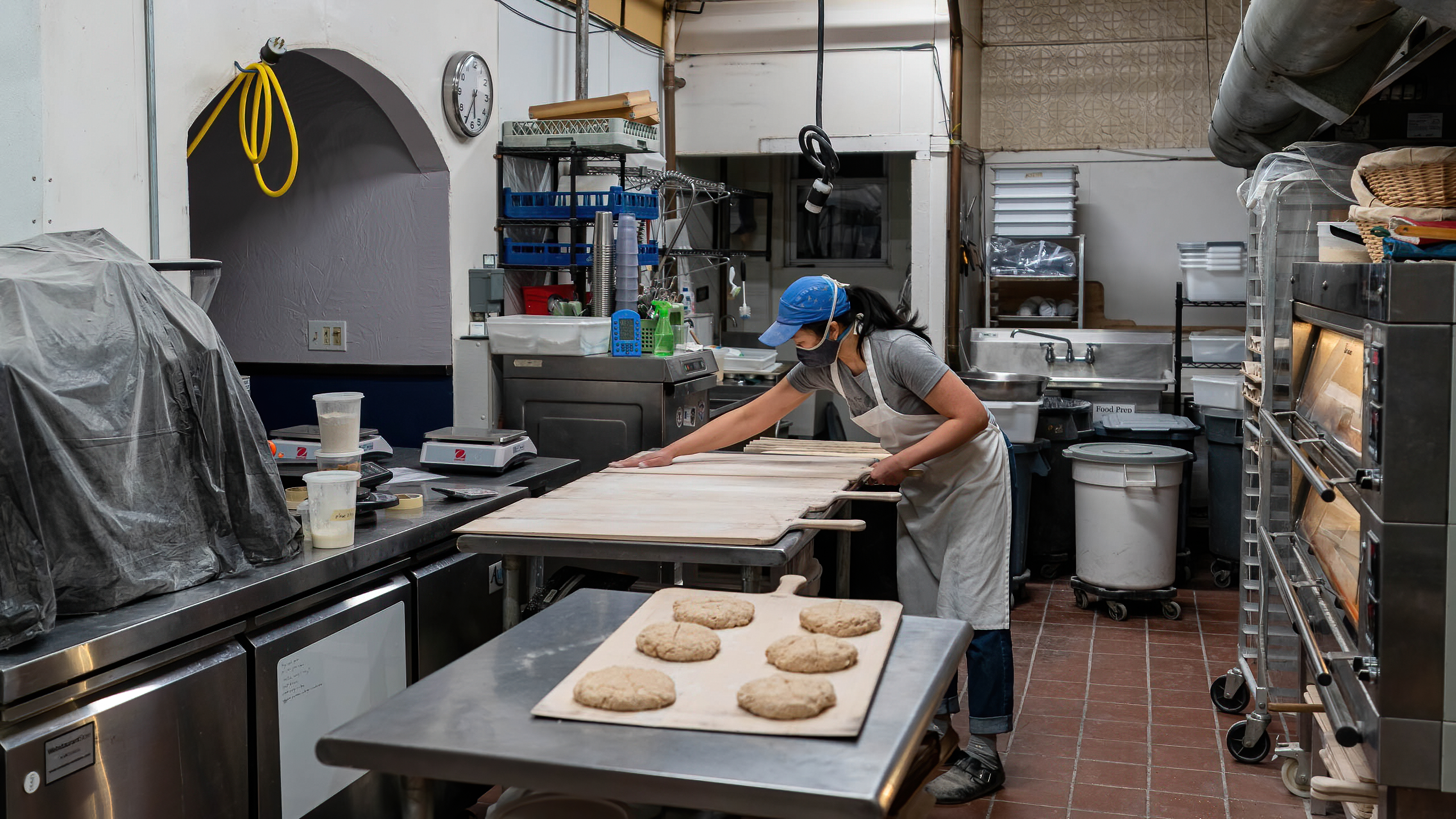
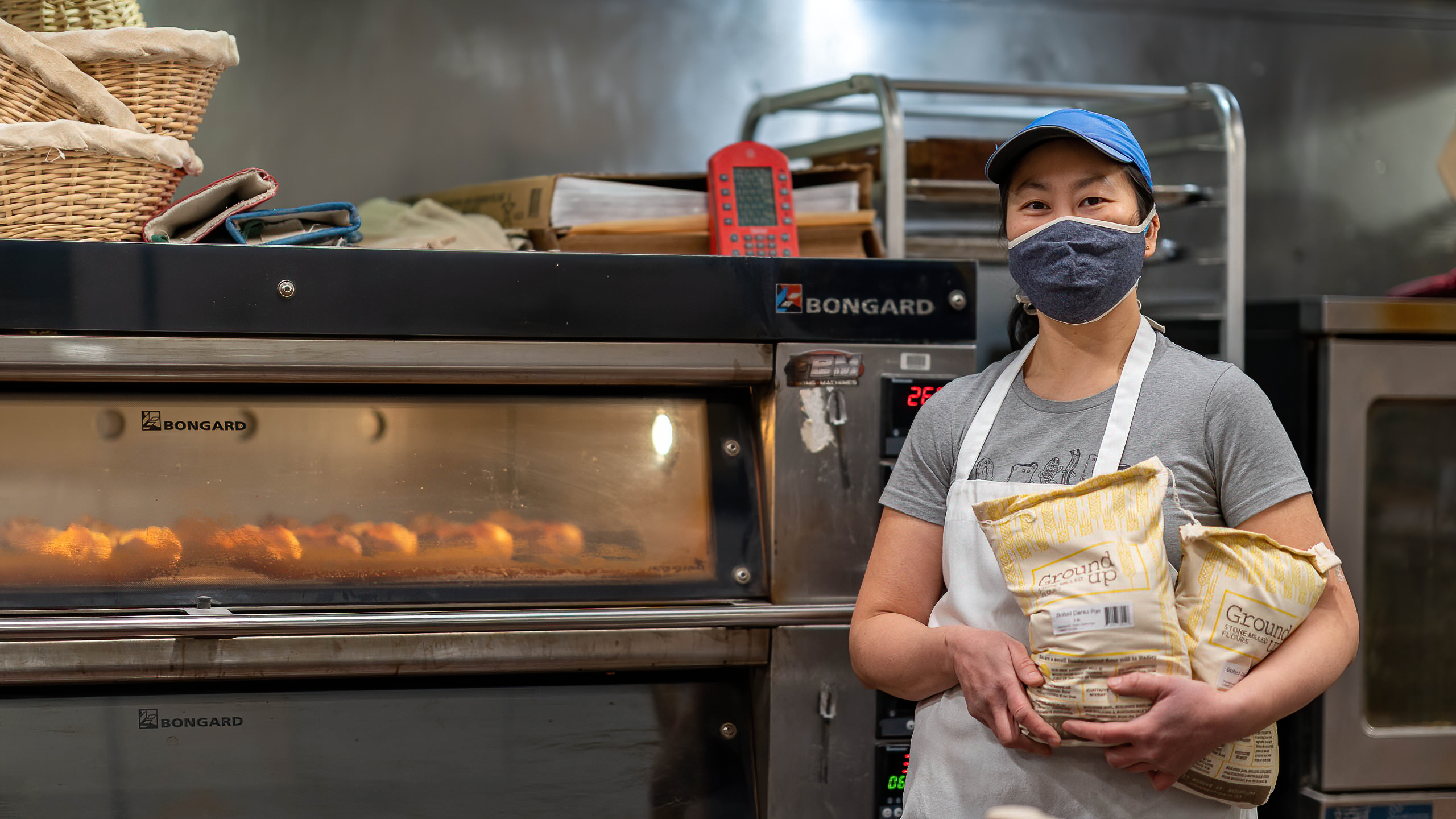
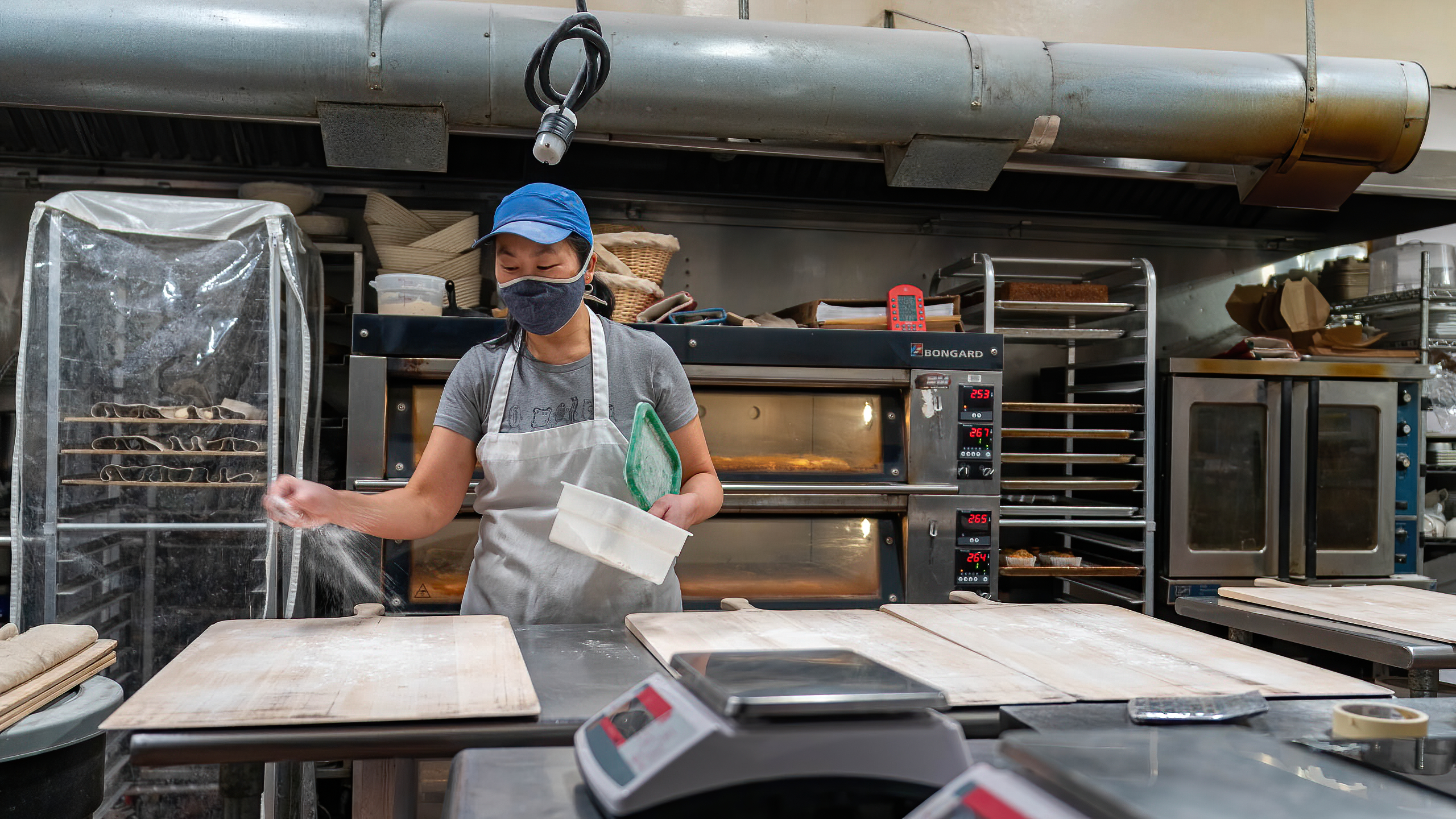
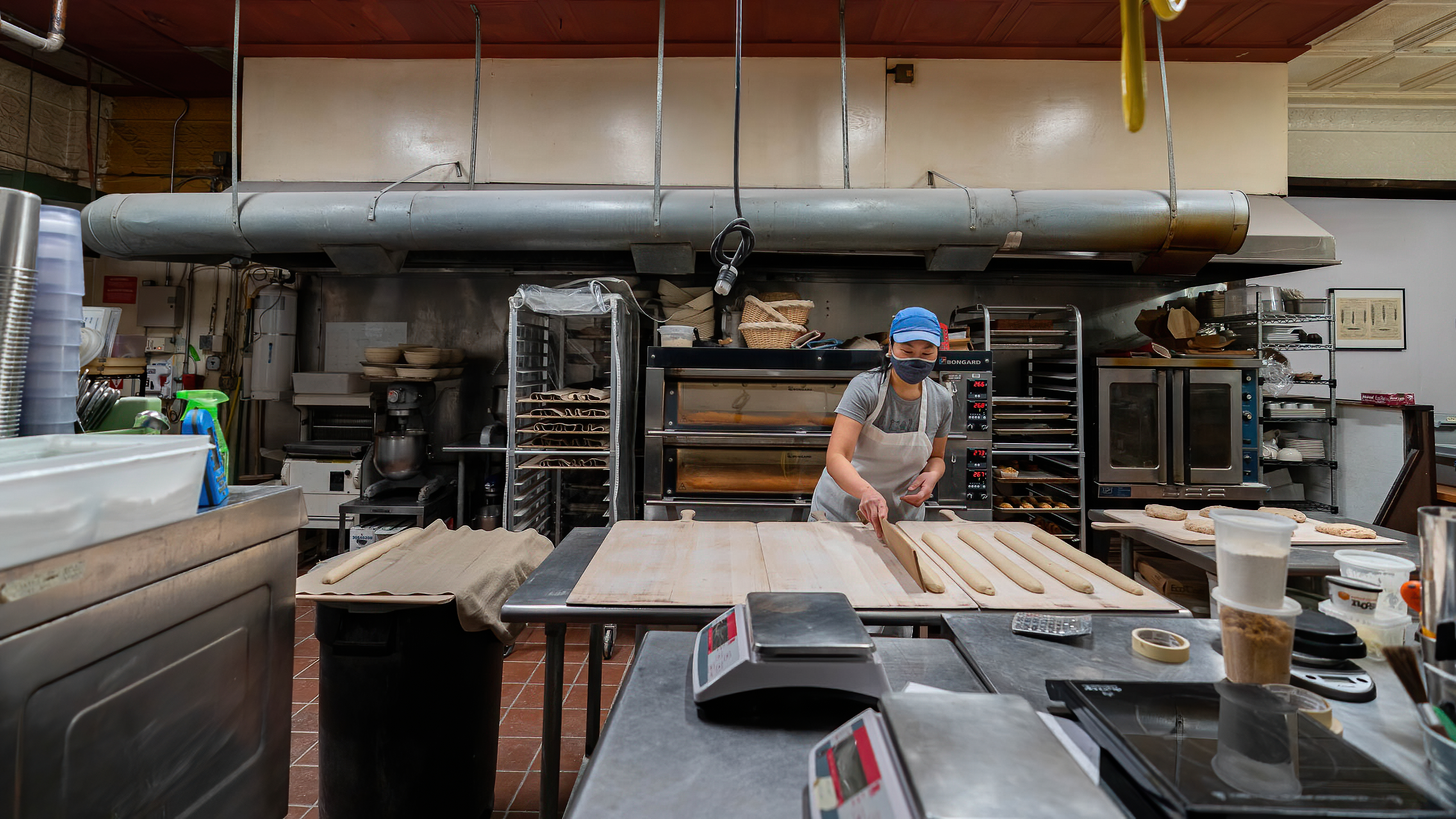
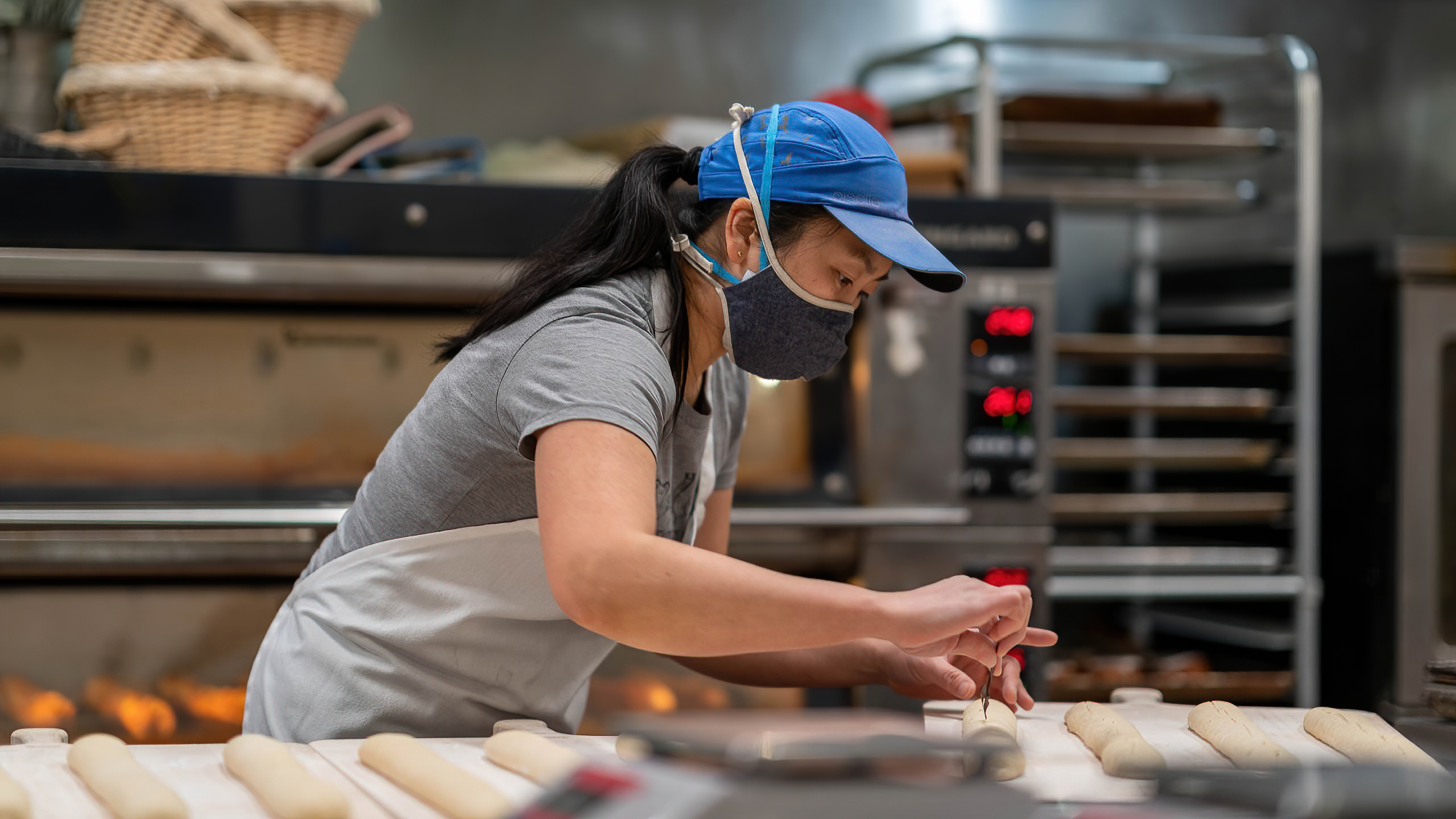
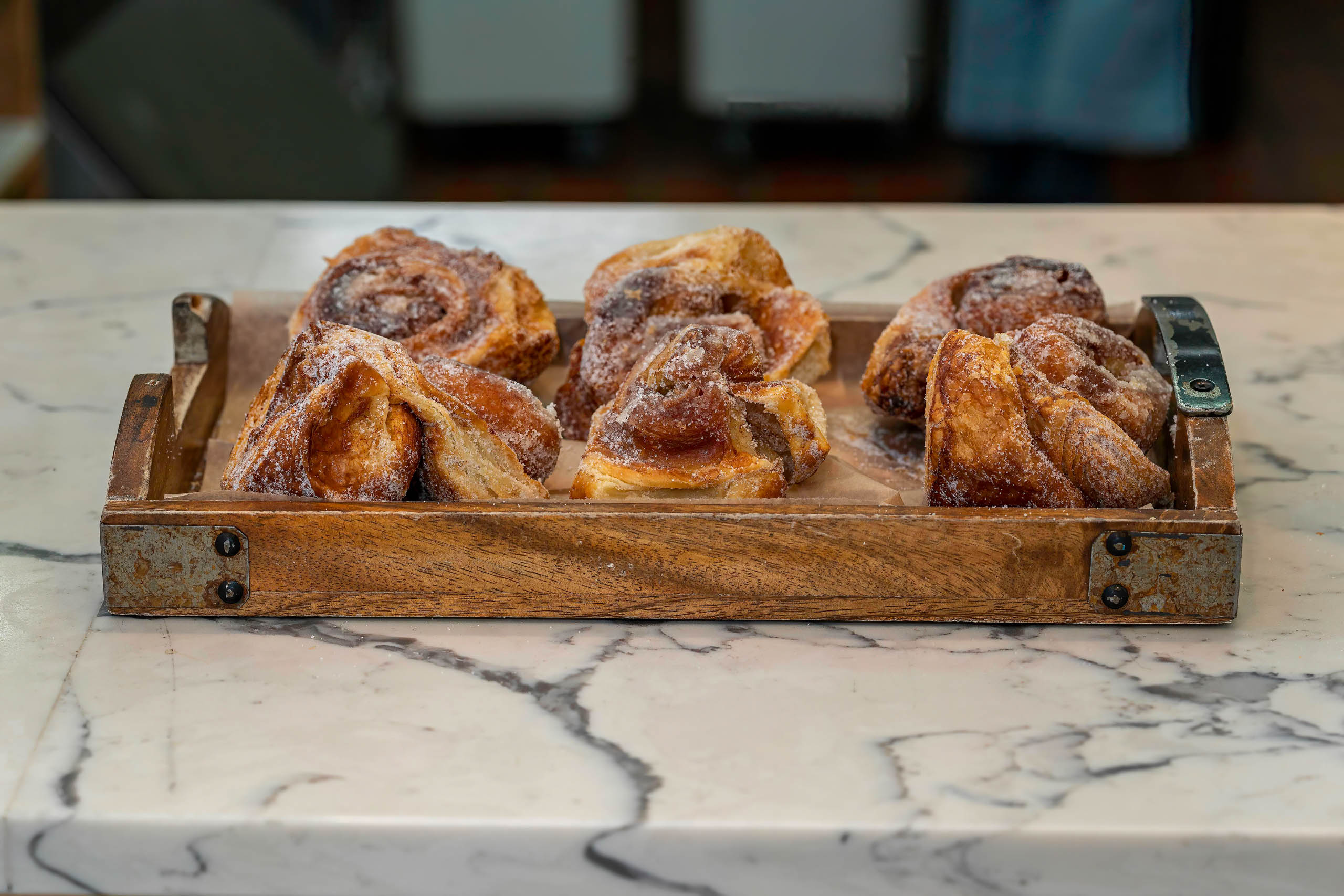
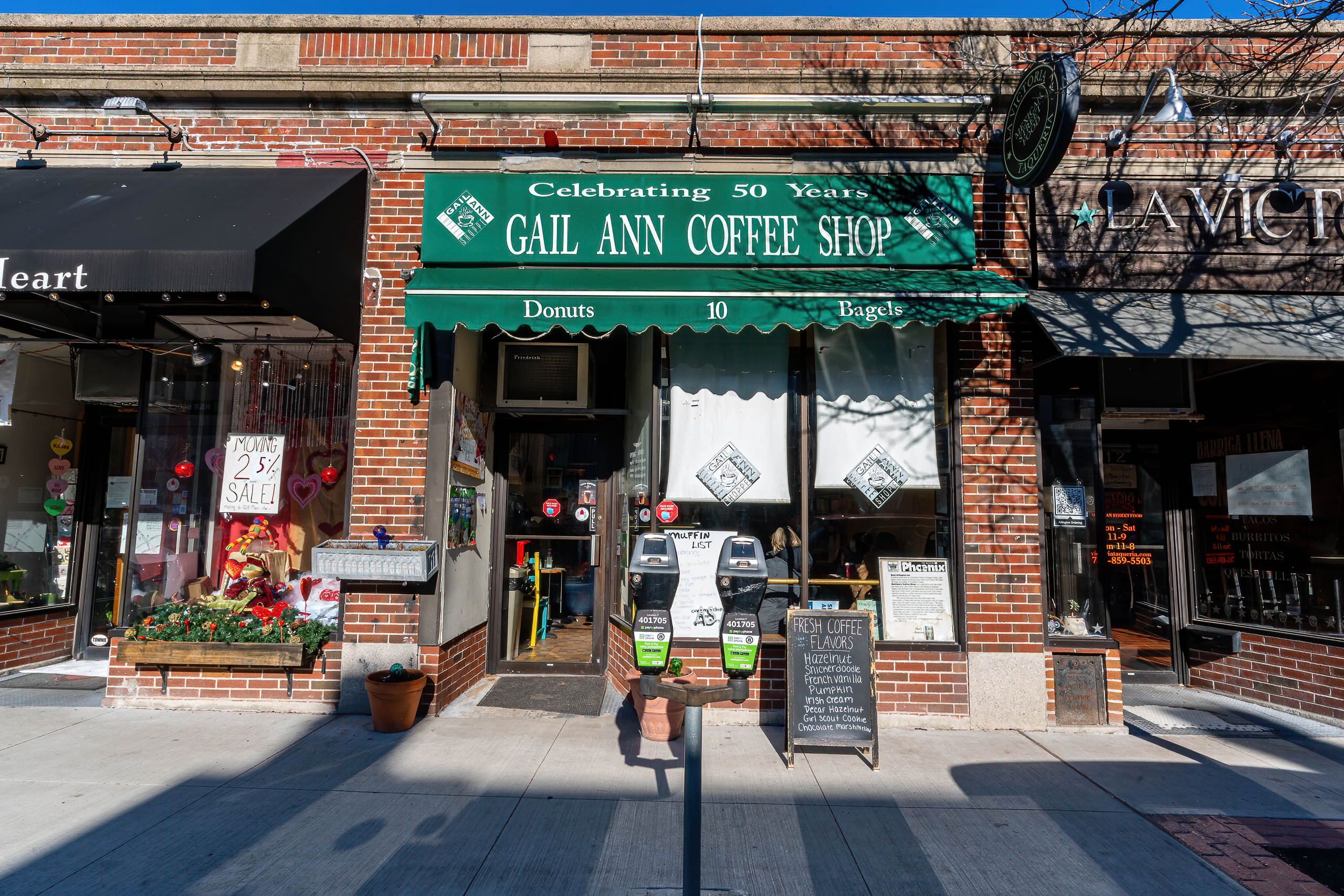
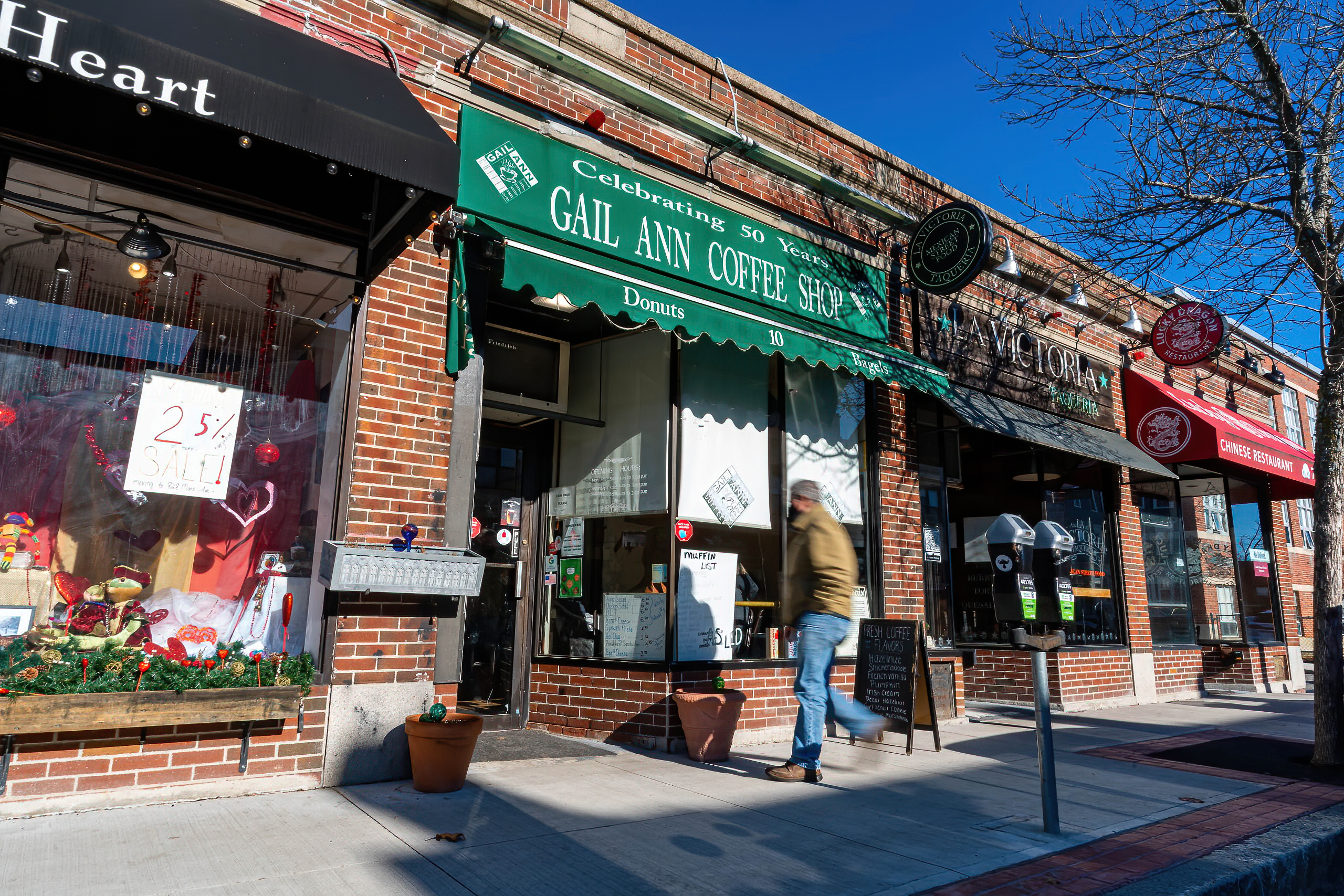
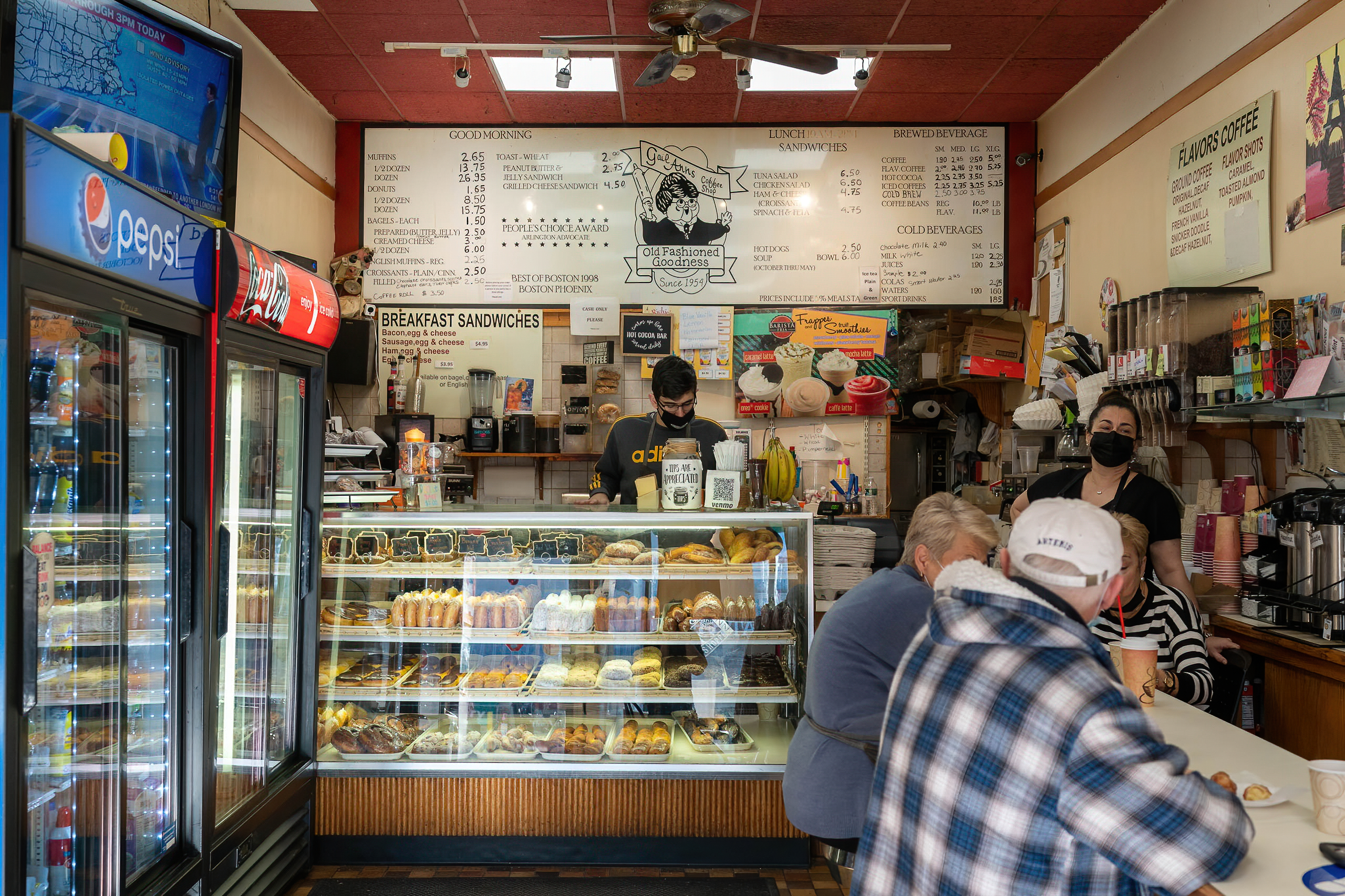
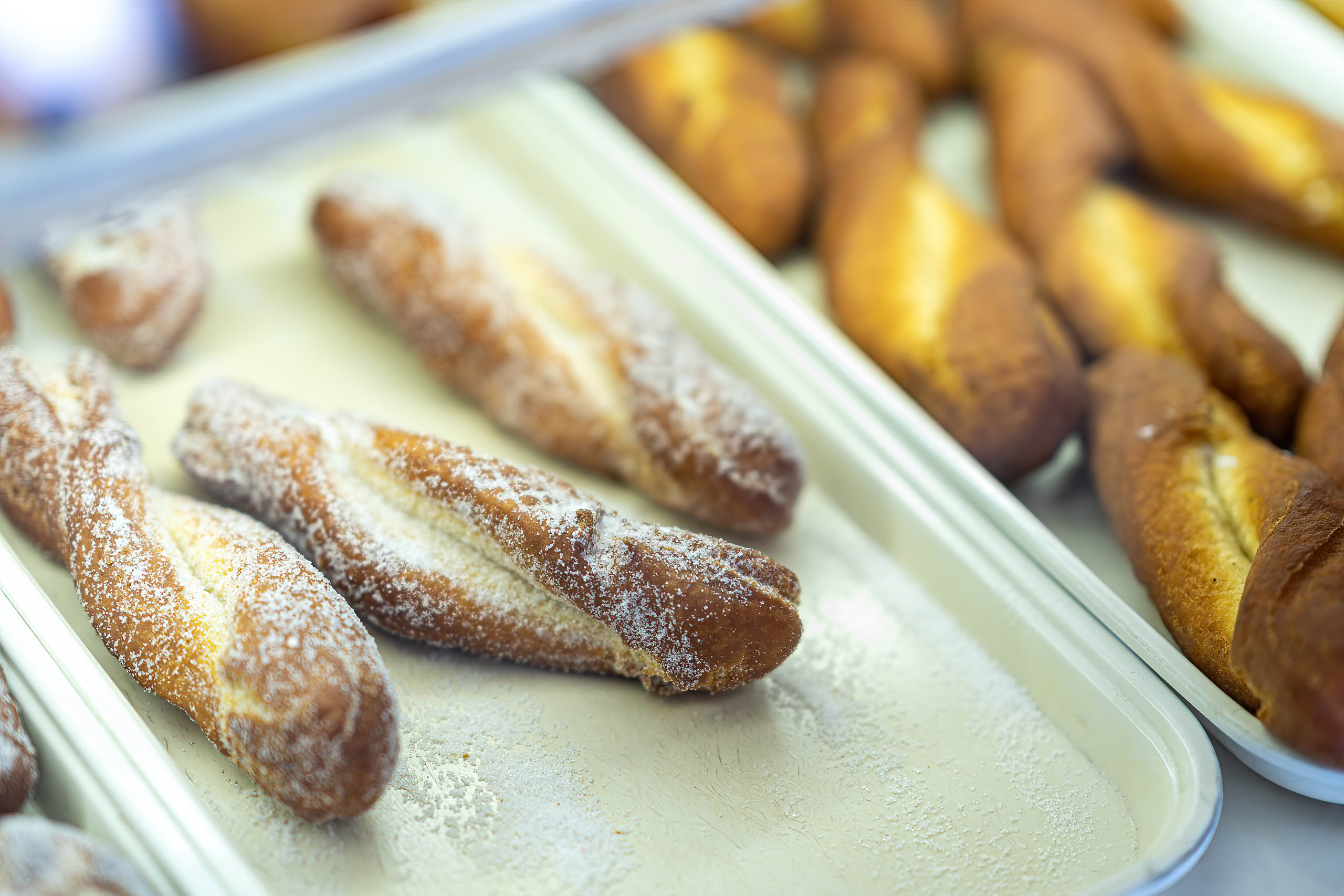
The stories got longer because the people deserved it. Daisy Chow at Breadboard with fifteen years in her hands and a preorder model built in a week. Lika Velentzas at Arlington Bakery, baking a prosphoron for Lent between a walk-in cheesecake and Easter. Gail Ann’s, run by the same Greek family since 1954, solving the world’s problems from the counter.
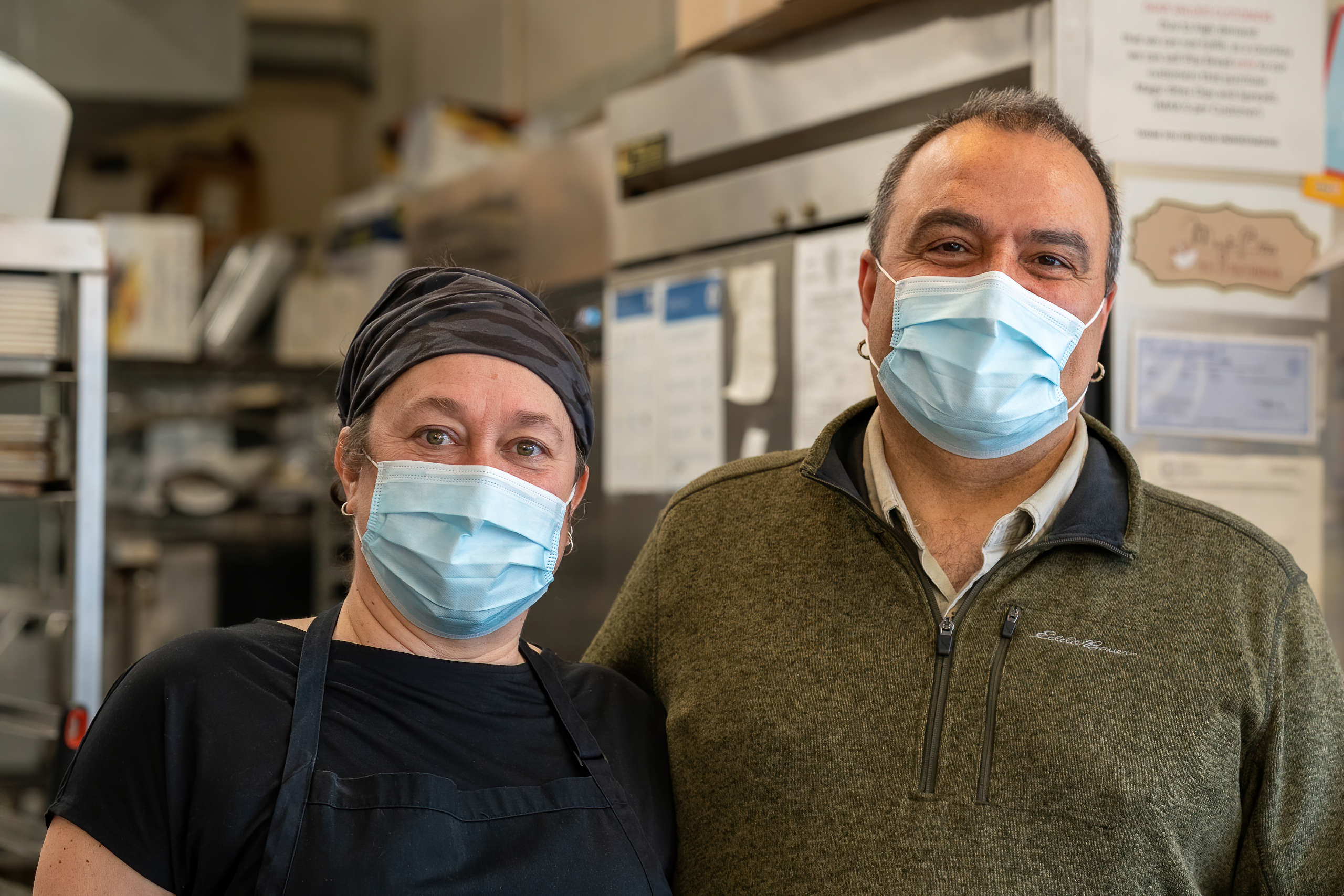
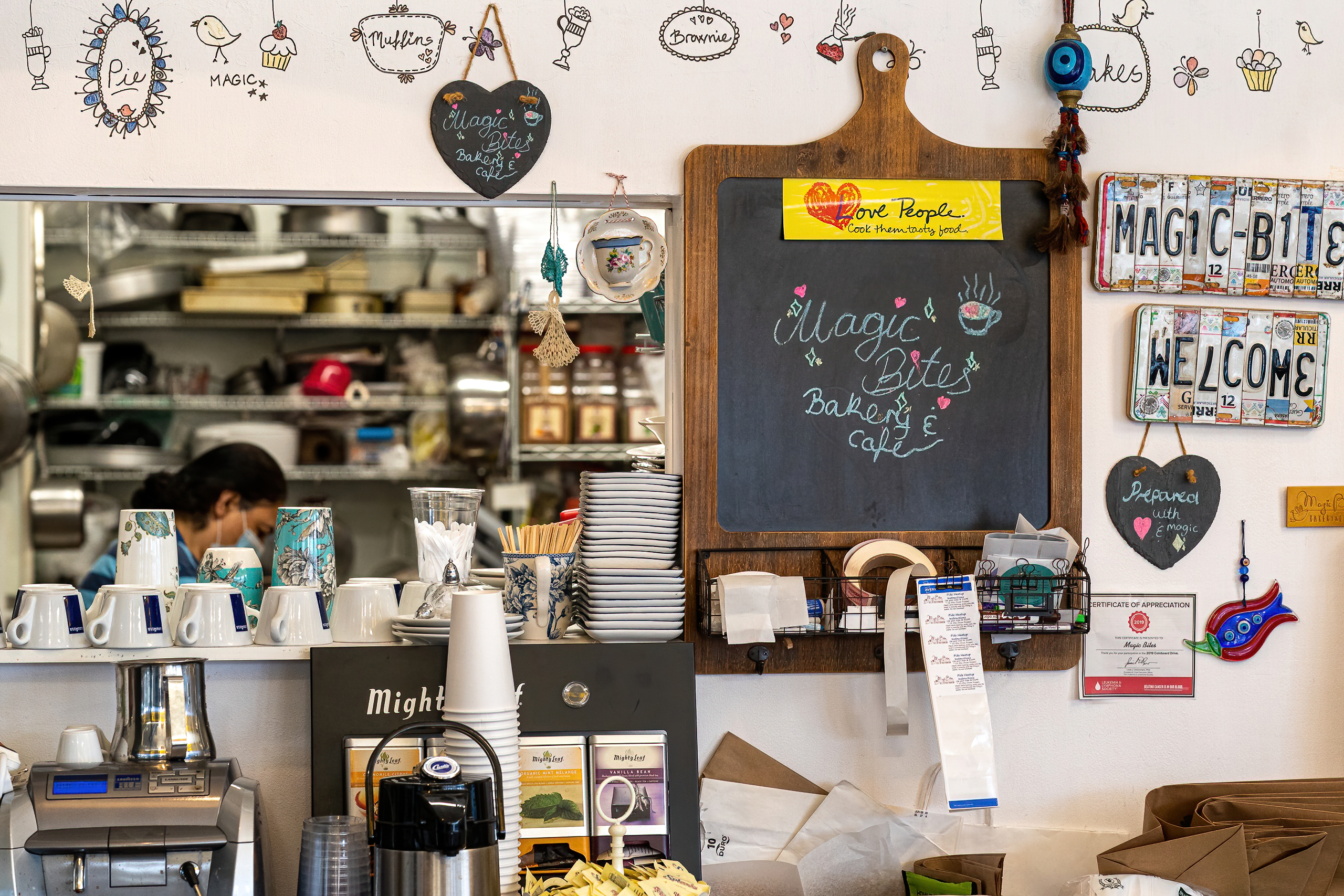
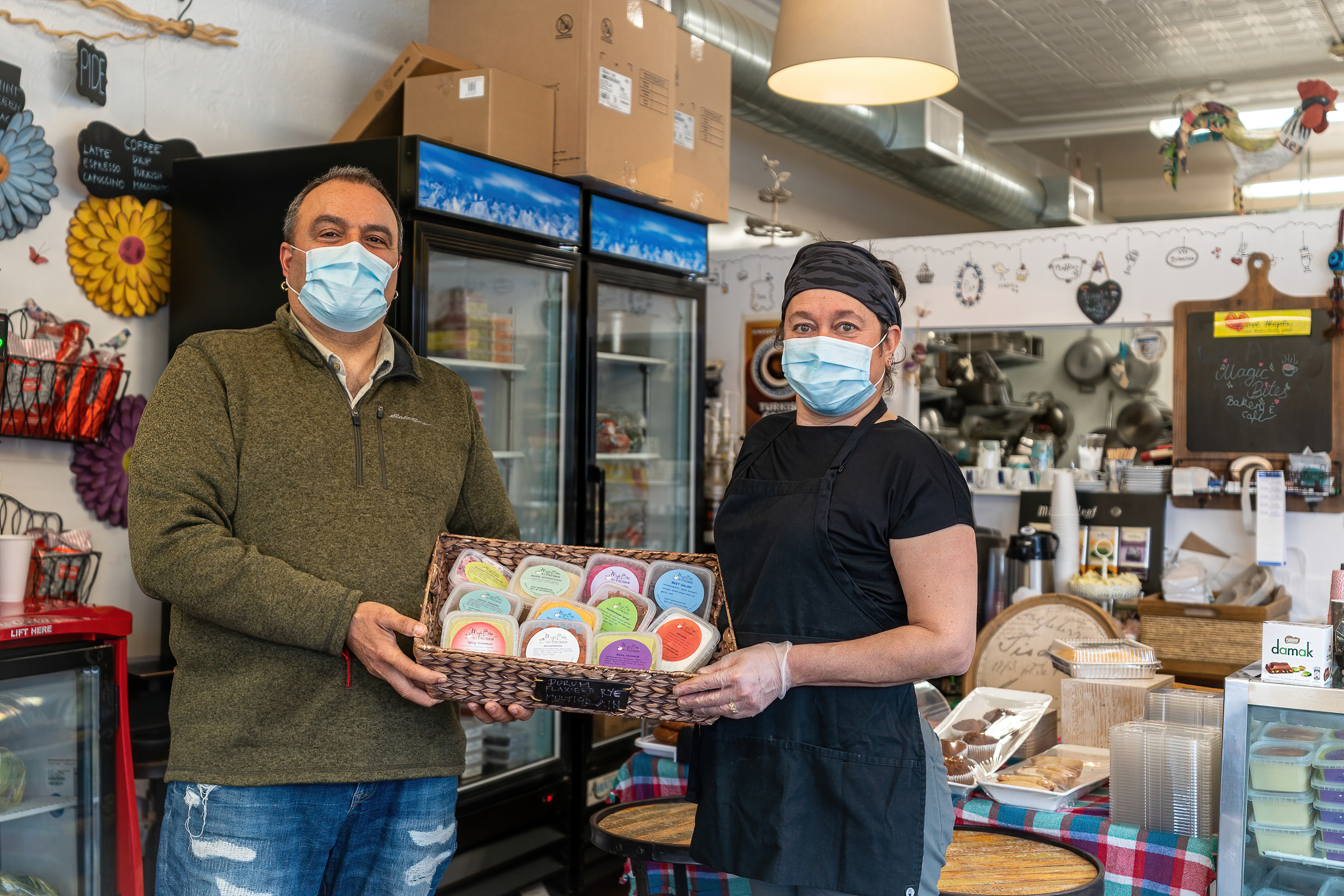
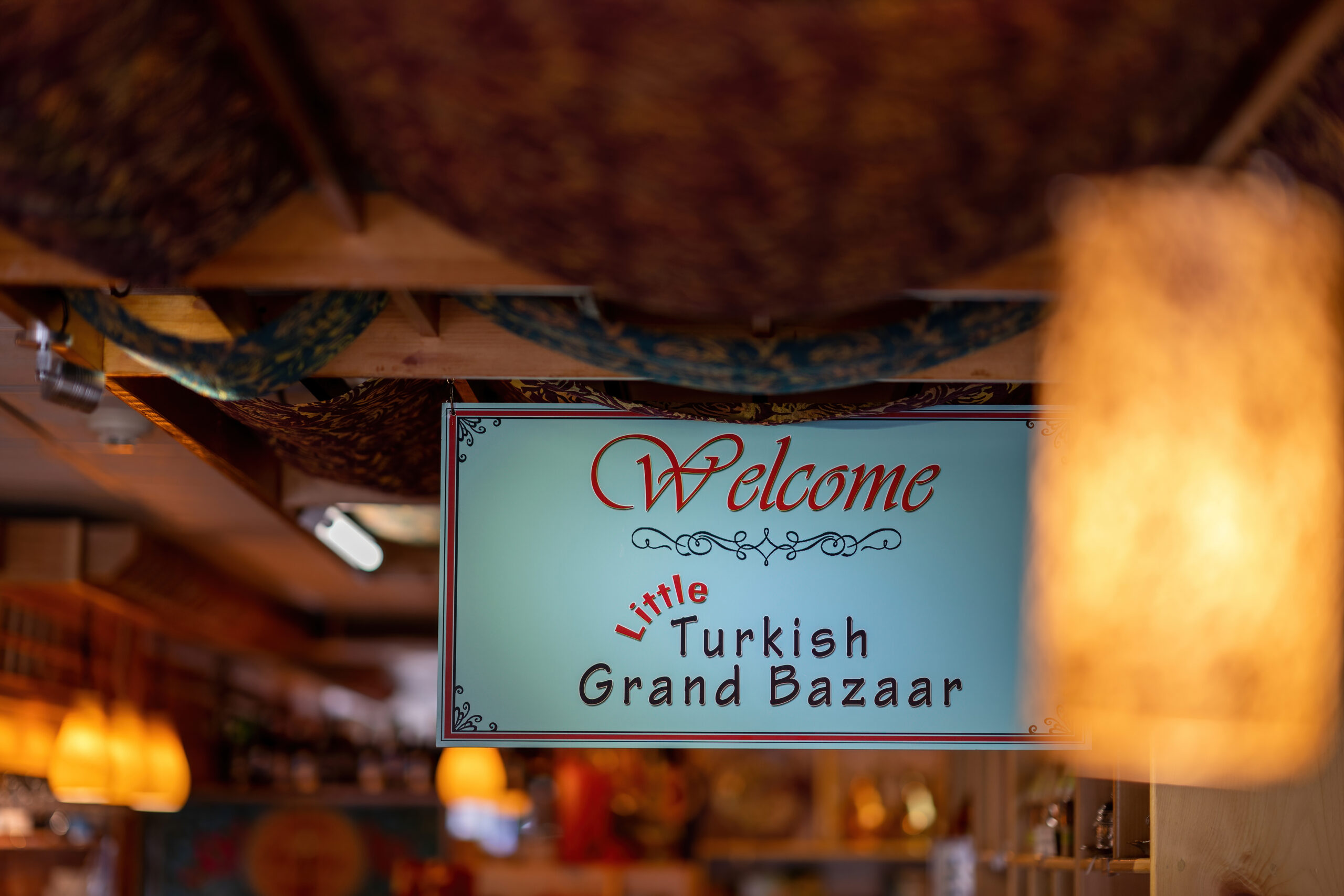
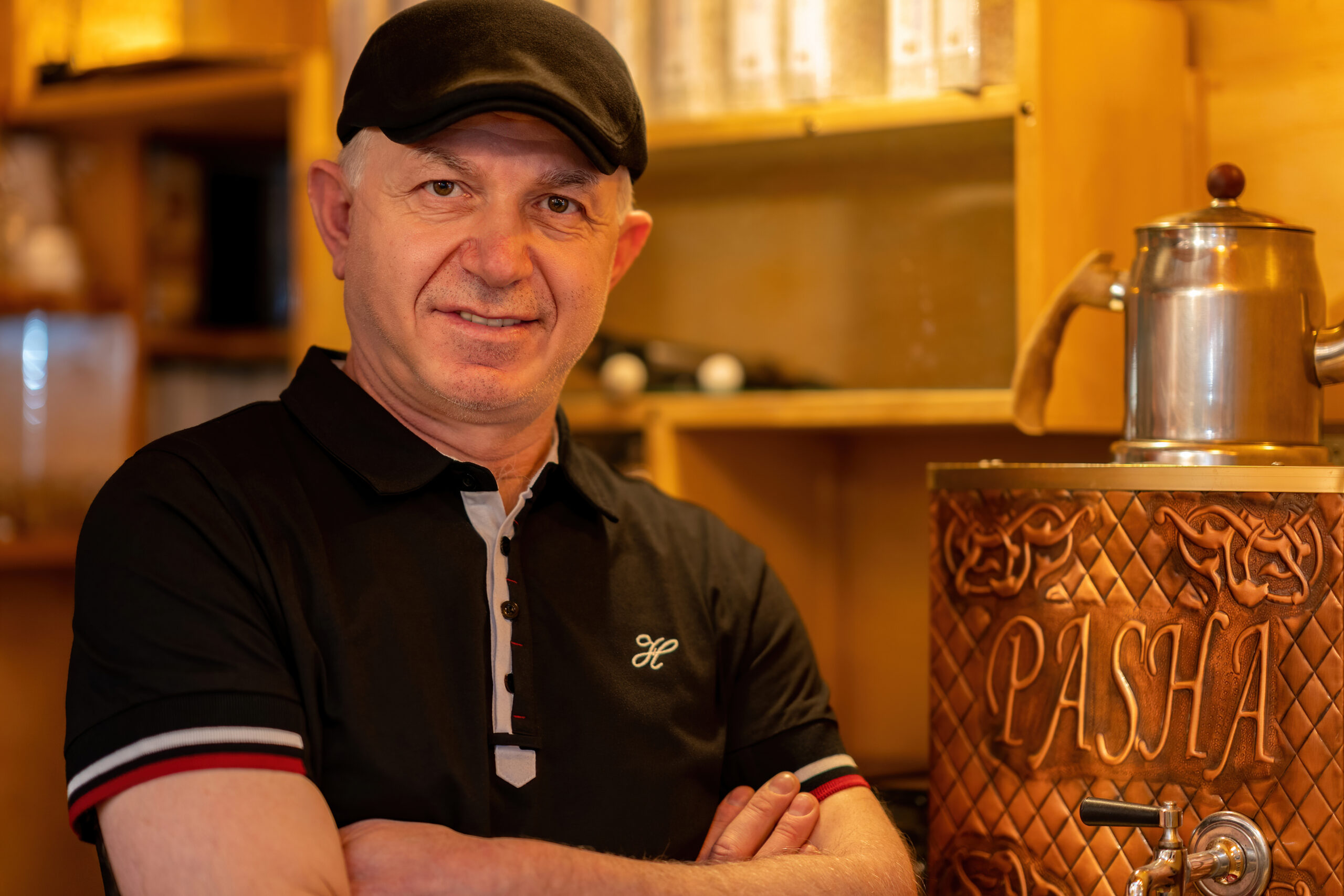
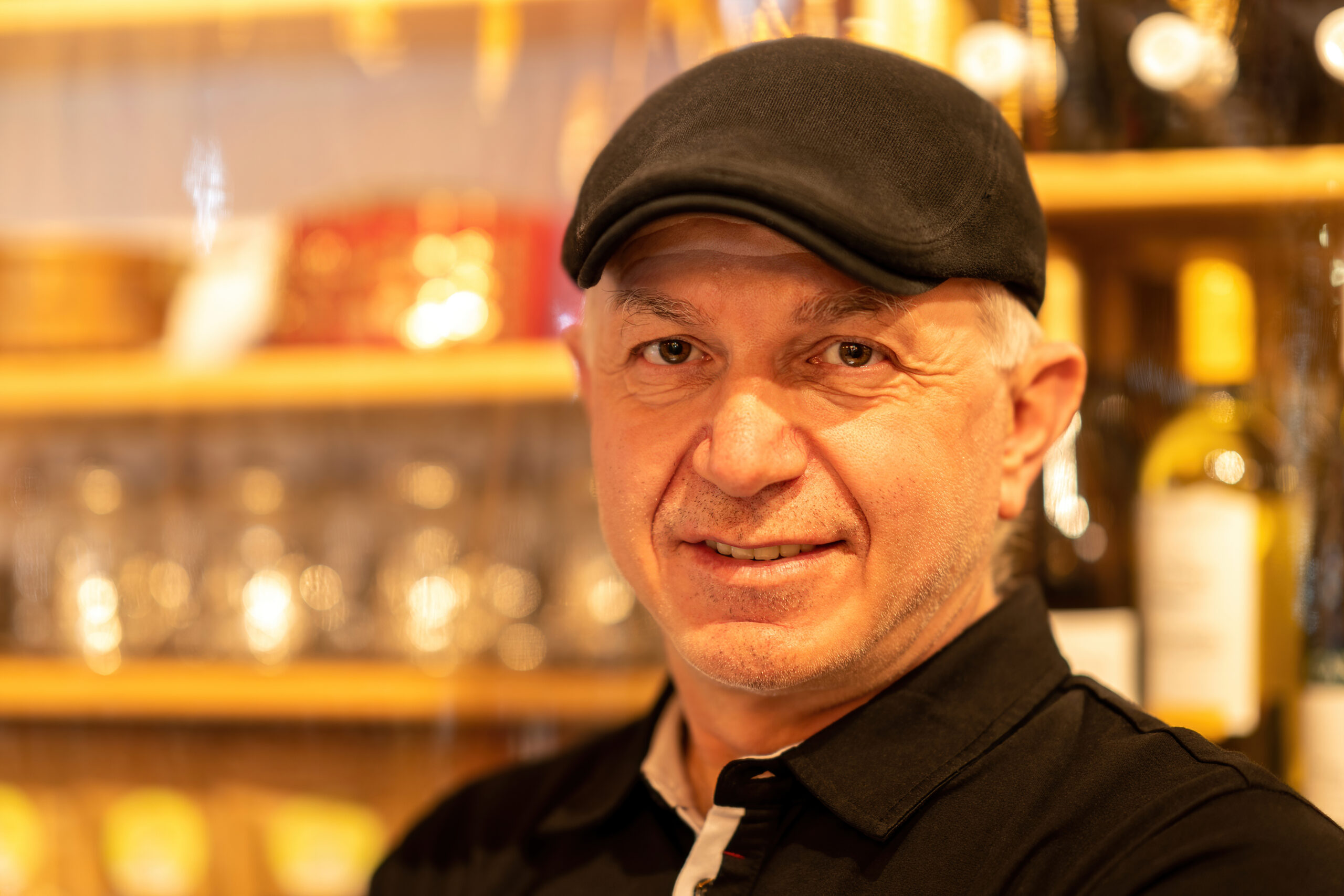
Daylight allowed different tools: a 360° photograph let a reader stand inside Magic Bites and meet Elif and Atilla Ozkefeli from a safe distance. Video carried Pasha’s hand-built interior and Halit Candemir’s Little Grand Bazaar. Portraits put owners in front of their own windows.
The anatomy stayed the same. Standout items, the story, how to order, hours, phone, and the invitation to share. Sweet and Savory Arlington proved the system could leave the night behind and still do its one job.
The hours, media, and businesses changed, but the promise did not: make a local business visible enough for a neighbor to choose it.
- Arlington Bakery
- Breadboard
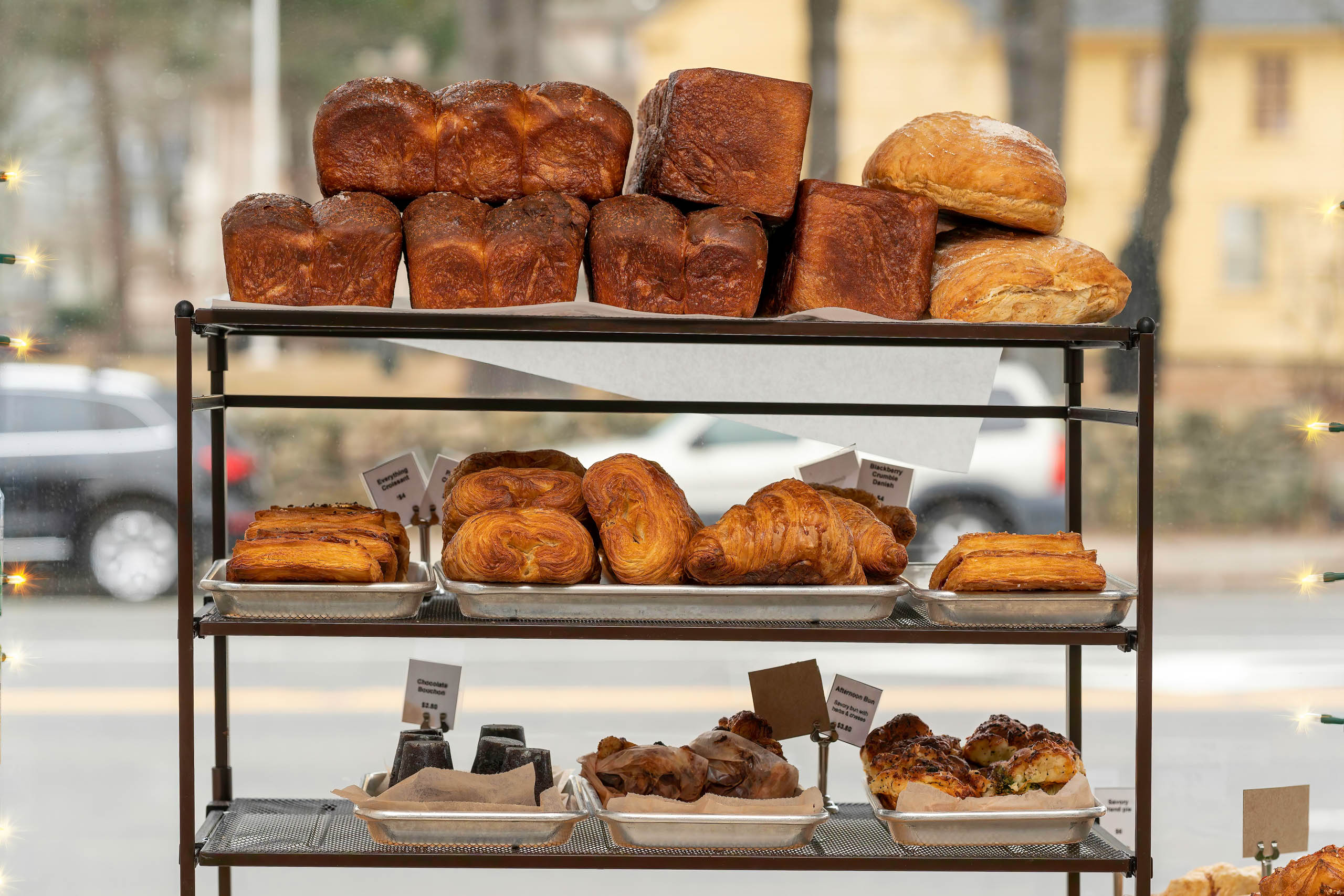
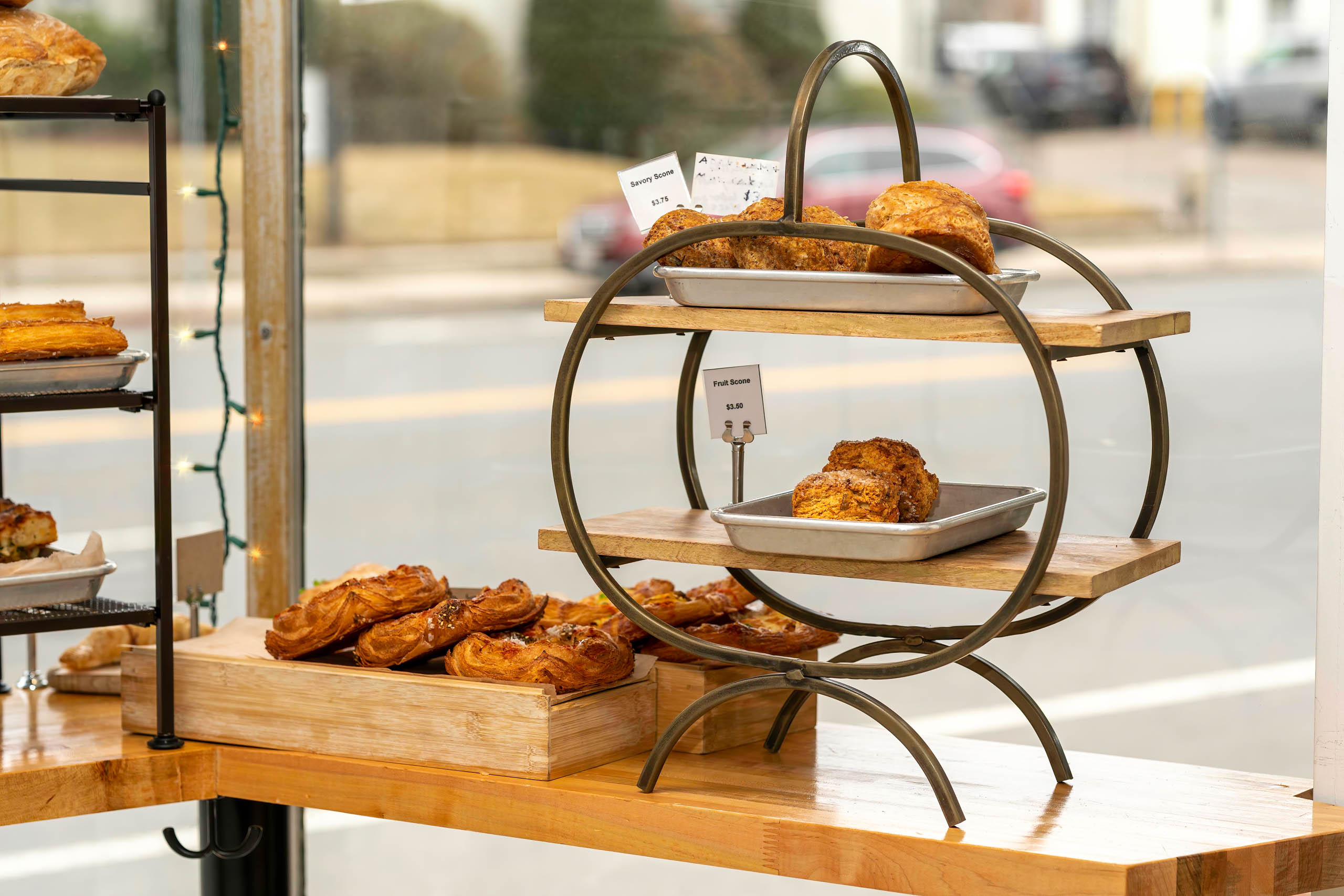
- Butternut
- Gail Ann's
- Magic Bites
- Pasha
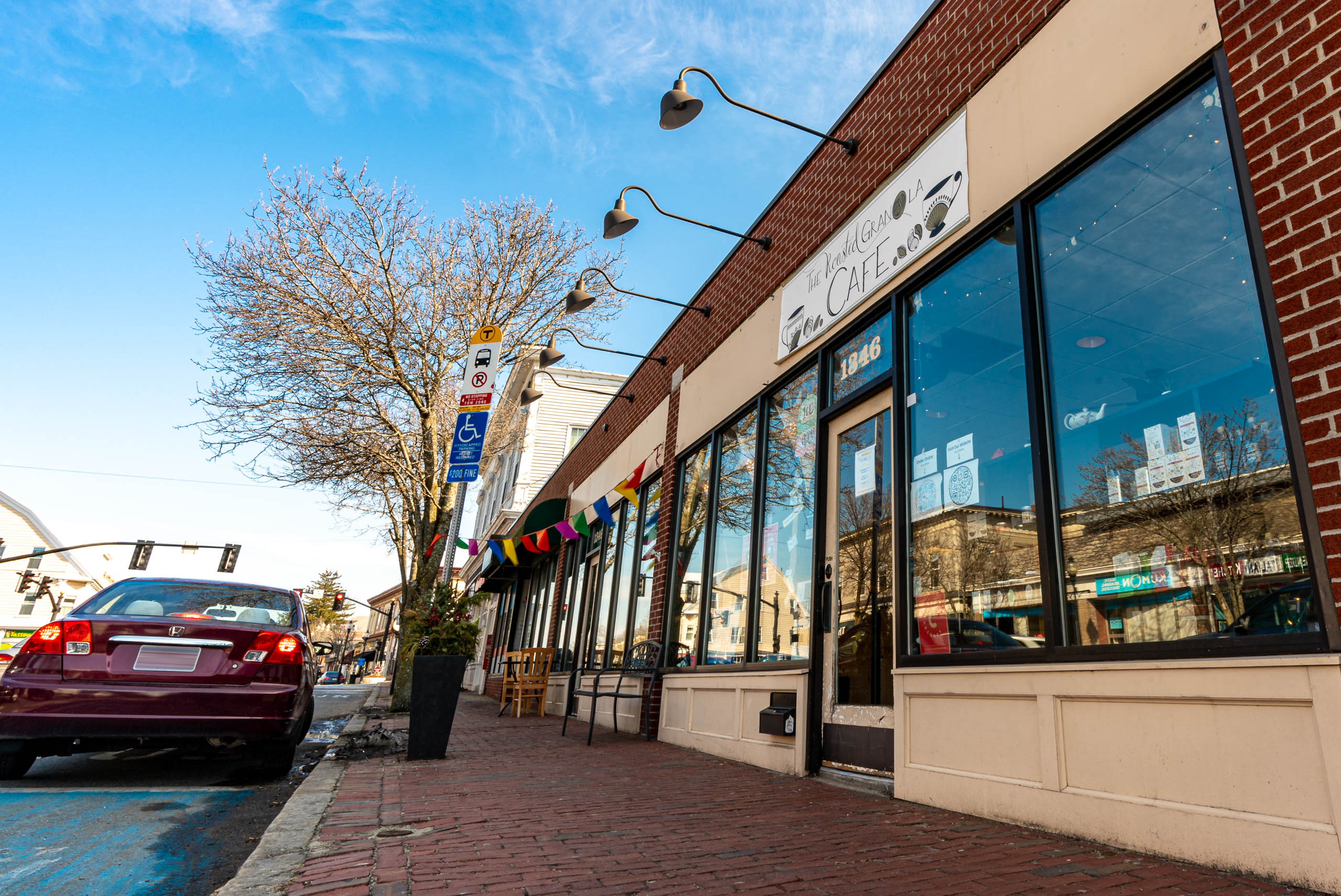
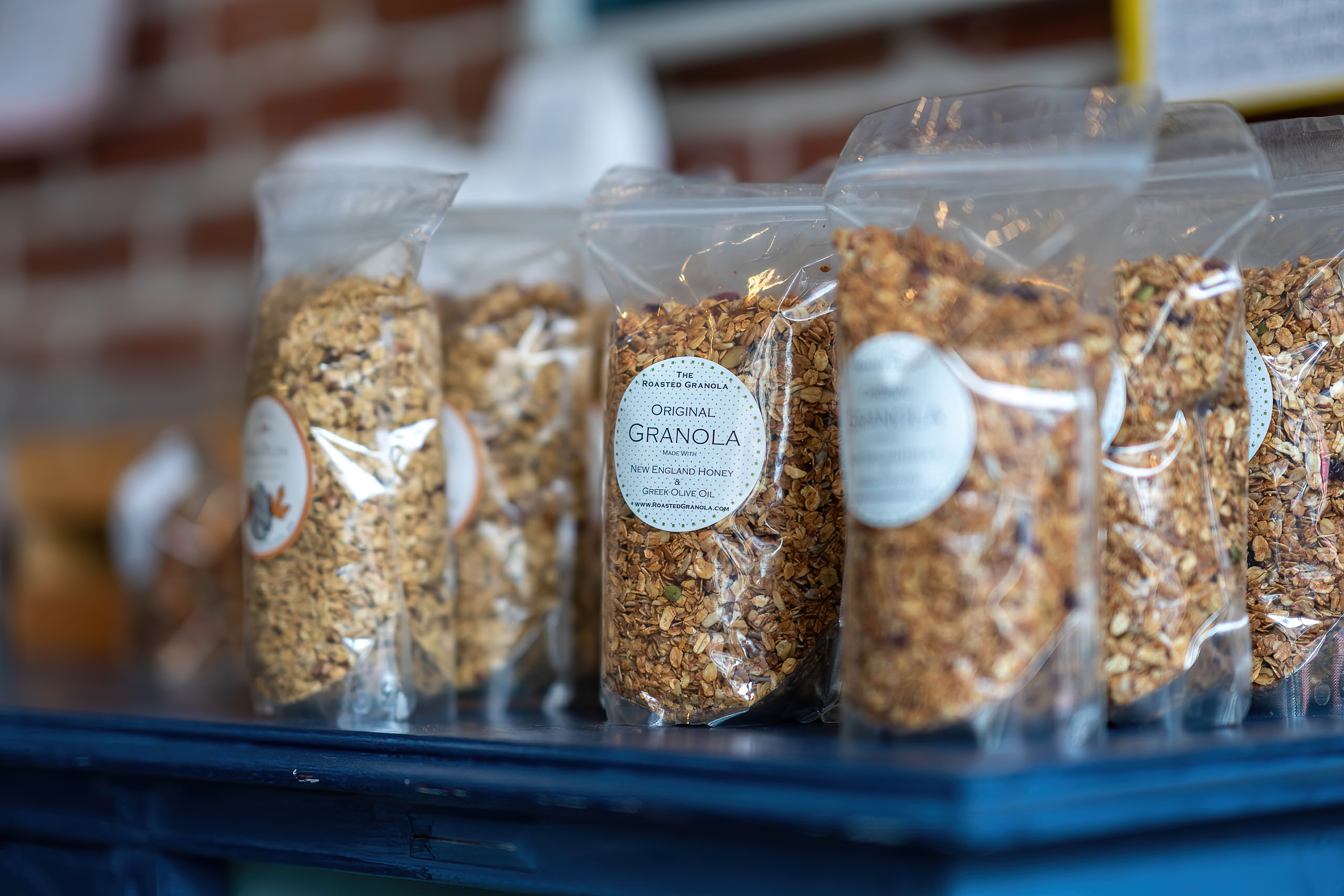
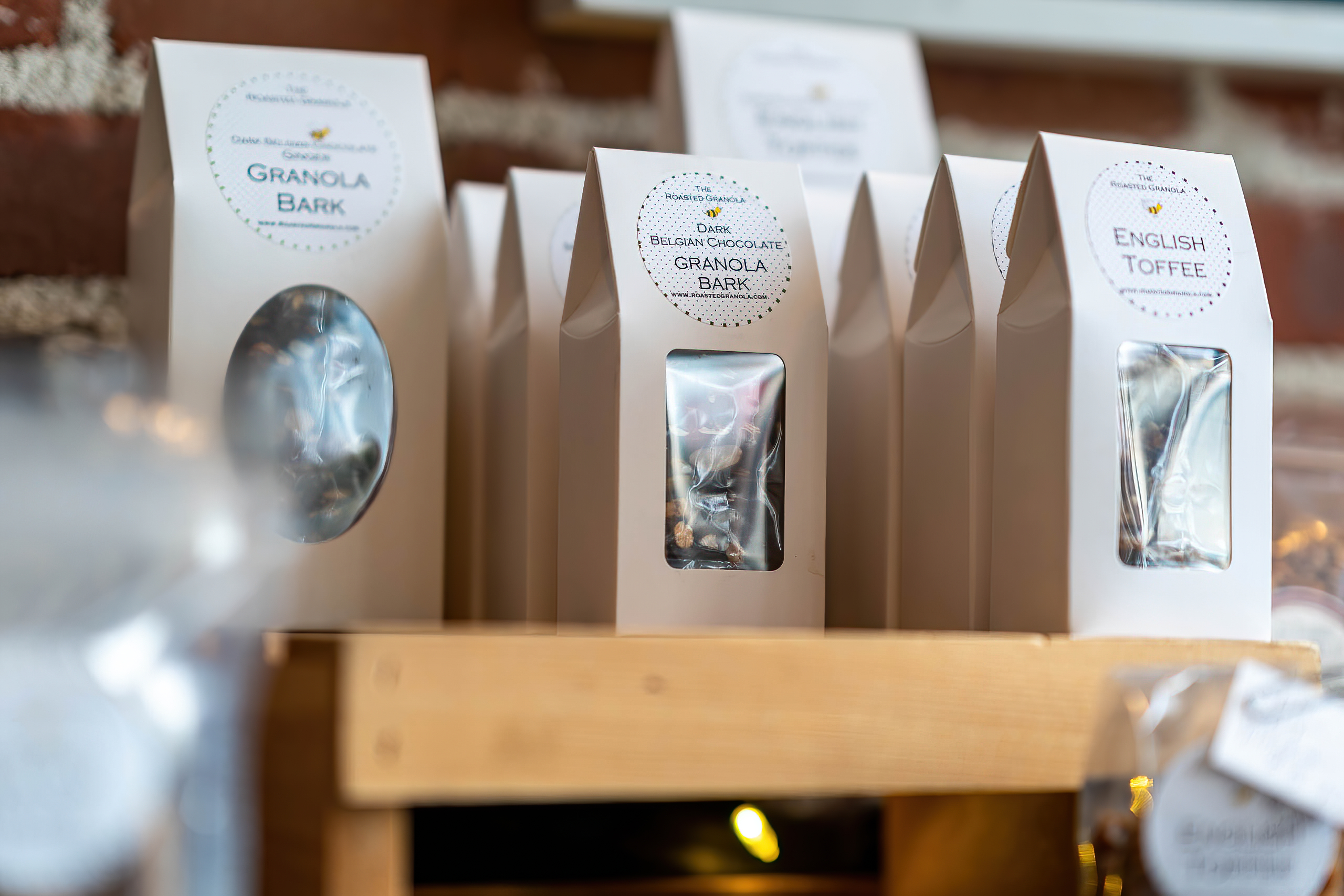
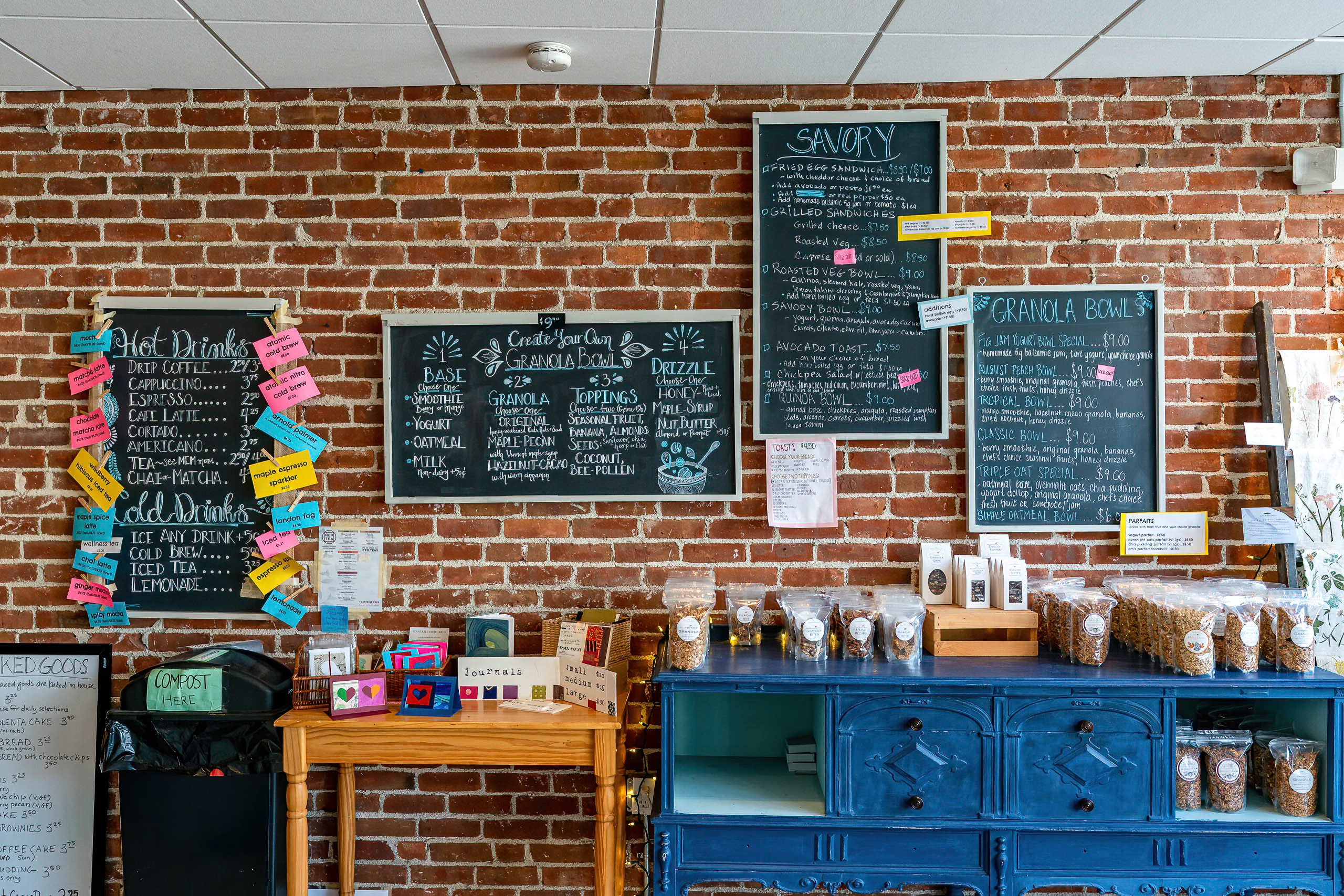
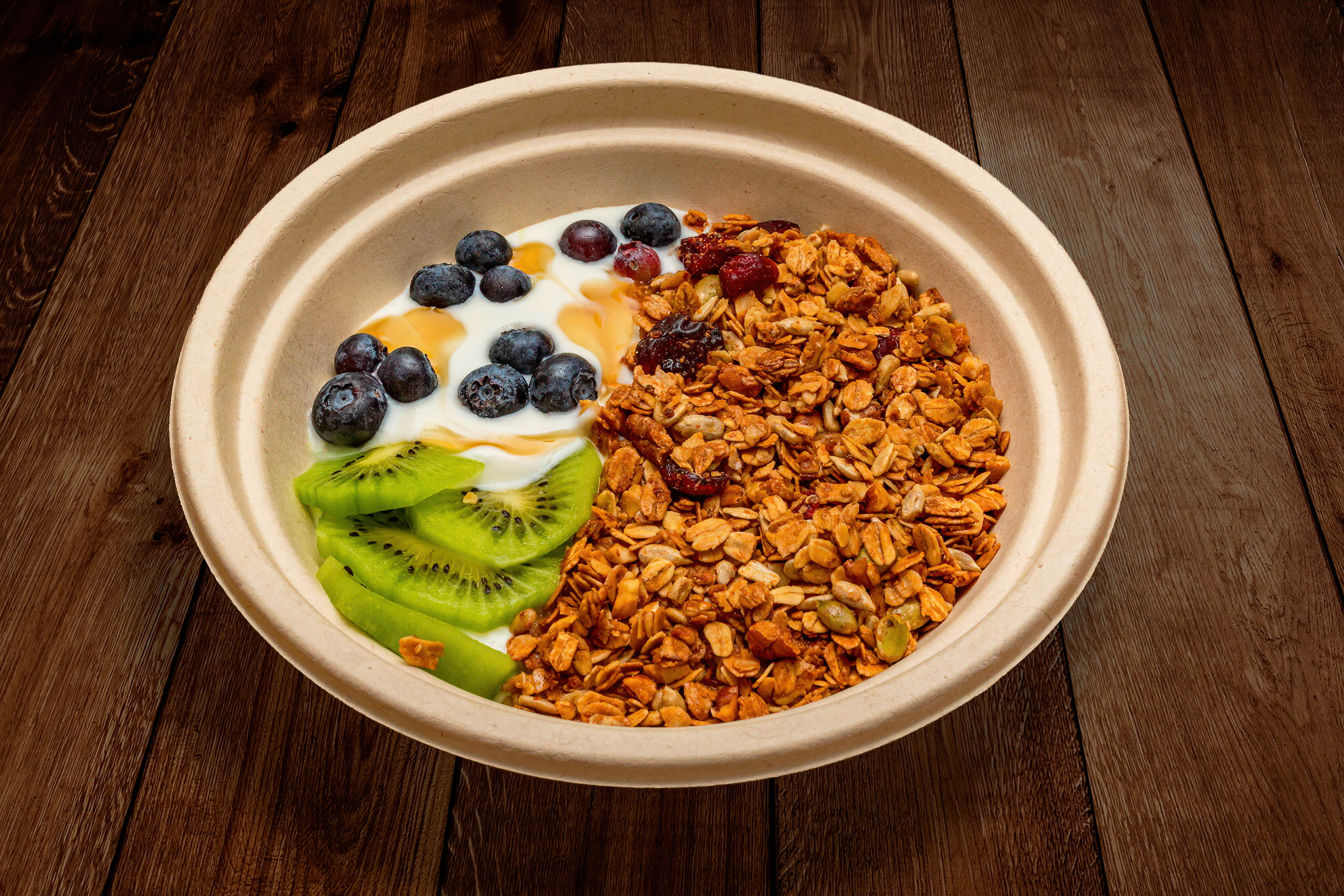
- Roasted Granola
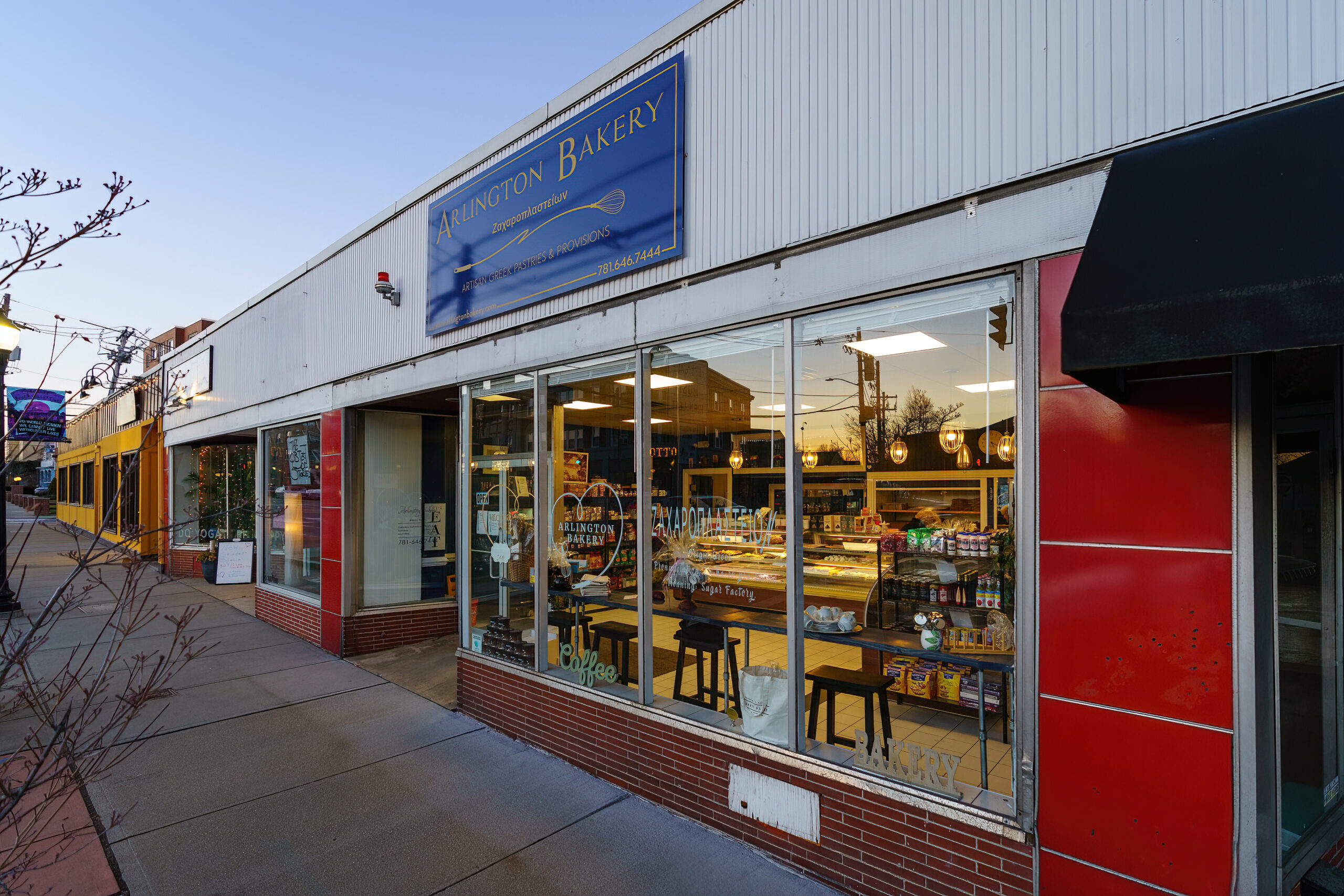
Arlington Bakery
Breadboard
Butternut
Gail Ann's
Magic Bites
Pasha
Roasted Granola
Video Storytelling
Pasha Turkish Cuisine
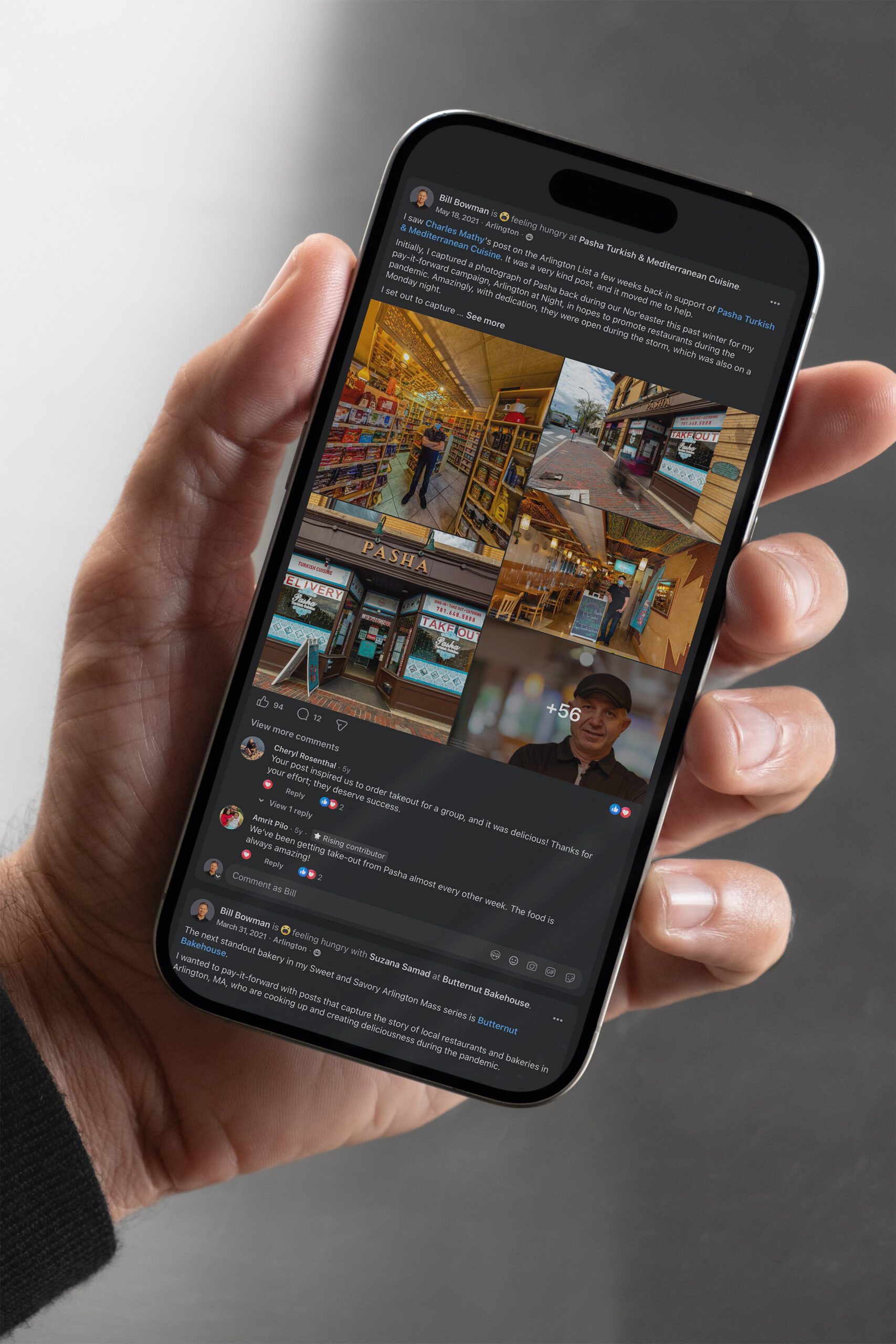
The first Pasha photograph was made during a nor’easter, on a Monday night when the restaurant was still open through the storm and the pandemic. One frame proved the lights were on. The next story needed to show why the place mattered.
So I returned with a wider set of tools: photographs, a 360° view, and a three-minute film. The camera moved through Pasha’s hand-built interior and Halit Candemir’s Little Grand Bazaar, giving the owner, the food, and the place room to speak together.
Every detail carried Halit’s hand, from the lamps and carved wood lattice to the fabrics, table dividers, and grocery shelves. The film let those relationships unfold at human speed, turning a restaurant listing into a visit.
The photograph could invite a neighbor to stop. The video could make that neighbor feel as if they had already stepped inside.
The Posts
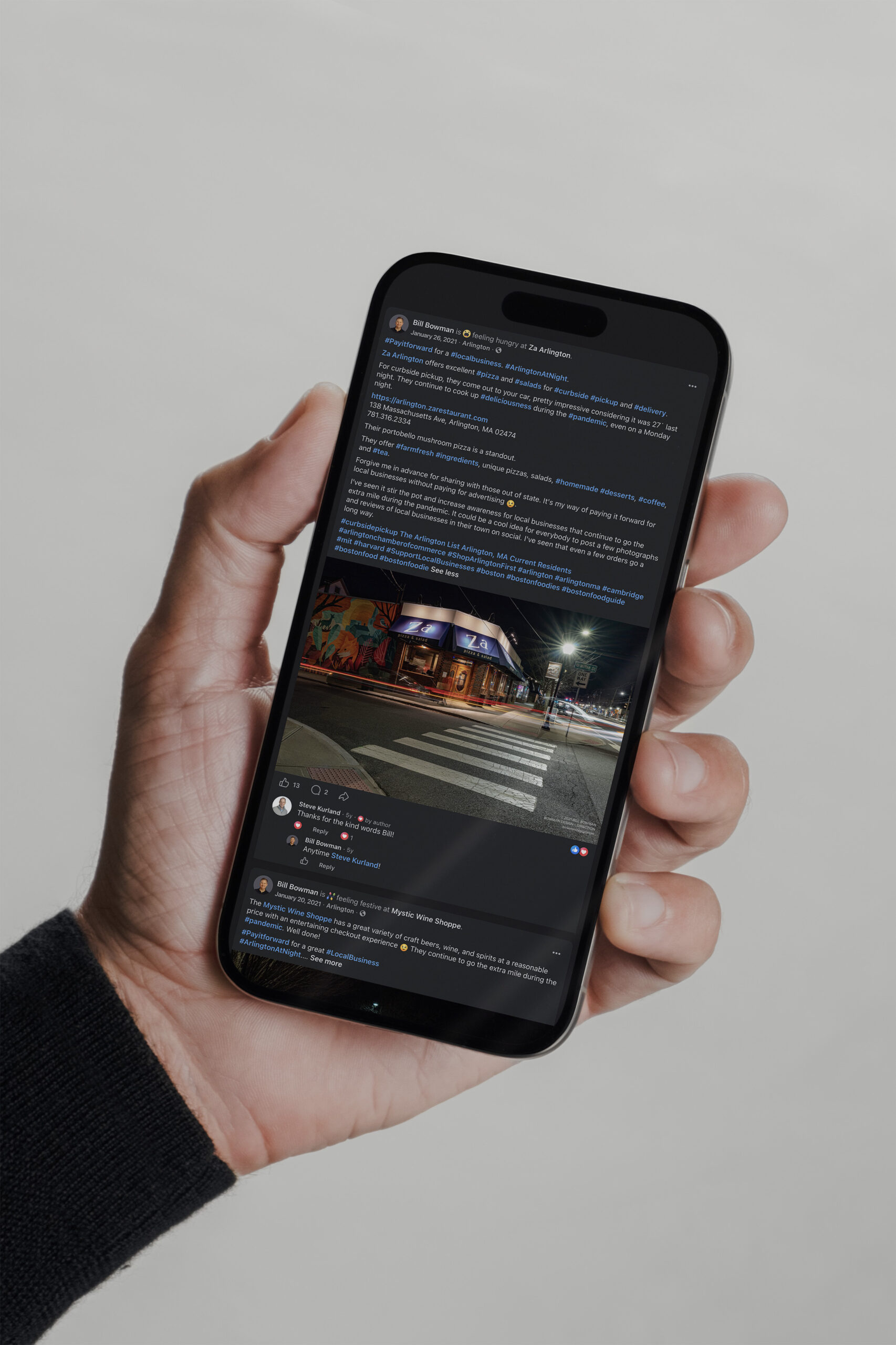
Each post was a complete decision in one scroll. The photograph proved the place was open, the first lines said what to order and why, the middle told a story only a regular could tell, and the bottom gave the address, phone, hours, and a link. Nothing required a second search.
The last paragraph did the distribution work. A public post, an apology to friends out of state, and a plain invitation to share meant every restaurant could repost the piece as its own, and every like from a friend in another state pushed it in front of a neighbor who could order.
Advertising and Distribution
The budget was my own and the arithmetic was kept honest. A boosted post cost seven cents per engagement. The campaign model then tested what 7,700 engagements could mean at a 3% assumed conversion and a $50 average order: 231 orders and $11,550 in restaurant revenue in a month, for kitchens that measured a good night in dozens. The model was directional. The evidence that mattered came from the owners themselves, and Butternut Bakehouse told me the lift was closer to 30%.
- 0+
Miles walked, on foot, one winter month
- 0+
Storefronts photographed across two rounds
- 0
Reactions across the tracked posts, Facebook and The Arlington List
- 0
Comments across the tracked posts, Facebook and The Arlington List
- 0
People reached by the boosted post
- 0
Engagements on the boosted post
- 0¢
Cost per engagement, self-funded
- 0M+
Google Maps views to date, still counting
Google Maps: Still Open for Dinner
Facebook posts live for a day. A photograph on a Google Maps listing lives beside every search for dinner in Arlington, for years. So each night’s picture was also posted to the restaurant’s listing with a review, standout items, and a few words about the owner.
By March 2021 those photographs had been seen 81,000 times.
Today the 24 I can still count total more than 4 million views: Sugo past 2 million, La Victoria near 1 million, Twyrl past 340,000, My Brother’s Place and Capitol Creamery past 160,000 each. The campaign ended in the spring of 2021. Its photographs are still bringing people to the door.
The placement gave each image a second life at the exact moment a resident or visitor was choosing where to go.
What the Town Said Back
The comments did what the spreadsheet could not. They showed the town seeing itself.
Marilyn Y., Arlington
I didn't expect that it would move me to tears just to see photos of my favorite businesses lit up and busy. Such is pandemic life, I guess.
Cookie Time Bakery
We love being a local business that people love so much. Thanks for helping to spread the cookie love.
Suzana Samad, Butternut Bakehouse
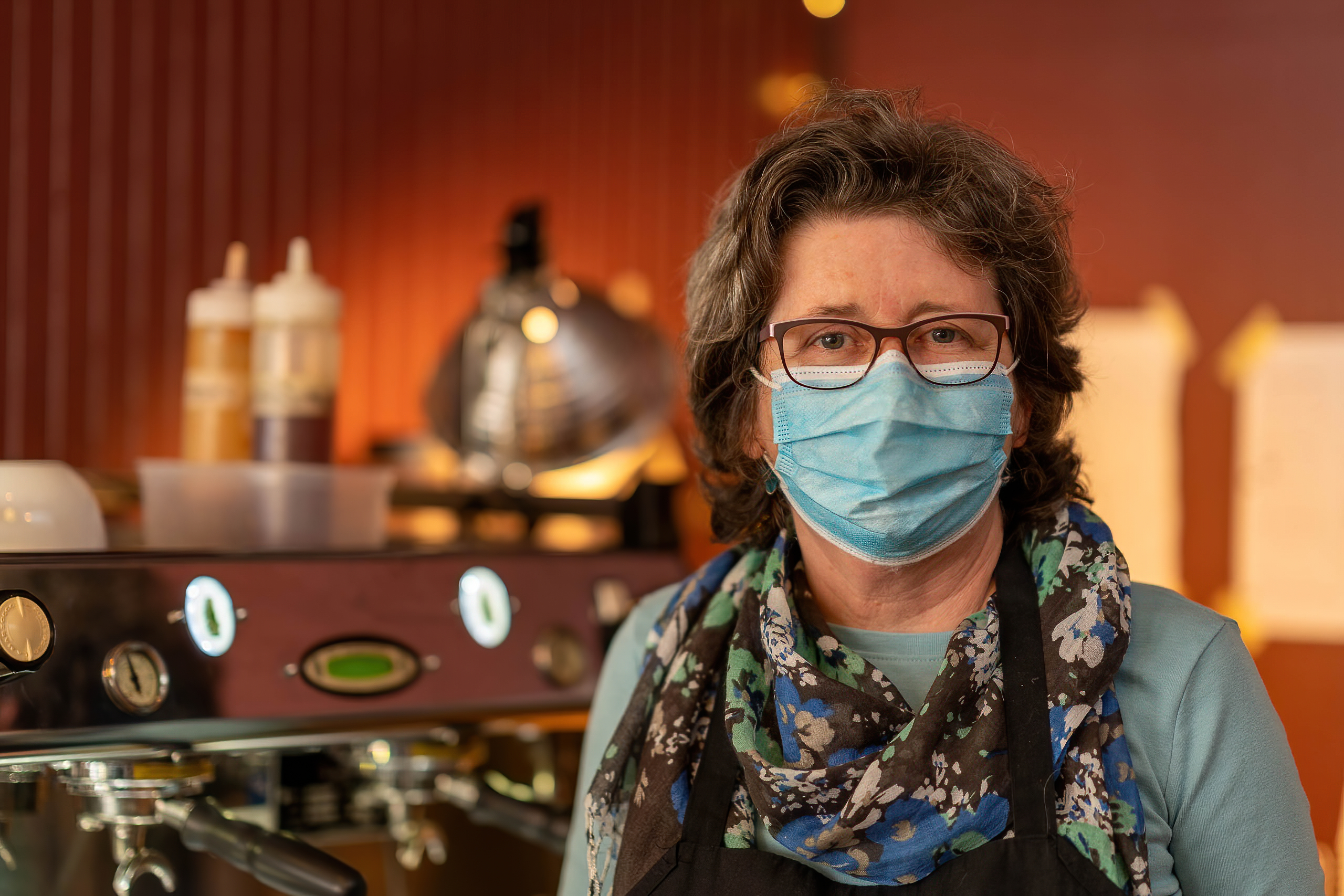
Thank you Bill Bowman for the opportunity. It was a real pleasure working with you. You went above and beyond what I had expected.
Melanie M., Arlington
Little Q is at the top of my list of places I want to make sure are still standing when this is all over. I think we will order from there tonight.
Sara D., Arlington
I hearted all the ones we have ordered from this past year! If you do another I'd love to see Roasted Granola and Butternut Bakehouse.
Carter L., Texas
I love getting these messages from out of state! I still have friends in Boston so these posts have value for Texans like me.
Atilla Ozkefeli, Magic Bites Bakery
I bet this is one of the best series you have. Great shots, specially portraits.
Stephanie R. F., Arlington
We got pizza from Brickstone last night for the first time. I told the owner that we ordered from them because of this post and he was SO appreciative.
Katie K., Arlington
Your love and appreciation of the town is palpable and made me tear up just a little bit. Beautiful photos!
The nominations became the next round. Little Q Hot Pot was photographed the night it was requested, Butternut Bakehouse became the bakery that reported the strongest lift, and under the Pasha and Magic Bites posts, congratulations arrived in Turkish from family and friends an ocean away. The campaign went out as one question to the town. The town answered.