


Sperry Product Innovation
The brand promised shared success. The website made sharing work.
Sperry Product Innovation develops patent-protected products through a partnership model with a plain name: Shared Investment, Shared Success. The model maximizes R&D dollars and multiplies margins, and it asked for more than a new website:
Give shared invention a brand. Then make the partnership itself work.
Bowman Design Direction partnered with SPI to build more than a brand and a website. We built the place where the partnership happens: a public story of invention above the login, and a role-based extranet below it, connecting strategic partners to the work they share.
Read the Story
Challenge
SPI’s model runs on collaboration: inventors, vendors, and strategic partners developing patent-protected products together. But the collaboration itself ran on localized Outlook accounts and files scattered across individual machines. The company built on sharing had infrastructure built for keeping.
The uncertainty cut both ways. Partners could not reach the work they co-owned, and the work was too protected to simply open up. SPI needed a brand worthy of its inventions and a way to share confidential work without surrendering control of it.
Direction
Discovery kept returning to the same observation: a partnership is not experienced through promises. It is experienced through the mechanics of working together. SPI’s strategy already had a name, Shared Investment, Shared Success. Nobody had ever translated it into a working system.
So we gave the website two jobs. Above the login it tells the story of invention: history, products, careers. Below the login it becomes the partnership itself, with role-based access deciding exactly what each partner sees. Sharing became something the brand does, not something it says.
Outcome
The protected products developed through SPI’s partnership model have generated more than a billion dollars in sales. Behind that proof sits a quieter transformation: more than one million records migrated from localized Outlook accounts into Google’s G Suite, and file management re-architected into a private cloud synced with Google Drive.
Institutional memory that lived on individual machines became a single, searchable system with role-based access through the new SPI website. Collaboration stopped waiting for office hours: partners log in and land directly in their shared files, teams work anytime, anyplace, and ideation moves from concept to reality faster.
Takeaway
A brand usually ends at the login screen. SPI’s begins there. The work translated a business model into operating infrastructure, treating a million migrated records and role-based file access as brand deliverables, because to a partner, the sharing is the promise. Most agencies would have shipped the website and called the rest IT. The rest was the brand.
What We Built
Brand & Identity
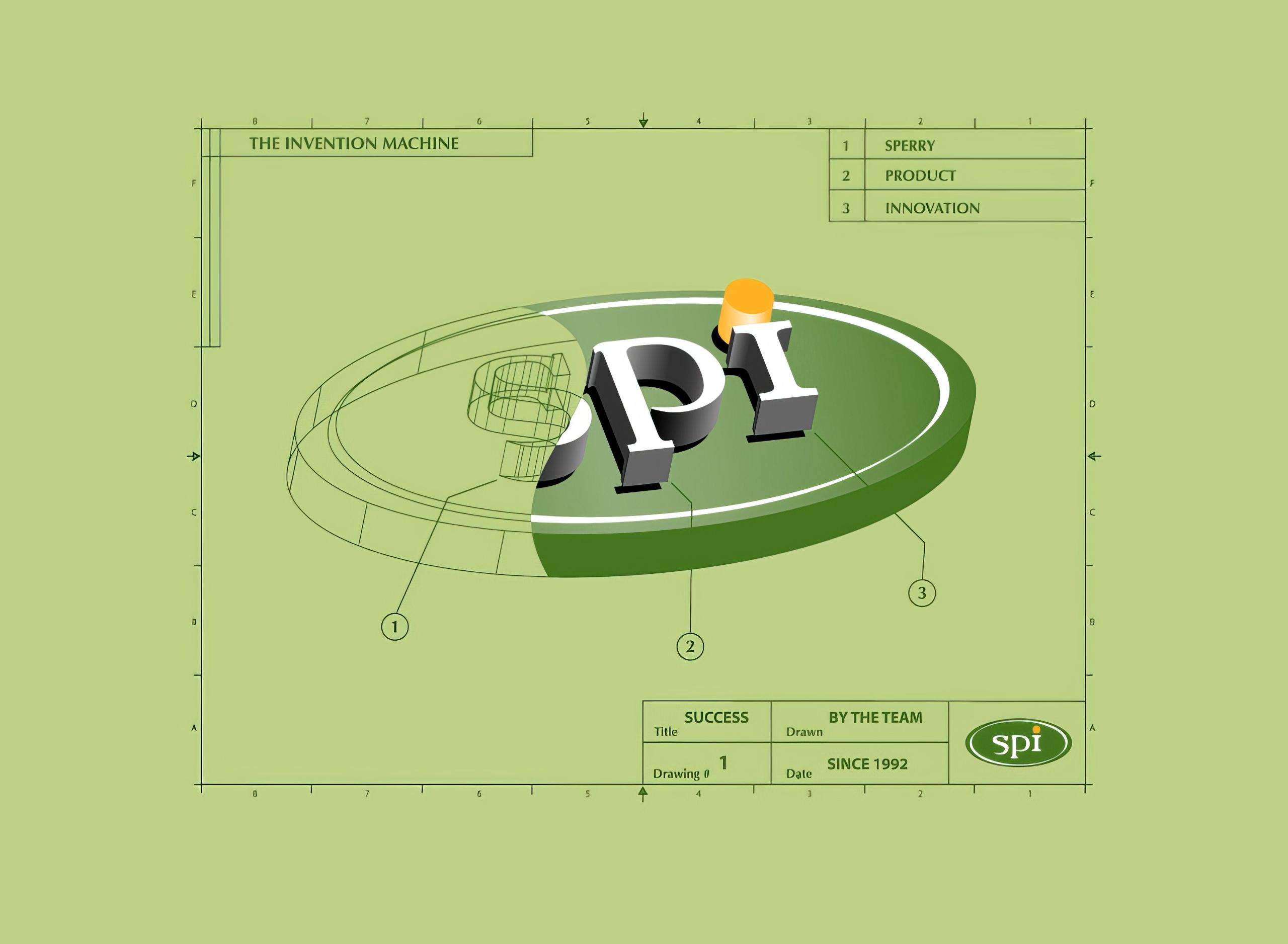
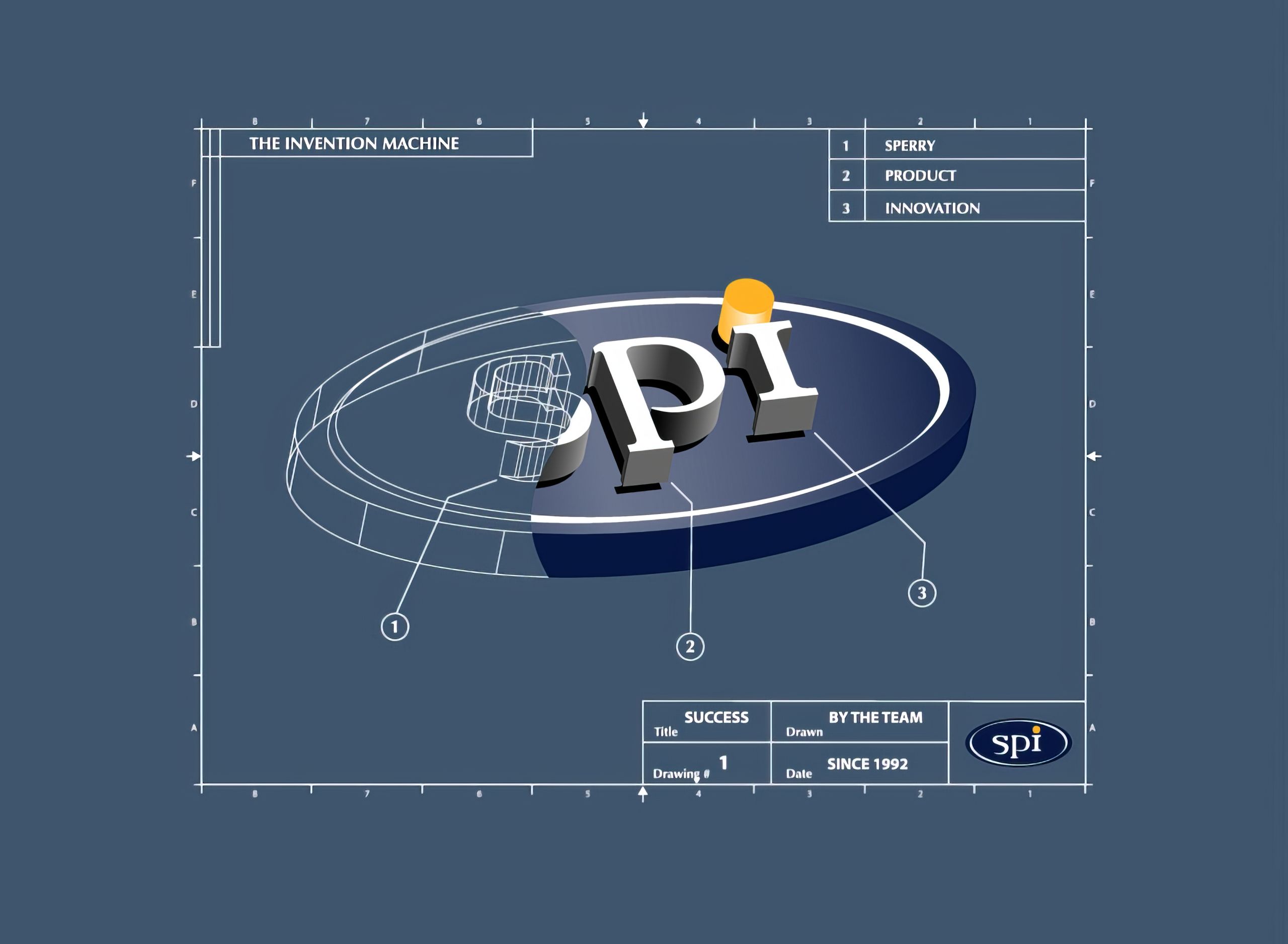
We captured the essence of SPI: the bright light of invention, translated into an identity that is confident, optimistic, and credible in the rooms where patents and partnerships are negotiated. The brand gave a company that sells collaboration a face partners could trust on first contact.
Website
We designed a responsive site that is clean, colorful, and quietly whimsical, promoting SPI’s rich history, successful products, and careers. It promotes products and connects collaborators, working as both the public proof of invention and the doorway into the partnership.
Extranet
We built role-based collaboration directly into the website. Strategic vendors and partners simply log in and are redirected to their shared files, with access shaped to each relationship. Confidential work stays controlled while the people who need it reach it from anywhere.
Knowledge Infrastructure
We migrated over one million records from localized Outlook accounts into Google’s G Suite and re-architected file management into a private cloud synced with Google Drive. Scattered institutional memory became one searchable, protected system that scales with the partnership.
The Through-Line
Every deliverable translated the same strategic insight: partnership is experienced through infrastructure, not promises.
The identity made invention visible. The bright-light brand gave SPI a confident public face, and the website put its proof on display: decades of history, a catalog of successful products, and a careers page that invites the next innovator through the door.
The same design kept going past the marketing. The login is not an exit from the brand experience. It is the middle of it, carrying a partner from the public story into the private workbench without a seam.
The extranet made partnership physical. Role-based access turned Shared Investment, Shared Success from a handshake into a system: each vendor and partner sees exactly the work they share, wherever they are, whenever ideas arrive.
The migration made partnership durable. A million records and a re-architected cloud meant the relationship no longer depended on whose laptop held the file.
The Identity Earned Trust. The Website Explained the Model. The Extranet Enabled Collaboration. The Knowledge System Preserved It.

Discovery + Strategy
Before design, we mapped how a partnership actually works: who needs to know what, and when.
Business Roadmap
Invention was thriving; infrastructure was not. We aligned brand, website, and operations into one roadmap built to remove the friction between partners and the work they share.
Brand Architecture
The bright light of invention became the organizing idea. Optimism and rigor shaped an identity system credible enough for patents and warm enough for partnership.
Relationship Architecture
Inventors, vendors, and strategic partners each trust differently. We mapped every relationship’s needs and shaped access, message, and experience around each one.
Extranet Strategy
Log in, land in your shared work. We designed role-based access as brand behavior: share exactly enough, with exactly the right partner, and nothing more.
Knowledge Architecture
A partnership is only as strong as its memory. One million records moved from scattered Outlook accounts into G Suite and a private cloud the whole company can search.
Competitive Positioning
Product developers compete on claims of capability. SPI can point at the partnership itself: shared investment, shared files, shared success, working in plain sight.
Brand Identity
Original
3D

Brand 3D
Apparel

Creations
Sperry Product Innovation
Motion
Website
We designed the website around the two jobs SPI’s site actually has: present the caliber of the company’s inventions, and connect the partners who help move them from invention to market. Above the login, the site presents the company behind the partnership: its history, its products, and its people. Below it, the site goes to work.
The design itself is clean, colorful, and quietly whimsical. Invention at SPI is optimistic work, and the site carries that optimism while staying credible to the engineers, attorneys, and partners who live in patent-protected detail.
For partners, the homepage is a doorway. Strategic vendors and partners log in and are redirected straight to their shared files, with role-based access deciding what each relationship sees. No portals to learn, no requests to wait on.
For the team, the site is the hub of a larger system: G Suite, a private file cloud, and the extranet working as one. Collaboration happens anytime, anyplace, and ideation moves from concept to reality faster.